
Dog reflective collar for night walking is one of those simple purchases that can quietly reduce risk, because it tackles the real issue at night: drivers and cyclists often do not see your dog (or the leash) until they are already close.
If you have ever felt that little jolt when a car turns into your crosswalk, or a runner appears out of nowhere, you already understand why visibility matters more than “cute gear.” A reflective collar is not a guarantee, but it can give you extra seconds and extra distance, which is usually what safety comes down to.
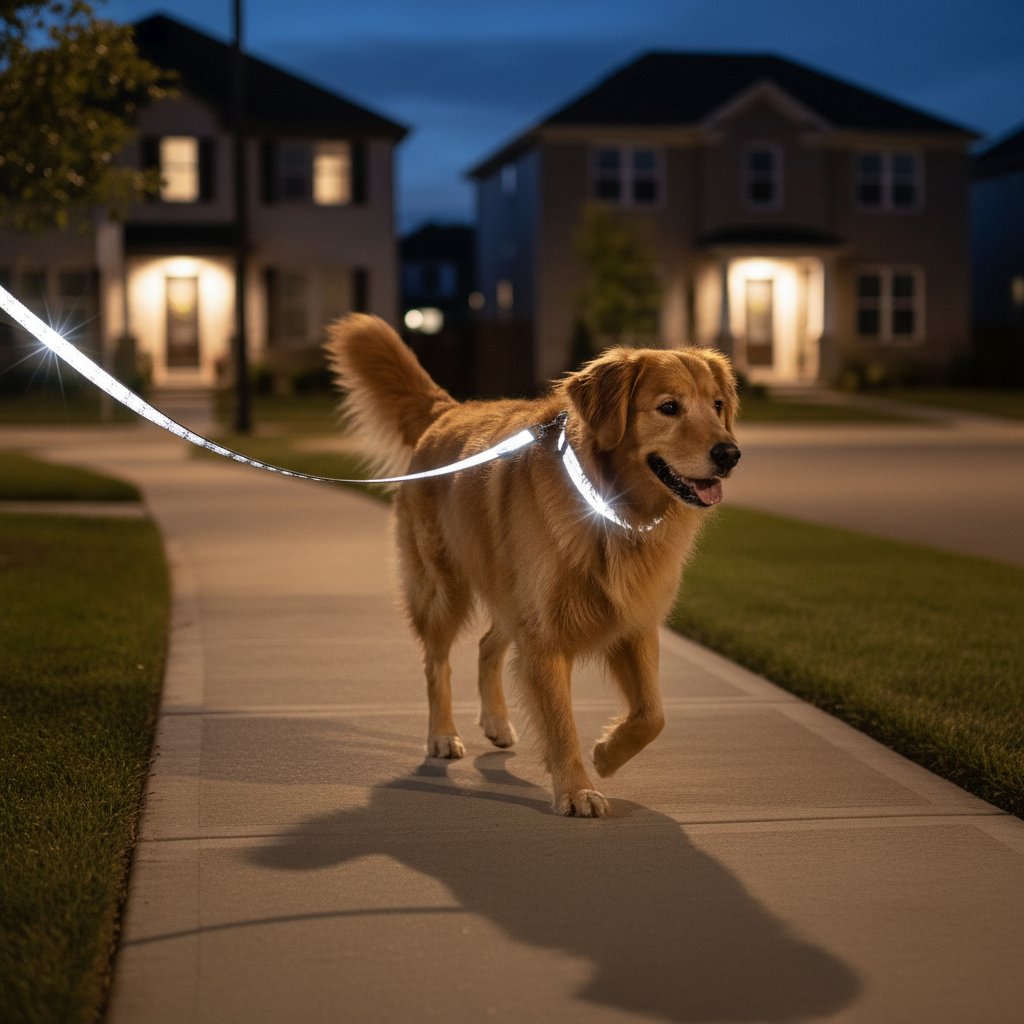
This guide breaks down what reflective materials actually do, how to choose a collar that fits your dog and your route, and how to set up a night-walking routine that avoids the common “I bought one but it still feels sketchy” problem.
Why night walks feel risky: what visibility really means
Most night-walk near-misses are not about speed, they are about recognition. A driver may look up and see “movement,” but not immediately identify “dog on a leash,” especially near intersections, driveways, or parking-lot exits.
- Contrast is low: dark fur plus dark streets creates a silhouette that blends in.
- Light sources are messy: headlights, streetlights, and shadows can hide a small body close to the ground.
- Leash lines disappear: even when a person is visible, the dog can be 4–6 feet away and harder to detect.
- People misjudge distance: cyclists and runners often assume you will “stay straight,” then your dog steps out to sniff.
According to the American Kennel Club (AKC), visibility gear like reflective items and lights can help make dogs more noticeable during low-light walks, especially near roads. It is practical advice, not a magic shield, but it is worth taking seriously.
Reflective vs. light-up collars: what each one does well
Shoppers often treat these as interchangeable. They are not. Reflective gear works when external light hits it, while LED collars produce their own light. Many owners end up preferring a mix, depending on where they walk.
| Type | Best for | Limitations | Good pairing |
|---|---|---|---|
| Reflective collar | Streets with cars, headlights, bike lanes | Less effective in very dark areas without light sources | Reflective leash + bright human gear |
| LED/light-up collar | Parks, trails, dim neighborhoods | Needs charging/batteries; can fail if not maintained | Reflective patches on harness |
| Reflective harness | Dogs that pull or slip collars | Fit is more complex; rubbing possible | Reflective collar as backup |
If your main route includes cars, a dog reflective collar for night walking often earns its keep because headlights make reflective strips pop from farther away. If you are mostly on trails with minimal lighting, consider adding a small light as a second layer.
How to pick the right reflective collar (fit, material, durability)
Here is the part many people rush: a collar can be reflective and still be a bad choice if it twists, chafes, or loosens. You want something your dog tolerates, because an uncomfortable collar “mysteriously” stays on the hook.
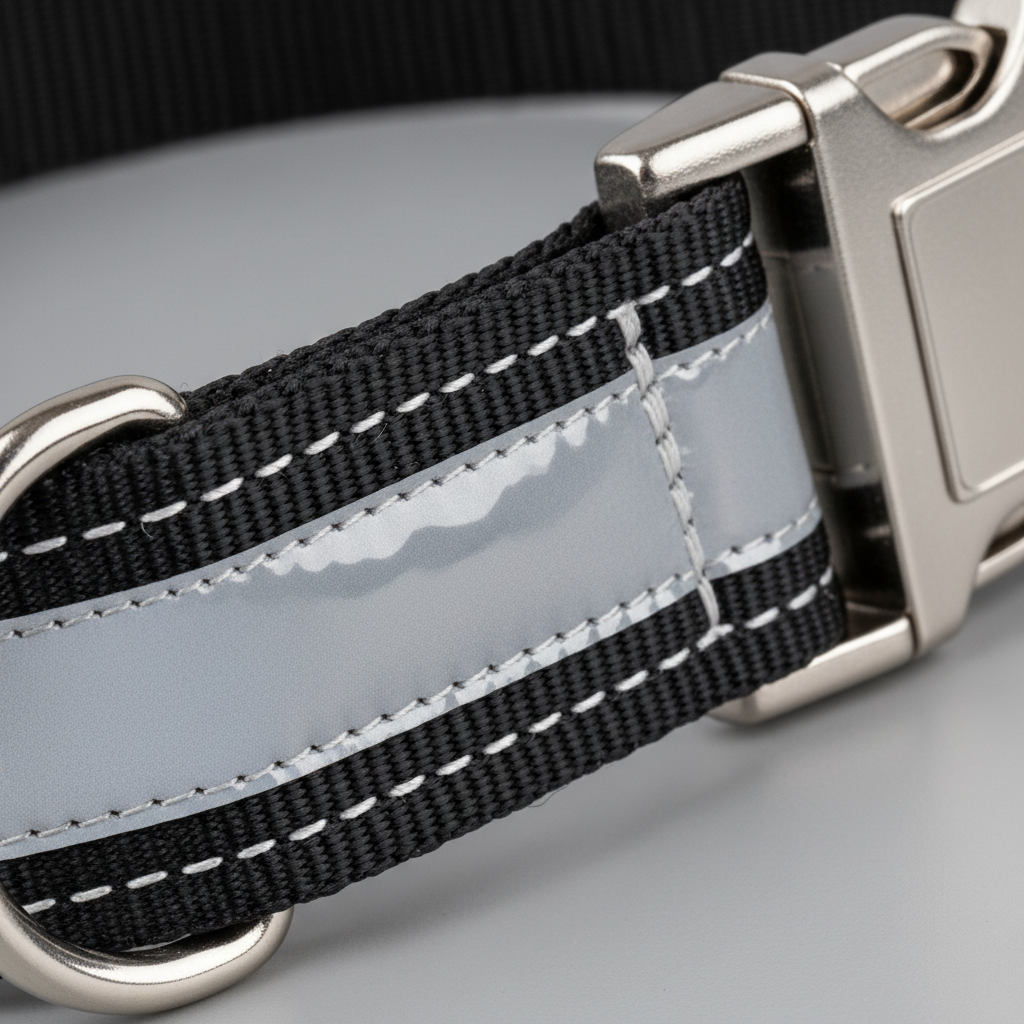
What to look for when you compare collars:
- Reflective coverage: wider reflective bands or full-length reflective threads are easier to see than tiny logos.
- Hardware quality: a sturdy D-ring and reliable buckle matter, especially if your dog lunges.
- Comfort edges: soft lining or rounded edges can reduce rubbing, particularly for short-coated dogs.
- Water resistance: not “waterproof everything,” just materials that handle rain and odor without stiffening.
- Fit range: enough adjustment so you can keep it snug without choking.
Fit rule that still holds up: the collar should allow two fingers between collar and neck, but not rotate so much that reflective panels end up under the throat most of the walk.
Quick self-check: do you need reflective, LED, or both?
If you are unsure, run through this quick checklist and be honest about your routine. Most “wrong product” frustration comes from not matching gear to the walking environment.
- You walk near intersections, driveways, or street parking more than a few minutes per outing.
- Your dog has dark fur or is small, meaning they sit lower in the headlight beam.
- Your leash is long, retractable, or you let your dog roam side-to-side.
- You regularly walk at dawn/dusk, when visibility shifts quickly.
- You do trails or unlit parks where headlights rarely hit reflective surfaces.
How to interpret it: if the first three sound like you, prioritize reflective gear. If the last one is your main scenario, add an LED element or a clip-on light.
Practical setup: making a reflective collar work on real walks
Buying the collar is step one. Using it well is the part that keeps you safer. A few small habits usually make a bigger difference than upgrading from “good” to “premium.”
1) Pair it with the right leash and your own visibility
- Use a reflective leash or add reflective tape to your current leash so the “line” is visible.
- Wear at least one bright or reflective item yourself. Drivers often aim around the person first.
2) Choose the attachment point that stays stable
- If your dog pulls, a harness can keep reflective areas positioned better than a rotating collar.
- If your dog tends to back out, confirm the collar fit and consider a martingale-style design with guidance from a trainer.
3) Build a “crossing routine”
- Shorten the leash before crossing, so your dog cannot step into the lane unexpectedly.
- Pause at curb cuts and driveways, even in quiet neighborhoods.
According to the Centers for Disease Control and Prevention (CDC), increasing visibility and paying attention to traffic are common-sense parts of pedestrian safety at night. You and your dog count as pedestrians, even when the sidewalk feels familiar.
Common mistakes that reduce visibility (even with a reflective collar)
This is where people get annoyed: “I bought the thing and nothing feels different.” In many cases, the collar is fine, but these issues cancel it out.
- Collar twists under the neck, hiding reflective strips from oncoming traffic.
- Too much fur coverage in winter coats or thick ruffs, which blocks reflective sections.
- Dirty reflective material, which can reduce how brightly it returns light.
- Relying on reflective only in pitch-black parks where no light hits it.
- Using retractable leashes near roads, creating unpredictable distance and angles.
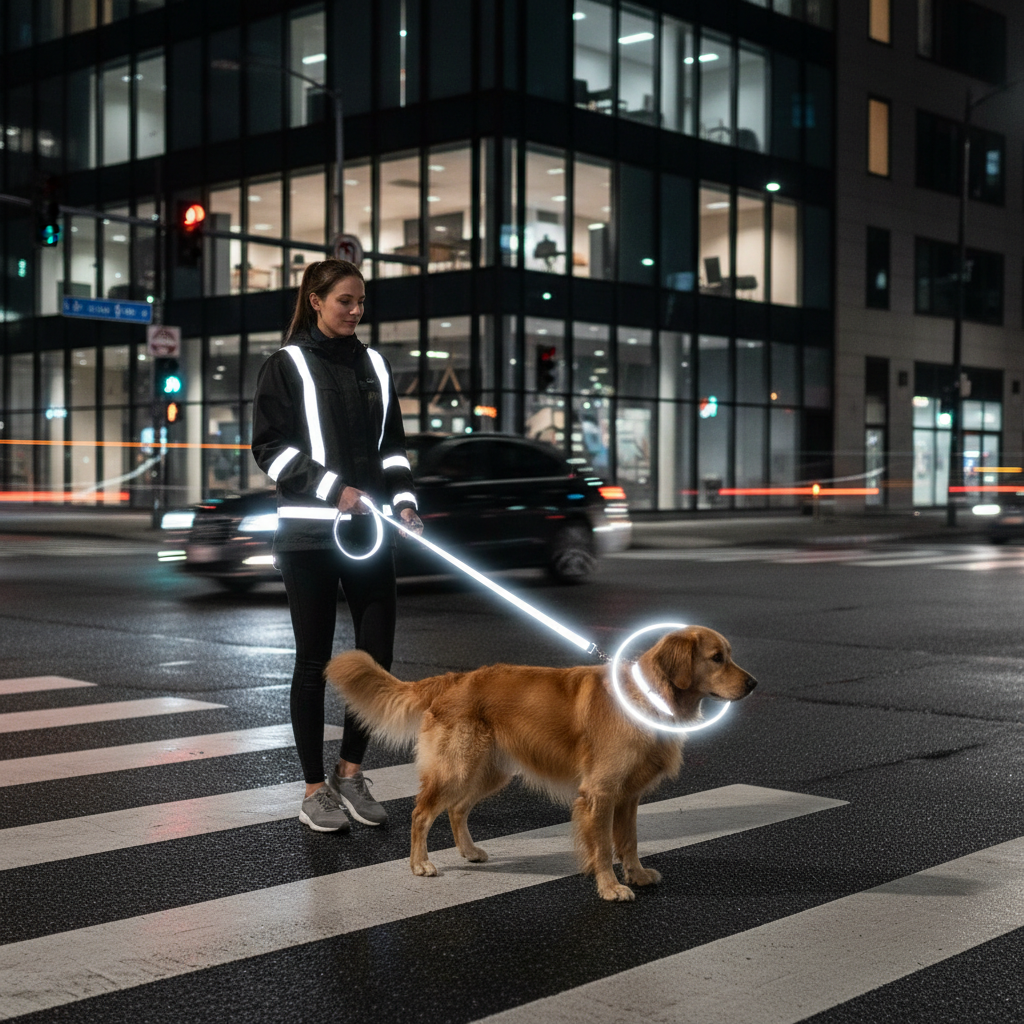
A small maintenance tip that helps: wipe the reflective panels occasionally, especially after rain or muddy walks, and inspect stitching around the D-ring for early wear.
When to consider professional help (trainer or vet)
A dog reflective collar for night walking supports visibility, but it does not solve behavior or fit problems that create risk.
- If your dog lunges at cars, bikes, or people, a certified trainer can help with impulse control and leash manners.
- If your dog coughs, gags, or shows neck discomfort in a collar, a veterinarian can advise whether a harness is safer for your dog’s anatomy.
- If your dog frequently slips collars, ask a professional to evaluate fit and recommend secure options without over-tightening.
This is not about “overreacting,” it is about acknowledging that gear can only do so much when a dog’s movement is unpredictable.
Key takeaways before you buy
- Reflective works best with headlights, so it is excellent for street walking and crossings.
- Fit and stability matter as much as reflectivity, a twisting collar can hide the bright parts.
- Layering helps: reflective collar plus reflective leash, and sometimes a small light for dark trails.
- Routine beats upgrades: shortening leash at crossings and scanning driveways reduces surprises.
If you want one clean next step, choose a collar with broad reflective coverage, verify a two-finger fit, then do a quick “headlight test” by shining a flashlight from 20–30 feet away to see what actually lights up.
FAQ
What is the best dog reflective collar for night walking?
The best option is usually the one with wide reflective coverage that stays oriented on your dog’s neck and uses durable hardware. If it spins constantly or irritates skin, it will not perform well in real use.
Do reflective collars work in complete darkness?
They can be limited in very dark areas because reflective material needs an external light source to bounce light back. For unlit trails, adding an LED light or light-up collar often makes visibility more consistent.
Is a reflective harness safer than a collar at night?
It depends on your dog. Harnesses can improve control and keep reflective panels visible, but poor fit can cause rubbing. If your dog pulls hard, a harness may be more comfortable than pressure on the neck, and a vet can help if you are unsure.
How tight should a reflective collar be?
Most dogs do well with the two-finger rule between collar and neck. Too loose can let the collar rotate and reduce visibility, too tight risks discomfort and breathing issues.
Should I also buy a reflective leash?
In many street-walking situations, yes. The leash is the invisible tripwire for cyclists and runners, and making that line visible can prevent close calls even when your dog is easy to see.
Can I wash a reflective dog collar?
Usually yes, but follow the manufacturer’s guidance because some reflective coatings wear faster with harsh detergents or high heat. Even just wiping it down can help maintain reflectivity.
My dog’s collar reflects, but cars still pass close, why?
Visibility reduces risk, it does not control driver behavior. Consider route changes, crossing timing, adding a light for extra notice, and working on a predictable heel near traffic.
If you are trying to make night walks feel calmer, focus on a reflective collar that fits well, then build a simple setup around it, reflective leash, predictable crossing routine, and a backup light for darker routes can be the difference between “stressful” and “manageable.”