
Best slow feeder dog bowls are designed to slow gulping by forcing your dog to work around ridges, pockets, or mazes, which can make mealtime calmer and sometimes easier on digestion. If your dog finishes dinner in 20 seconds, hacks at the bowl, or spits kibble across the floor, a good slow feeder often makes an immediate, practical difference.
This topic matters more than people think because fast eating is rarely “just a bad habit.” It can show up alongside reflux, regurgitation, gassiness, stress, multi-dog competition, or simply a dog who’s very food-motivated. And yes, there’s a safety angle too: anything that encourages frantic gulping can increase the chance of choking or vomiting in some dogs.
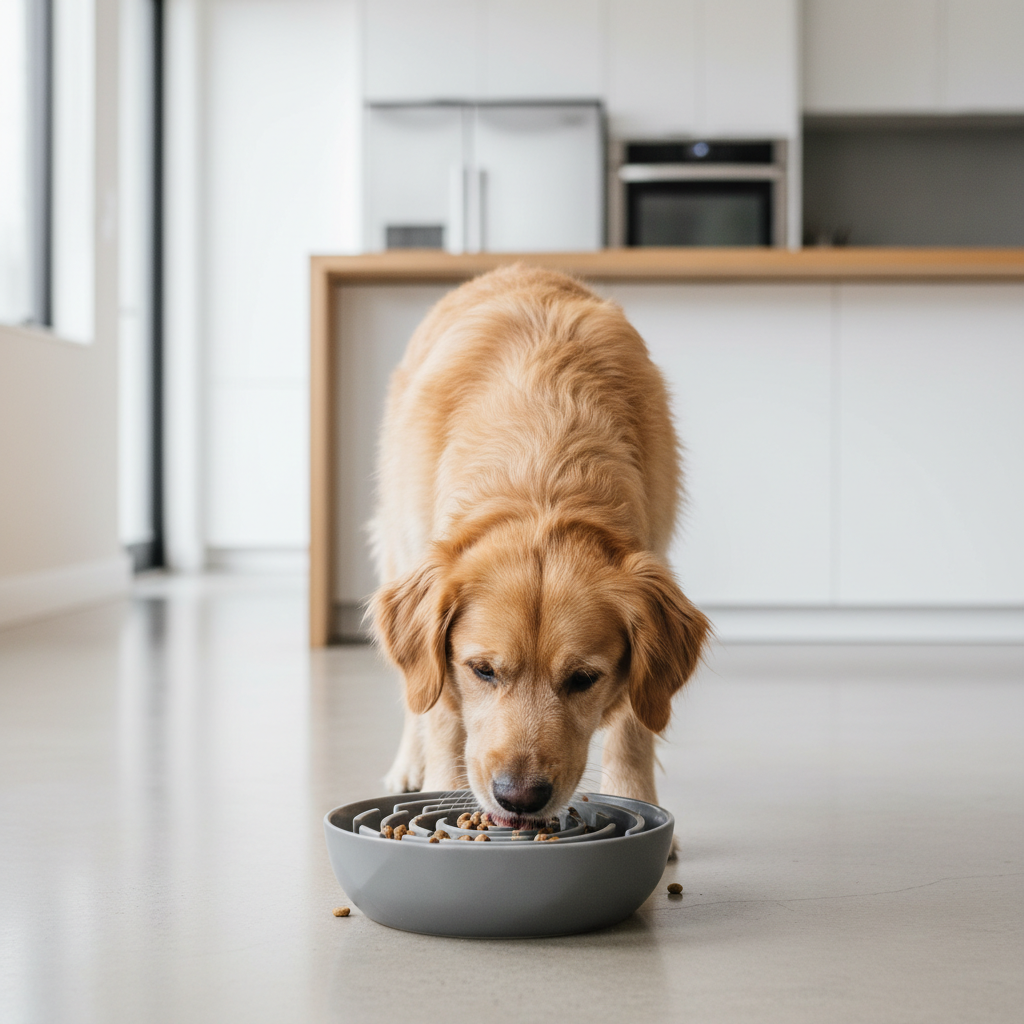
Still, not every “slow feeder” works for every dog. Some bowls are too shallow for flat-faced breeds, some are too light for strong noses, and some designs become annoying to clean so they end up in a cabinet. This guide focuses on how to pick the right style in 2026, what to avoid, and how to use one without turning dinner into a daily wrestling match.
What a slow feeder can (and can’t) do
A slow feeder’s main job is simple: add friction and decision-making to eating. Instead of vacuuming a bowl, your dog navigates obstacles, which usually stretches meal time and reduces gulping.
- Often helps with: scarf-and-barf (eating then vomiting), boredom eating, messy feeding, and dogs who get overstimulated at meals.
- May help with: mild regurgitation or gassiness tied to speed, especially when paired with smaller meals.
- Doesn’t “treat”: medical causes like parasites, pancreatitis, food intolerance, esophageal issues, or chronic vomiting. Those need a vet’s input.
According to the American Veterinary Medical Association (AVMA), persistent vomiting, repeated retching, or signs of distress warrant veterinary evaluation, not just a bowl change. If your dog regularly vomits, coughs while eating, or struggles to swallow, treat the slow feeder as a supportive tool, not the answer.
Quick self-check: do you actually need one?
Some dogs eat quickly and never have a problem. Others turn speed into chaos. Use this quick checklist to decide whether it’s worth buying one of the best slow feeder dog bowls, or whether a simpler tweak will do.
- Your dog finishes a meal in under a minute, then looks uncomfortable or paces.
- You frequently see kibble inhaled without chewing, or hear coughing/hacking during meals.
- Vomiting happens soon after eating, especially when meals are large.
- Mealtime triggers frantic behavior, whining, guarding, or competition with other pets.
- Your dog pushes the bowl around, flips it, or creates a “kibble snowstorm.”
If none of these sound familiar, you might be better served by portion control, a better bowl stand height, or simply spreading feeding out through training rewards.
Types of slow feeders in 2026 (and who they fit)
There are a few common styles, and the “best” is usually the one that matches your dog’s face shape, eating intensity, and what you’re feeding.
Maze bowls (plastic or silicone)
Classic labyrinth ridges. Great for kibble, decent for some wet food, and usually the easiest entry point for first-time users.
- Best for: most medium/large dogs, moderate to fast eaters
- Watch for: very deep mazes can frustrate small dogs or seniors
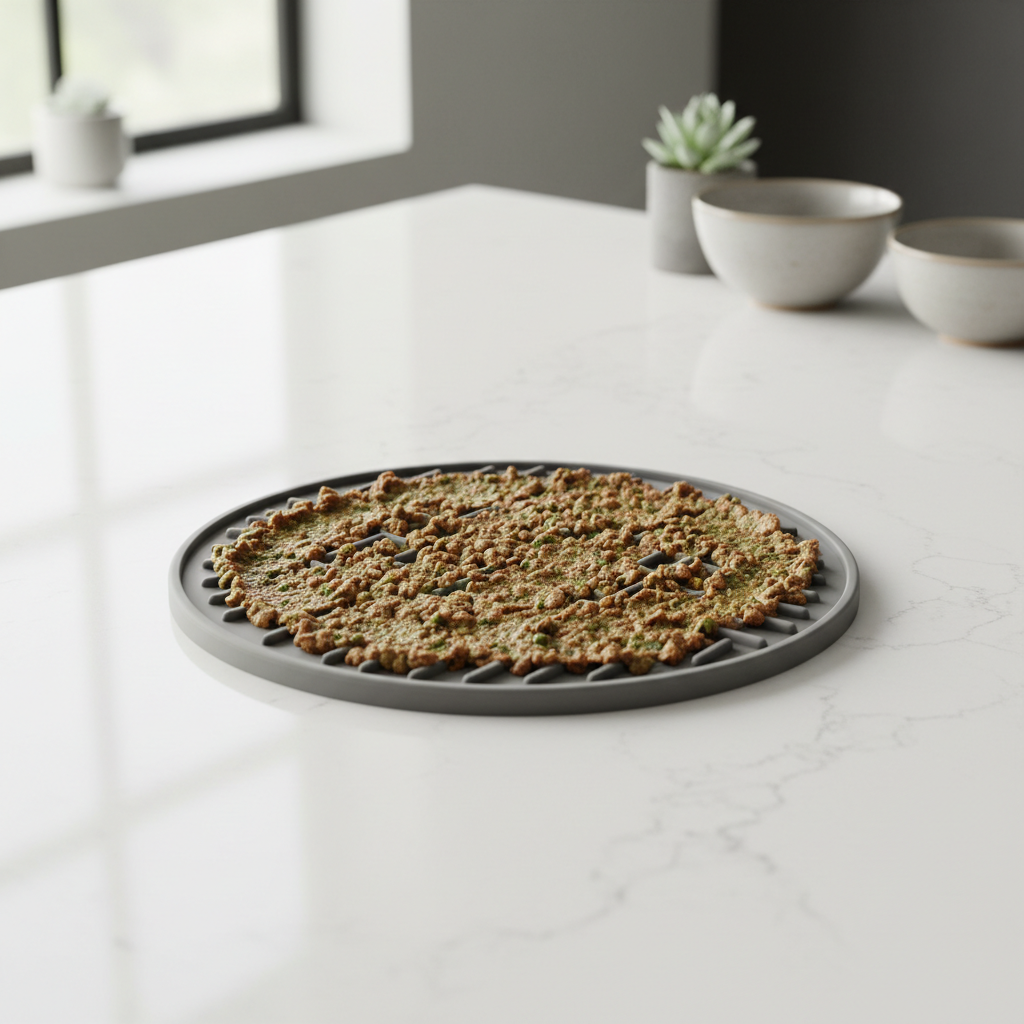
Lick mats and slow-feed trays
Flat, textured surfaces that encourage licking rather than crunching. They’re more “calm-down” tool than speed-control for kibble.
- Best for: wet food, toppers, anxiety-prone dogs
- Watch for: chewers who shred silicone, and dogs who need larger meal volume
Stainless + insert hybrids
These combine stainless steel with a removable slow-feed insert. In real households, this can be a sweet spot: weight + hygiene + easier cleaning.
- Best for: strong pushers, owners who hate scrubbing plastic
- Watch for: insert fit, and whether edges trap food
Puzzle feeders and treat-dispensing toys
Not a “bowl,” but often more effective for dogs who inhale food out of excitement. You trade speed for problem-solving.
- Best for: high-energy dogs, dogs who need enrichment
- Watch for: time commitment, noise, and multi-dog households
How to choose: size, material, stability, and cleaning
When people say a slow feeder “didn’t work,” it’s often a mismatch in one of these boring details.
- Capacity: The bowl should hold the full meal without piling food into one corner. Overfilling defeats the maze.
- Depth: Shallow is often easier for small dogs and flatter faces; deeper patterns can slow big gulpers but can frustrate others.
- Material: Food-grade silicone and stainless tend to be popular for smell resistance; hard plastic can be fine but replace if you see scratches.
- Non-slip base: A grippy bottom matters more than fancy patterns, especially on tile.
- Cleaning reality: Tight grooves look cool online, then become a weekly grime project. If it’s not easy to clean, it won’t get used.
According to the U.S. Food and Drug Administration (FDA), damaged food-contact surfaces can be harder to clean effectively, so if a bowl becomes heavily scratched or cracked, replacing it is a reasonable precaution.
Comparison table: matching bowl style to common scenarios
If you’re browsing the best slow feeder dog bowls, this quick table helps narrow your choice without overthinking every product listing.
| Dog / feeding scenario | What usually works | What to avoid |
|---|---|---|
| Very fast kibble gulper | Deeper maze bowl, stainless + insert hybrid | Ultra-shallow trays that don’t slow much |
| Flat-faced breed (pug, bulldog-type) | Wide, shallow slow feeder; simple ridges | Narrow channels that block access |
| Wet food or mixed meals | Lick mat, slow-feed tray, wide maze bowl | Deep, tight mazes that trap residue |
| Strong “bowl pusher” | Heavy base, suction-style tray, rubber bottom | Lightweight plastic bowls that skid |
| Multi-dog home with competition | Separate feeding zones; puzzle feeder per dog | One shared area, or bowls easy to steal |
How to introduce a slow feeder without frustration
The goal is slower eating, not a dog that gives up and stares at you like you betrayed them. A short ramp-up usually prevents that.
- Start easy: Use a simpler pattern or don’t fully pack food into every groove on day one.
- Moisten kibble if needed: For some dogs, slightly damp kibble clumps less and reduces frantic snorting through channels.
- Use smaller portions: Split the meal into two rounds so your dog doesn’t feel “behind” the whole time.
- Supervise early: If your dog chews the bowl, tries to flip it, or seems panicked, switch styles.
- Pair with calm routines: Put the bowl down after a sit, use a consistent spot, and keep other pets away.
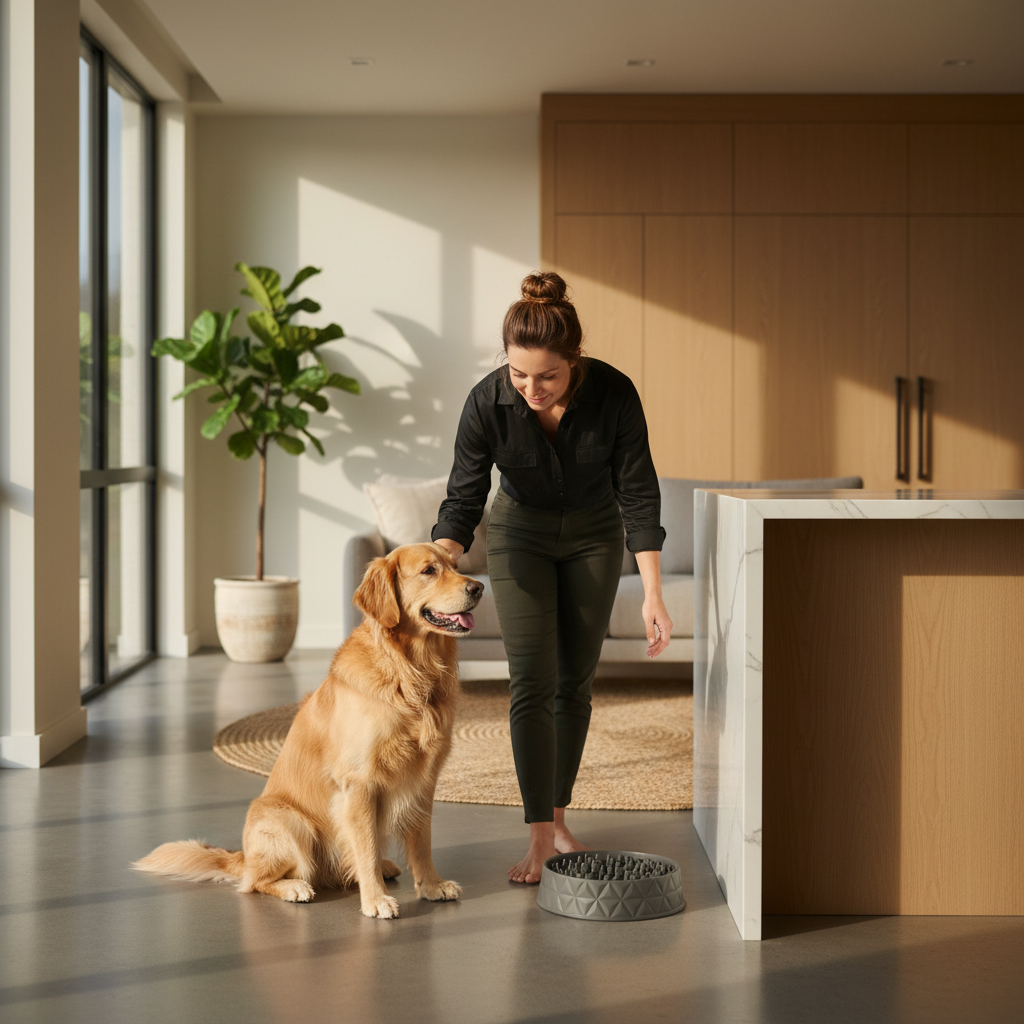
Key point: If your dog becomes more frantic, the bowl is too hard or the context is too competitive. In many homes, fixing mealtime environment helps as much as the hardware.
Common mistakes (the stuff that wastes money)
- Buying the most extreme maze first: More obstacles isn’t always better, it can trigger frustration and flipping.
- Ignoring bowl height and posture: Some dogs do better with a slight lift, but it varies by size and body structure.
- Overfilling grooves: If food covers the pattern, your dog still gulps, just messier.
- Using damaged bowls: Deep scratches can hold odor and residue, and some dogs will pick at rough edges.
- Expecting it to fix chronic GI issues: If symptoms persist, a vet should rule out medical causes.
When to talk to a veterinarian (don’t “bowl” your way past a real issue)
A slow feeder is a tool, not a diagnosis. If any of the following shows up, it’s smart to consult a veterinarian, especially if your dog is a senior, very young, or has a known condition.
- Repeated vomiting, blood in vomit, or vomiting unrelated to meal timing
- Frequent coughing, gagging, or choking during meals
- Weight loss, poor appetite, or sudden changes in drinking
- Swollen belly, unproductive retching, or obvious pain, which can be urgent
According to the American Animal Hospital Association (AAHA), changes in vomiting frequency, appetite, or behavior can be signs worth evaluating, and timing matters if symptoms escalate quickly.
Conclusion: what I’d prioritize when buying in 2026
Shopping for the best slow feeder dog bowls gets easier when you stop chasing the “most advanced” design and focus on fit, stability, and cleanability. For most dogs, a medium-difficulty maze bowl with a grippy base works well, and a stainless hybrid makes sense if you want something heavier and easier to keep fresh.
If your dog is frustrated, switch to a simpler pattern or use a tray or lick mat for part of the meal, then build up. And if fast eating comes with repeated vomiting, coughing, or other red flags, a bowl change should sit alongside professional advice, not replace it.
Action step: Measure your current bowl diameter, pick one level easier than you think you need, then adjust difficulty after a week based on how your dog behaves, not how it looks on day one.
FAQ
- Do slow feeder bowls help prevent bloat?
They can slow eating, which may reduce gulping in some dogs, but bloat risk depends on multiple factors. If you’re worried because your dog is deep-chested or has a history, ask your veterinarian what prevention steps make sense. - What if my dog refuses to eat from a slow feeder?
That usually means the pattern is too hard or the dog is stressed at meals. Try a simpler design, spread food less densely, or mix in a lick mat for part of the meal so it feels achievable. - Are silicone slow feeders safe for chewers?
Many are durable, but determined chewers may tear silicone. Supervise early, and if your dog starts shredding, switch to a heavier bowl or a stainless option. - Can I use wet food in a slow feeder dog bowl?
Yes, but wide grooves or trays clean up easier than deep mazes. Rinse promptly after meals so residue doesn’t harden in tight channels. - How do I clean a slow feeder properly?
Warm water and dish soap usually work, and many options are dishwasher-safe. If grooves hold odor or film, a bottle brush helps; replace bowls that are cracked or heavily scratched. - My dog still eats fast with a slow feeder, what now?
Try smaller portions, a more stable bowl, or a slightly more challenging pattern. For some dogs, puzzle feeders or splitting meals into multiple short sessions works better than switching bowls repeatedly. - What size slow feeder should I buy?
Big enough to hold the meal without mounding, and wide enough for comfortable access. For small dogs, oversized bowls can actually speed eating because food spreads too thin and becomes easy to lick up.
If you’re sorting through dozens of similar listings and want a quicker path, focus on your dog’s eating style, face shape, and what you feed most days, then choose one slow feeder that you’ll actually clean and use consistently, that tends to beat “the fanciest maze” sitting unused in a drawer.