
guinea pig timothy hay cubes compressed products can be a convenient add-on, but they’re also one of those items people buy expecting them to “replace hay,” then wonder why their guinea pig still wastes hay or gets picky.
Here’s the practical reality: cubes are usually a supplement to long-strand Timothy hay, not a substitute. They can help with enrichment, travel, and a bit of extra chewing, yet they don’t always deliver the same gut-motility and dental benefits you get from loose hay that’s easy to pull, sort, and graze on all day.
This guide breaks down what compressed Timothy hay cubes are, why some guinea pigs love them and others ignore them, how to choose safer options, and how to feed them without accidentally pushing your pet toward constipation, weight gain, or less hay intake.
What “compressed Timothy hay cubes” really are (and what they are not)
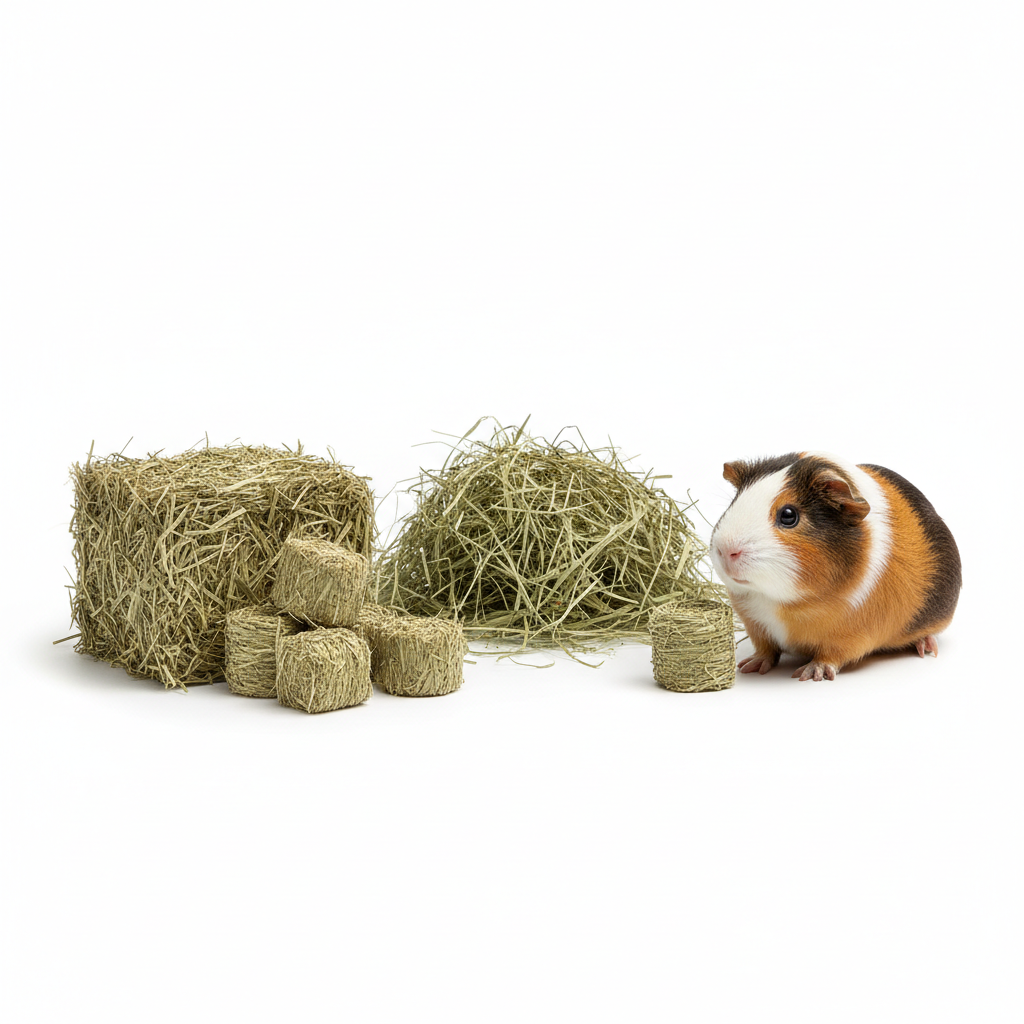
Compressed Timothy hay cubes are typically chopped or milled Timothy hay that’s pressed into dense blocks. Many are marketed for small animals, horses, or “all herbivores,” so the label matters.
What they are: a fiber-forward chew that can add variety, reduce mess, and be easier to store than loose hay.
What they are not: a perfect 1:1 replacement for unlimited long-strand hay. Long strands encourage more natural grazing behavior and tend to keep the digestive system moving in a steadier way.
According to the American Veterinary Medical Association (AVMA), guinea pigs require a consistent, species-appropriate diet and routine veterinary care; for most homes that starts with unlimited grass hay plus measured pellets and fresh vegetables, then treats as true extras.
Why guinea pig owners choose cubes (the common real-world reasons)
Most people don’t buy cubes “just because.” It’s usually one of these situations:
- Mess and waste frustration: your guinea pig pulls hay out, pees on it, then refuses it.
- Busy routines: you want something your pet can nibble while you refresh hay less often.
- Travel or emergency kits: cubes store well and are easy to portion.
- Enrichment: some pigs enjoy gnawing a dense cube, especially when bored.
- Selective hay eating: a picky guinea pig might ignore stems but accept a cube texture.
But the flip side shows up quickly: cubes can be hard, dusty, or “too filling,” and some guinea pigs will choose cubes over loose hay, which is not the direction you want.
Quick self-check: are cubes a good fit for your guinea pig right now?
Use this as a fast decision filter before you add compressed cubes to the routine.
Green light (usually okay to try)
- Your guinea pig already eats unlimited long-strand grass hay daily.
- Poops look normal in size and quantity, appetite stays steady.
- You want cubes for enrichment or short-term convenience, not as a main diet item.
- Your pet chews well and has no known dental pain.
Yellow light (try cautiously, watch closely)
- Your guinea pig is overweight, older, or less active.
- You’re troubleshooting picky hay habits and might accidentally reduce hay availability.
- You have a pig that gulps treats fast or gets possessive around food.
Red light (skip unless a vet suggests otherwise)
- History of GI stasis, constipation, bloat, or frequent soft stool episodes.
- Dental disease signs: drooling, messy chin, dropping food, reduced chewing.
- Any situation where your guinea pig already struggles to eat enough hay.
According to the American Animal Hospital Association (AAHA), changes in appetite and stool in small mammals can become serious quickly, so if you notice a sudden shift, it’s worth contacting a vet instead of “waiting it out.”
How to choose safer compressed Timothy hay cubes
This is where people get burned, because “Timothy” on the front doesn’t guarantee the cube is a good guinea pig product.
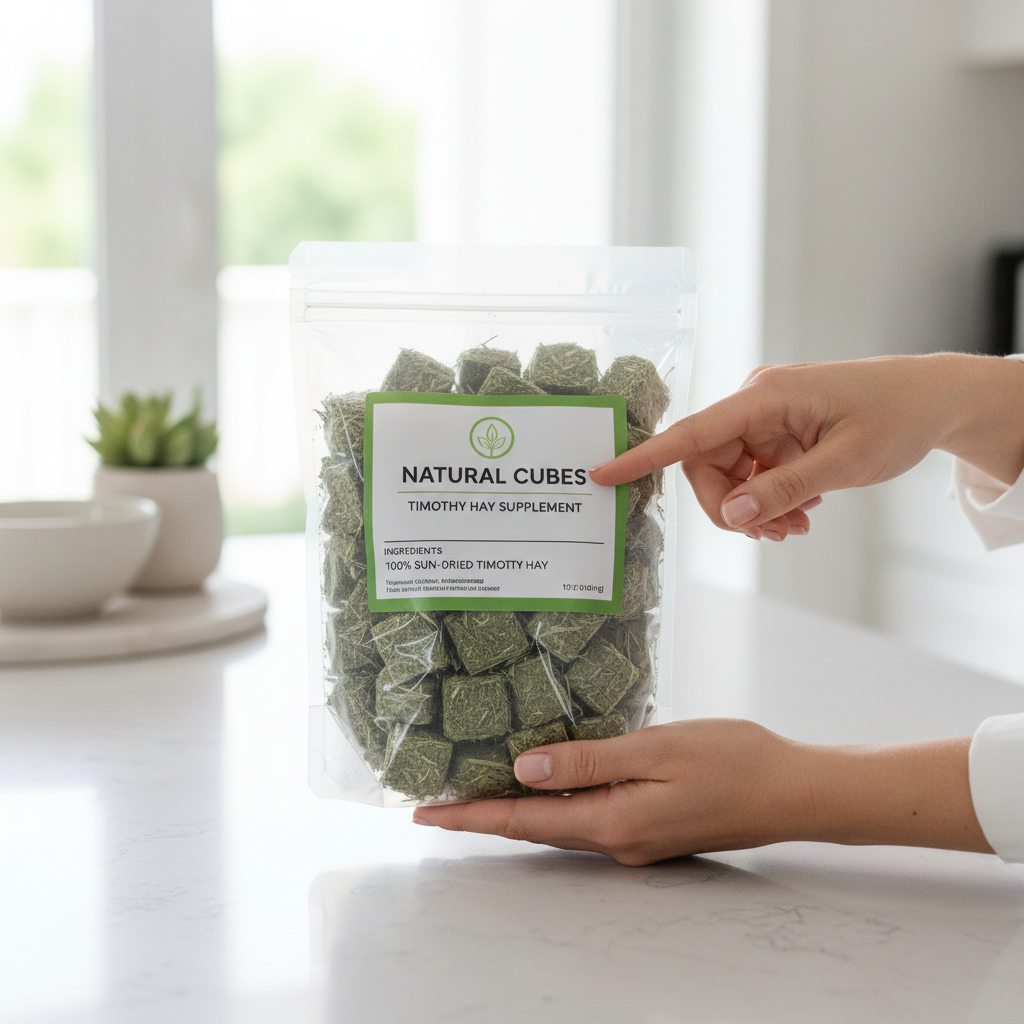
- Look for grass-hay-only: ideally Timothy hay as the single ingredient, no molasses, grains, seeds, or fruit bits.
- Check the target animal: cubes made for horses may be fine in theory, but size, hardness, and dust level can be wrong for guinea pigs.
- Smell and feel: fresh hay smells clean and grassy, not sour; cubes should feel firm but not rock-like, and shouldn’t crumble into dust clouds.
- Avoid “alfalfa cubes” for most adults: alfalfa is higher in calcium and calories, which can be a poor fit for many adult guinea pigs.
- Prefer reputable packaging: sealed bags with batch/lot info and clear storage guidance tend to indicate better quality control, though it’s not a guarantee.
Feeding compressed cubes without sabotaging hay intake
The best approach is to treat cubes like a controlled chew, not a bowl that sits out all day.
Practical starting plan
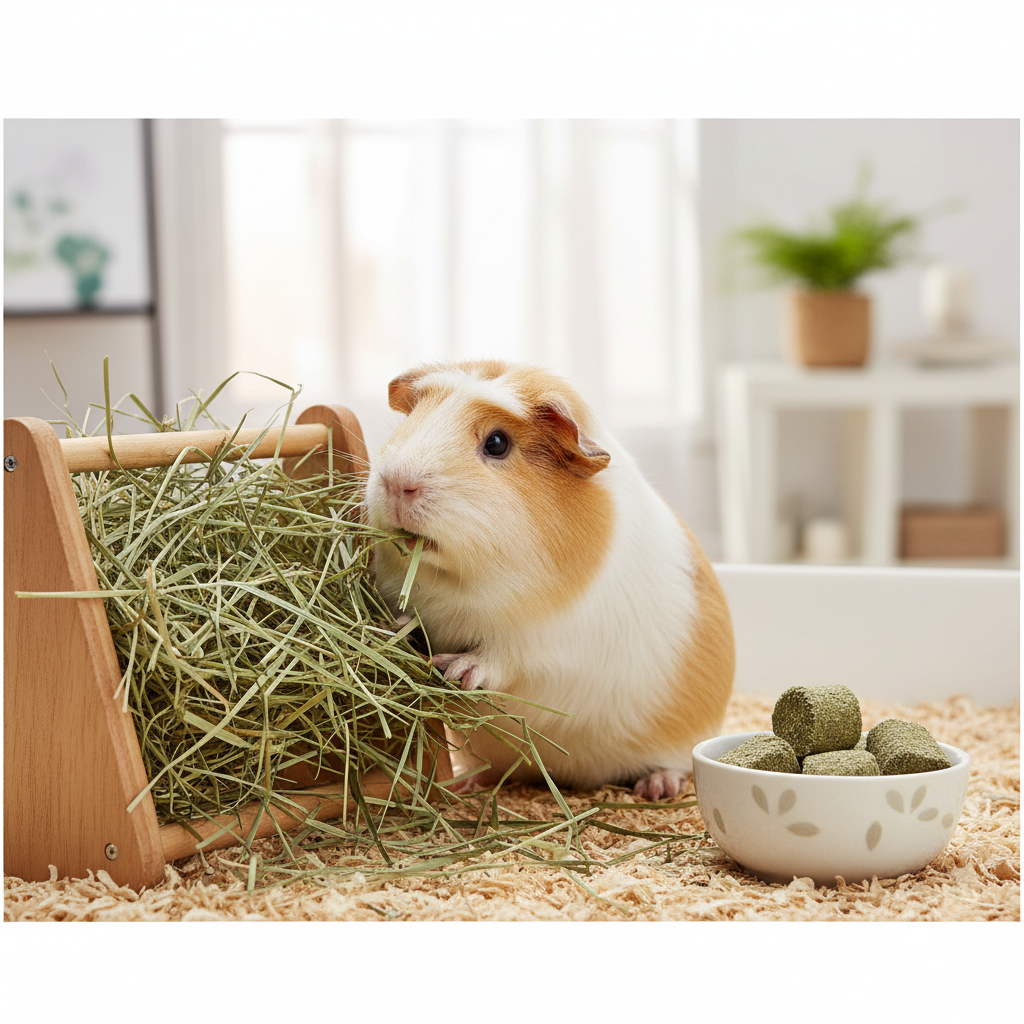
- Keep unlimited loose Timothy hay available at all times, in the same spot your guinea pig already trusts.
- Start with a small piece of one cube once per day, then reassess after a few days.
- Offer cubes after your guinea pig has been grazing hay, not as the first “fun” food of the day.
- If your pig chooses cubes and ignores loose hay, reduce cubes immediately and reset the habit.
Should you soak cubes?
Soaking can reduce hardness and may help some guinea pigs who struggle with very dense cubes. The downside is soaked cubes spoil faster and can become unappealing quickly.
- Soak only what will be eaten promptly, discard leftovers.
- If your guinea pig has dental issues or pain, soaking is not a fix, it’s just a workaround while you talk with a vet.
Key point: if you’re using guinea pig timothy hay cubes compressed products because your pet “won’t eat hay,” you’ll usually get better results by improving hay freshness, presentation, and variety first.
Cubes vs loose hay vs pellets: a simple comparison
Here’s a quick way to think about where cubes fit in a typical guinea pig diet.
| Option | Best for | Limitations | How to use |
|---|---|---|---|
| Loose long-strand Timothy hay | Daily gut motility, natural grazing, dental wear | Messy, can be wasted if bedding/habits are off | Unlimited, always available |
| Compressed Timothy hay cubes | Enrichment, travel, portionable chewing fiber | Can be too hard, dusty, or too “rewarding” | Small add-on, monitor hay intake |
| Timothy-based pellets | Vitamins (including stabilized C), consistency | Easy to overfeed, can reduce hay appetite | Measured daily serving per vet/brand guidance |
Common mistakes (and what to do instead)
- Mistake: Using cubes as the main “hay.”
Do this instead: keep long-strand hay unlimited, use cubes like a treat-level add-on. - Mistake: Buying the cheapest cube and ignoring dust.
Do this instead: shake out a cube over a dark surface, if you see heavy dust, skip that bag. - Mistake: Assuming harder means better for teeth.
Do this instead: prioritize steady hay chewing; overly hard cubes can discourage chewing or stress a painful mouth. - Mistake: “My pig loves cubes, so I’ll give more.”
Do this instead: treat enthusiasm as a reason to portion more carefully, not less.
When to talk to a vet (don’t wait on these signs)
Food choices and “chew items” sound simple, but guinea pig digestion and dental health can turn quickly. Consider professional help if you see:
- Fewer or smaller droppings, or no droppings
- Refusing hay, chewing then dropping food, or visible drool
- Sudden weight loss, lethargy, hunched posture
- Ongoing diarrhea or repeated soft stool
According to the American Veterinary Medical Association (AVMA), establishing a relationship with a veterinarian who sees small mammals is an important part of responsible care; if your guinea pig shows appetite or stool changes, a vet can help you sort diet from illness.
Conclusion: where compressed cubes fit in a healthy routine
Guinea pig timothy hay cubes compressed options can be genuinely useful when you treat them like a controlled add-on, not a dietary shortcut. If your guinea pig already eats plenty of loose hay, cubes can add variety, reduce waste in certain setups, and make travel easier.
If you want one simple action step, start by keeping hay access generous and fresh, then introduce cubes in tiny portions while watching droppings and hay consumption. If anything looks off, scale back and consider a vet check, it’s usually the faster path than troubleshooting alone.
FAQ
Can compressed Timothy hay cubes replace loose hay for guinea pigs?
Usually no. Most guinea pigs do best with unlimited long-strand grass hay, while cubes work better as a supplemental chew or travel-friendly option.
How many Timothy hay cubes should I give my guinea pig per day?
It depends on size, activity, and what else is in the diet, but many owners do best starting with a small piece daily and adjusting only if hay intake stays strong and stool stays normal.
Are guinea pig Timothy hay cubes compressed products safe for young guinea pigs?
Many are likely fine in small amounts, but young guinea pigs often have different nutrition needs and may be eating alfalfa-based items. If you’re unsure, ask a vet who sees small mammals before making cubes a routine.
Should I soak Timothy hay cubes before feeding?
Soaking can help if cubes are very hard or your guinea pig struggles with chewing, but soaked cubes spoil faster. If chewing seems painful, a dental exam matters more than soaking.
Why does my guinea pig prefer cubes and ignore hay?
Cubes can feel like a “treat” because they’re dense and consistent. In many cases, reducing cubes and improving hay freshness, placement, and variety helps re-balance preferences.
What ingredients should I avoid in Timothy hay cubes?
Avoid added sugars like molasses, added grains, seeds, or dried fruit mixes. For most adult guinea pigs, also be cautious with alfalfa-heavy cubes unless a vet suggests them.
Do hay cubes help with dental wear?
Chewing fiber supports normal tooth wear, but cubes aren’t a magic dental tool. If you suspect dental problems, chewing more hard items can backfire, so a vet evaluation is the safer move.
If you’re trying to reduce hay mess or you need a more portable fiber option, compressed cubes can be a nice tool to have, just keep them in the “small and monitored” category and let long-strand hay stay the main event.