
Cat scratching post durable is one of those search phrases people type after they’ve watched a wobbly post tip over, shed rope all over the floor, and still fail to keep a cat away from the couch.
A truly durable, tall scratching post does two jobs at once: it holds up under repetitive clawing, and it feels safe enough that your cat actually uses it. If either part fails, cats go back to the next best option, usually upholstered furniture.
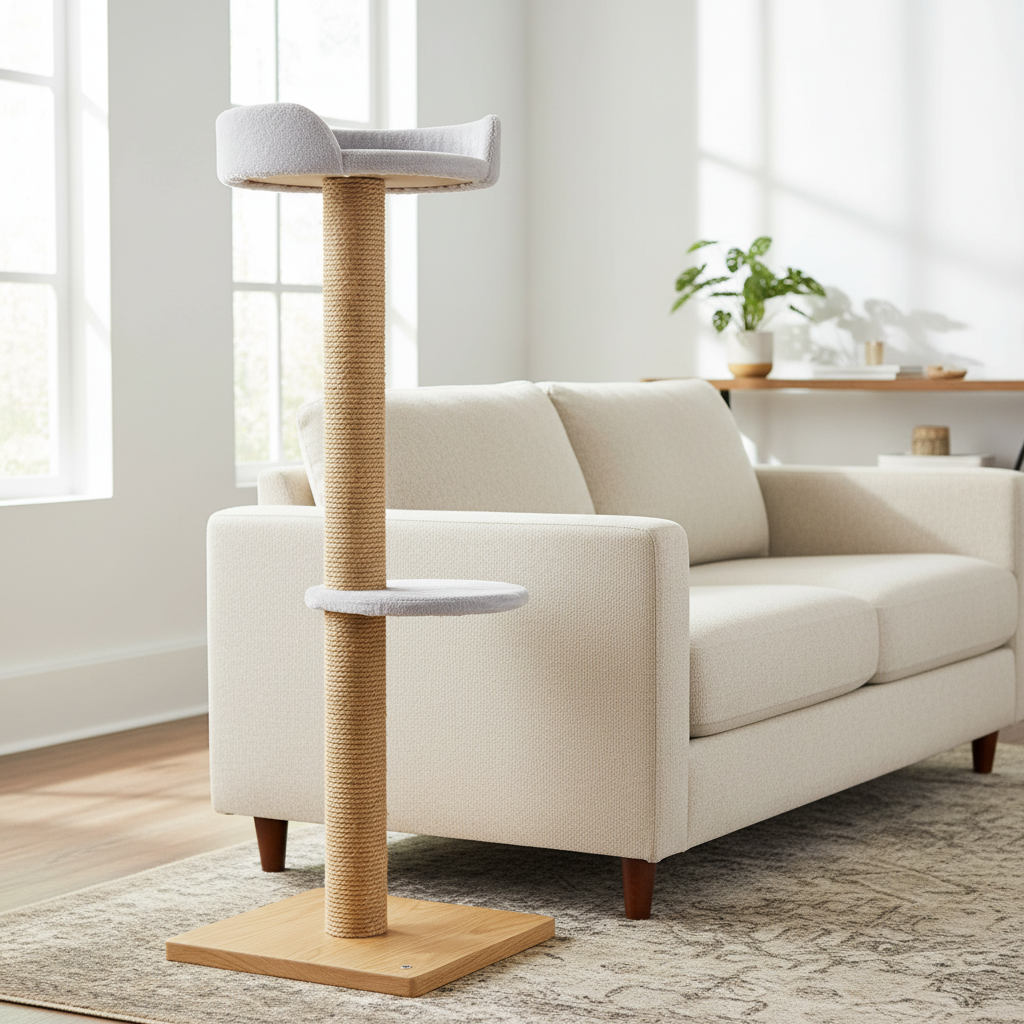
This guide breaks down what “durable” usually means in real-world materials, how tall is tall enough for a full-body stretch, and what to check before you spend money on another post that lasts a month.
What “Durable” Really Means for a Scratching Post
Durability is less about marketing words and more about how the post fails over time. In most homes, posts die in three ways: the wrap unravels, the top wobbles, or the base slides.
- Surface wear (sisal/rope/fabric): The scratching surface takes the direct damage. A good post shows fuzzy wear before it shows structural failure.
- Core integrity (tube/wood): If the inner column bends or compresses, cats feel instability and quit using it.
- Hardware holding power: Loose bolts are the silent killer of “durable.” If you can tighten it weekly, you can often double its usable life.
According to the American Society for the Prevention of Cruelty to Animals (ASPCA), scratching is a normal cat behavior used for claw maintenance, stretching, and marking. So the goal is not stopping scratching, it’s channeling it to a structure that can take the abuse.
How Tall Should a Tall Scratching Post Be?
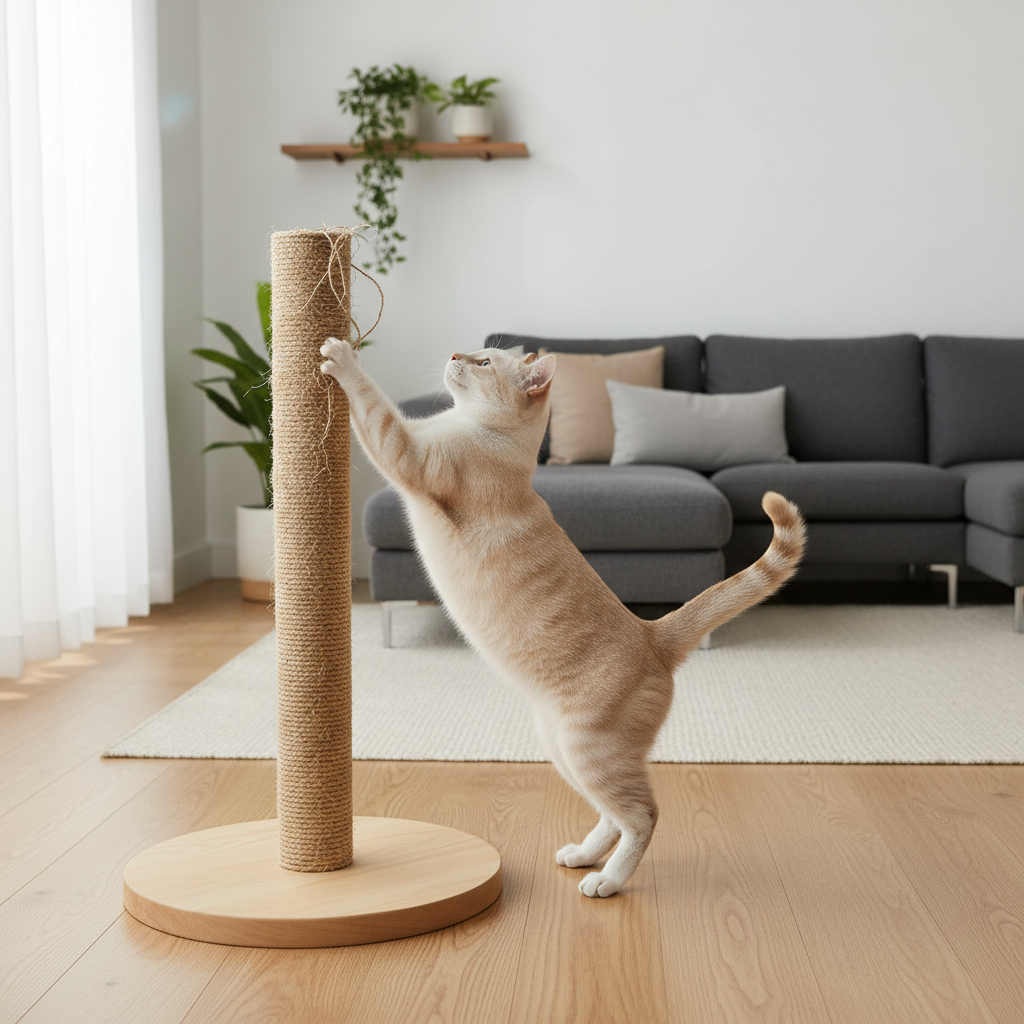
“Tall” is not a fixed number because cats vary, but the practical test is simple: can your cat stand on hind legs and fully extend without running out of post?
As a rule of thumb, many adult cats do best with a post in the 28–36 inch range, while larger breeds or cats that really love vertical stretching may prefer 36+ inches. If you have a kitten, buying taller early can still make sense if the base is stable.
Quick height fit check
- If your cat’s paws hit the top quickly, the post is “short,” even if the listing says tall.
- If your cat chooses door frames or sofa arms, you often need more height and less wobble, not more toys attached.
Materials That Hold Up (and What Usually Fails)
Most durability decisions come down to the scratching surface and the base. Here’s a plain-English comparison that matches what people see at home.
| Component | Common options | Durability signals | Typical weak points |
|---|---|---|---|
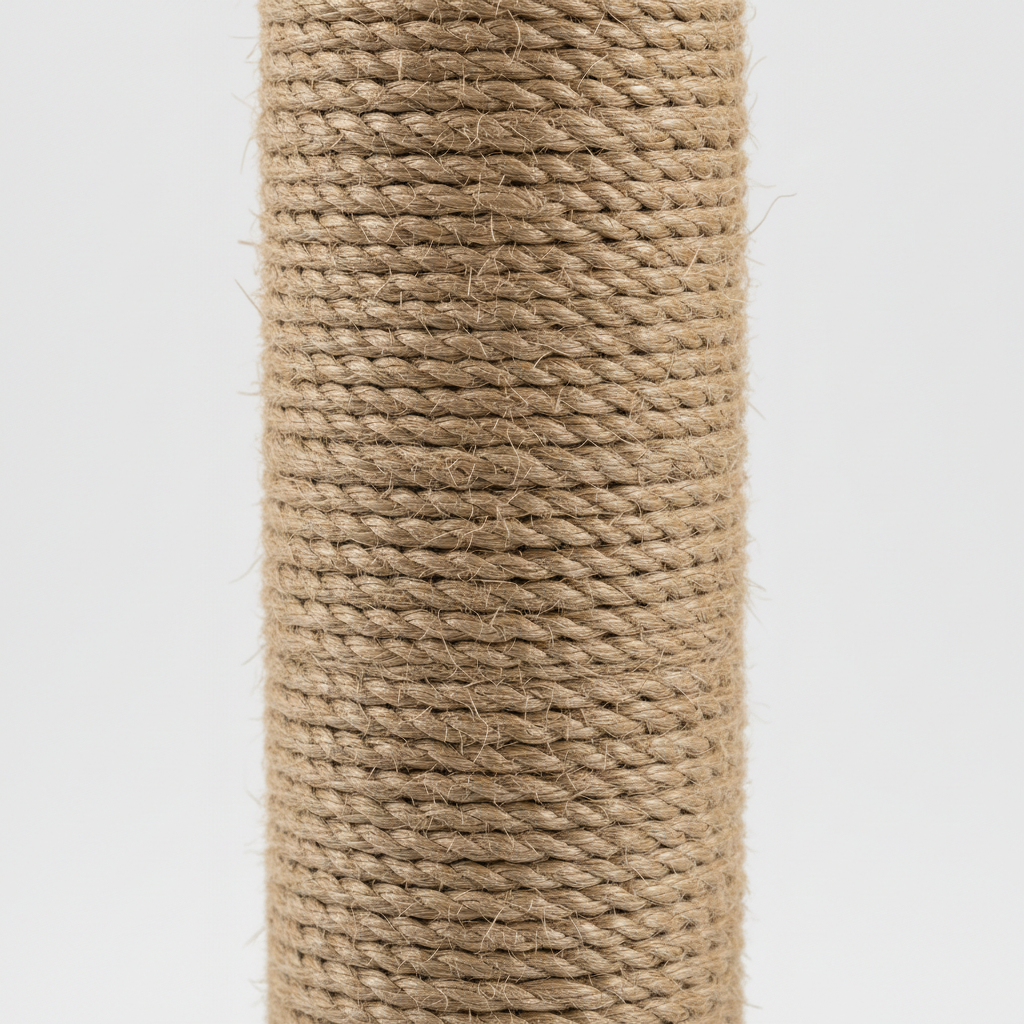
| Scratching surface | Sisal rope, sisal fabric, carpet | Tight wrap, thick rope, minimal seams | Loose rope ends, fabric peeling, carpet snagging |
| Post core | Cardboard tube, hollow tube, solid wood | Dense core, thicker diameter, no flex | Crushing, bending, wobble at joint |
| Base | Particle board, plywood, solid wood | Wide footprint, heavy weight, rubber feet | Sliding, tipping, stripped screw holes |
| Hardware | Single bolt, multi-bolt plates | Metal inserts, washers, locking nuts | Bolts loosening, wobble returning fast |
Key takeaway: A cat scratching post durable enough for daily use usually combines a thick, tight sisal surface with a wide, heavy base. Fancy add-ons rarely compensate for a shaky structure.
A Fast Self-Check Before You Buy (or Before You Replace)
If you’re trying to decide whether you need a new post, or just a better setup, this checklist helps separate “bad product” from “bad placement.”
- Wobble test: Push the post lightly at the top. If it rocks easily, your cat probably feels it too.
- Stretch test: Watch one full scratch session. If your cat can’t fully extend, the height is likely wrong.
- Preference test: Your cat scratching the sofa arms more than the post often means the post is either too short or too unstable, not that your cat is “stubborn.”
- Wear pattern: If damage concentrates at one seam or one loose rope end, you’re seeing a construction issue that will keep repeating.
- Floor behavior: If the base slides on hardwood, you may only need a grippy mat, furniture pads, or a heavier base.
How to Choose a Durable Tall Post: Practical Buying Criteria
Product listings can be vague, so focus on a few signals that are harder to fake in photos and specs.
1) Prioritize stability over “features”
- Look for a wide base relative to height; tall plus narrow often tips.
- Heavier is usually better, especially if your cat launches into it.
2) Check scratching surface construction
- Tightly wrapped sisal rope tends to wear more gracefully than loose wraps.
- Minimal exposed staples and fewer seams means fewer failure points.
3) Think about where it will live
- Near the couch or a doorway can work well because cats scratch to mark and stretch in high-traffic zones.
- If you already know your cat likes vertical scratching, don’t gamble on a short combo tree “just to try.”
Setup and Training: Making the Post the “Obvious Choice”
Even a great post can sit unused if it’s placed like a piece of decor instead of a tool. The goal is to make the right scratch easy and rewarding.
- Put it where the problem happens: Start within a few feet of the furniture your cat targets, then gradually move it only if needed.
- Use positive cues: Catnip or silvervine may help some cats, but not all. A short play session ending near the post can be more reliable.
- Reward timing matters: Give a treat or attention right after your cat scratches the post, not minutes later.
- Make it feel safe: If the base slips once, some cats remember and avoid it, so add a non-slip mat early.
According to the American Veterinary Medical Association (AVMA), positive reinforcement supports desirable pet behaviors. In practice, that means you’ll get more mileage from small, consistent rewards than from scolding after the fact.
Common Mistakes That Make “Durable” Posts Fail Faster
Some problems look like weak materials, but they’re really avoidable setup issues.
- Buying tall without buying stable: Extra height increases leverage, so the base must scale up too.
- Ignoring maintenance: Many posts only need a bolt tightened occasionally. If the wobble grows slowly, people miss it until cats abandon the post.
- Replacing too late: If rope is hanging loose, it can snag claws. Trim frays and retire posts that feel unsafe.
- Overusing deterrent sprays on furniture: These can help in some cases, but if you don’t provide a satisfying alternative, scratching just relocates.
If you’re worried about claw injuries, mobility issues, or sudden behavior changes, it’s smart to check with a veterinarian or a qualified behavior professional because medical discomfort can show up as “random” scratching shifts.
Conclusion: A Durable Tall Post Is Mostly About Confidence
A cat scratching post durable enough to last is usually the one your cat trusts: tall enough for a real stretch, heavy enough that it never surprises them, and built with a scratching surface that wears slowly instead of falling apart.
If you want a simple next step, do two things this week: measure the height your cat actually uses when stretching, then test your current post for wobble and floor slip. Those two checks often make the buying decision obvious.
FAQ
What height counts as a tall scratching post for adult cats?
Many adult cats use 28–36 inches well, but “tall” really means your cat can fully extend without paws hitting the top. Larger cats may prefer 36 inches or more if the base stays stable.
Is sisal rope better than carpet for durability?
In many households, tightly wrapped sisal rope holds up longer and stays attractive as it wears. Carpet can work, but it may snag, fray unevenly, and some cats lose interest once it mats down.
Why does my cat ignore a new scratching post?
Placement and stability are common reasons. If the post wobbles or sits far from your cat’s preferred “territory” spots, they may choose furniture instead. Try moving it closer and rewarding any use.
How do I stop a tall post from tipping over?
Look for a wider/heavier base, add a non-slip mat, and tighten hardware. If your cat launches into the post at speed, a heavier base usually matters more than extra toys or platforms.
How often should I tighten the bolts on a scratching post?
There’s no universal schedule, but checking every couple of weeks is a reasonable habit, especially early on. If you notice wobble returning quickly, the hardware or internal inserts may be wearing out.
Can a scratching post be “too tall” for a cat?
Height alone is rarely the issue, stability is. A very tall post with a small base can feel risky, particularly for older cats or cautious personalities. When in doubt, choose stable and accessible over extreme height.
What if my cat scratches horizontally instead of vertically?
Some cats prefer horizontal scratchers (cardboard loungers or flat sisal pads). You can still keep a tall post for stretching, but adding a horizontal option often reduces furniture scratching faster.
Should I trim my cat’s nails if they scratch a lot?
Nail trims can reduce damage and accidental snags, but technique matters. If you’re unsure or your cat resists strongly, a groomer or vet clinic can show you safer handling.
If you’re trying to pick a durable tall post without overthinking specs, it often helps to share your cat’s size, scratching style (vertical vs. horizontal), and where the furniture scratching happens, then match those details to stability, height, and surface type for a more “buy once, keep longer” setup.