
cat water fountain quiet shopping usually starts after one annoying moment: the fountain you bought to help your cat drink more turns into a constant hum, a splashy mess, or both.
If you live in an apartment, work from home, or your cat startles easily, noise matters as much as filtration. And if the fountain is “quiet” but the water tastes off a week later, that’s not much of a win either.
This guide focuses on the real-world stuff people get stuck on: why fountains get loud, what “filtered” actually changes, how to keep water fresh without becoming a full-time fountain technician, and which features are worth paying for.
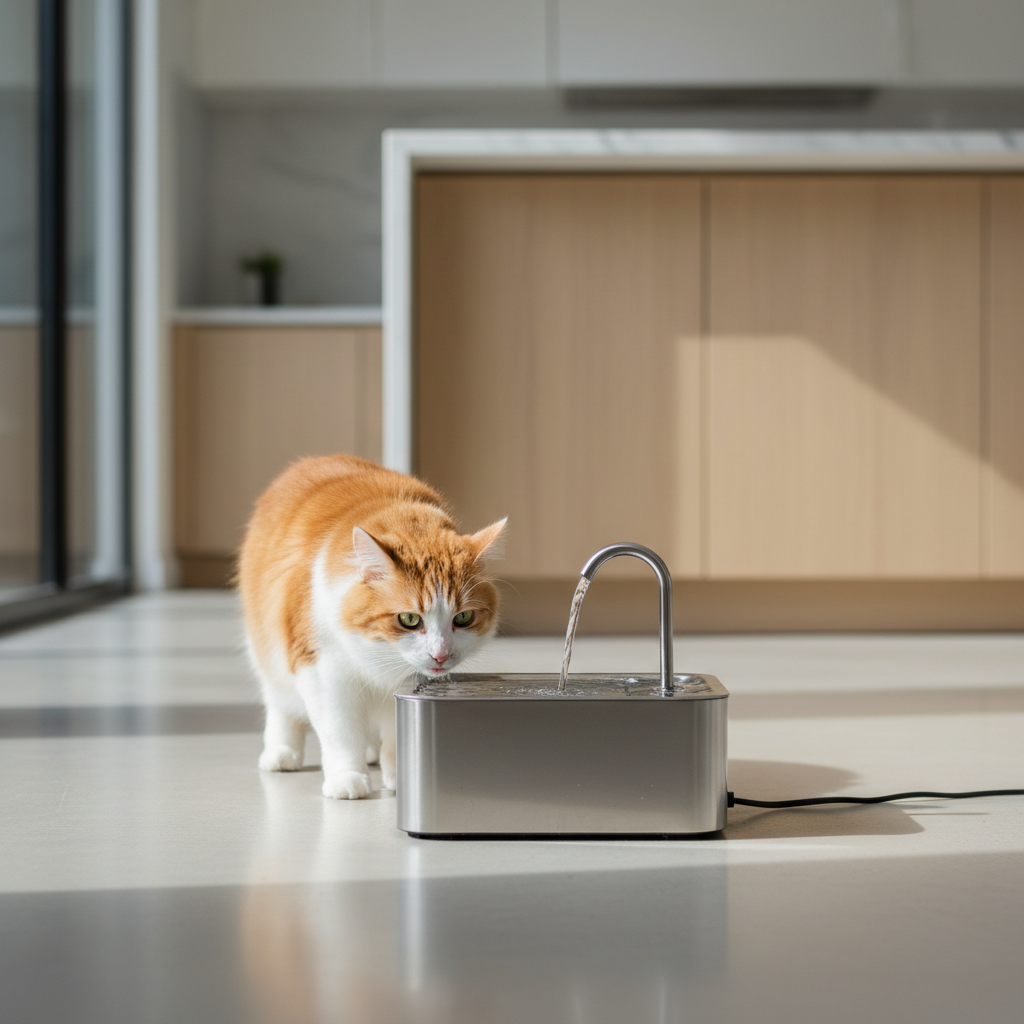
Why cat fountains get noisy (it’s usually not “a bad pump”)
Most noise problems come from setup, water level, or vibration, not a truly defective motor. A fountain can be marketed as whisper-quiet and still get loud in your home because the surface it sits on, the way the cord touches the base, and even tiny air bubbles change the sound.
- Low water level: the pump pulls air, you hear a harsher buzz, and the stream starts spitting.
- Vibration against hard floors: tile and thin laminate amplify hum, especially with lightweight plastic bases.
- Misaligned parts: lids, spouts, or filter trays not seated flush can rattle.
- Mineral scale and biofilm: buildup adds friction and reduces flow, which can make the pump work louder.
- “Waterfall” design choices: high drops and narrow spouts sound like a mini sink, even if the motor is quiet.
One more thing people overlook: a fountain that seems quiet in the afternoon can sound louder at night, simply because your home is quieter and your brain notices repetitive sounds more.
Quick self-check: are you dealing with hum, splash, or odor?
Before you replace anything, pin down the problem. Different symptoms point to different fixes, and this saves money.
- Constant electrical hum: usually vibration, pump seating, or scale inside the impeller housing.
- Gurgling or sputtering: water level too low or air trapped in the pump chamber.
- Splashes outside the bowl: stream height too high, cat pawing at the flow, or fountain placed too close to a wall edge.
- “Wet dog” smell (even with a filter): biofilm in crevices, old filter, or warm stagnant zones under the lid.
- Cat stops using it: noise sensitivity, slippery base, water tastes different, or location feels unsafe.
If the fountain is new and already loud, check for shipping foam, protective films, and loose snap-fit parts. It sounds obvious, but it’s a common miss.
Quiet + filtered + fresh: what features actually help
“Filtered” is not one thing. Many fountains combine a carbon filter for taste/odor with a foam pre-filter that catches hair. Some add multi-stage filters. In practice, freshness comes from circulation + cleaning + filter changes, not from a single magic cartridge.
According to AVMA (American Veterinary Medical Association), hydration is important for cats’ overall health; if you have concerns about your cat’s water intake or urinary issues, it’s smart to discuss habits and diet with a veterinarian.
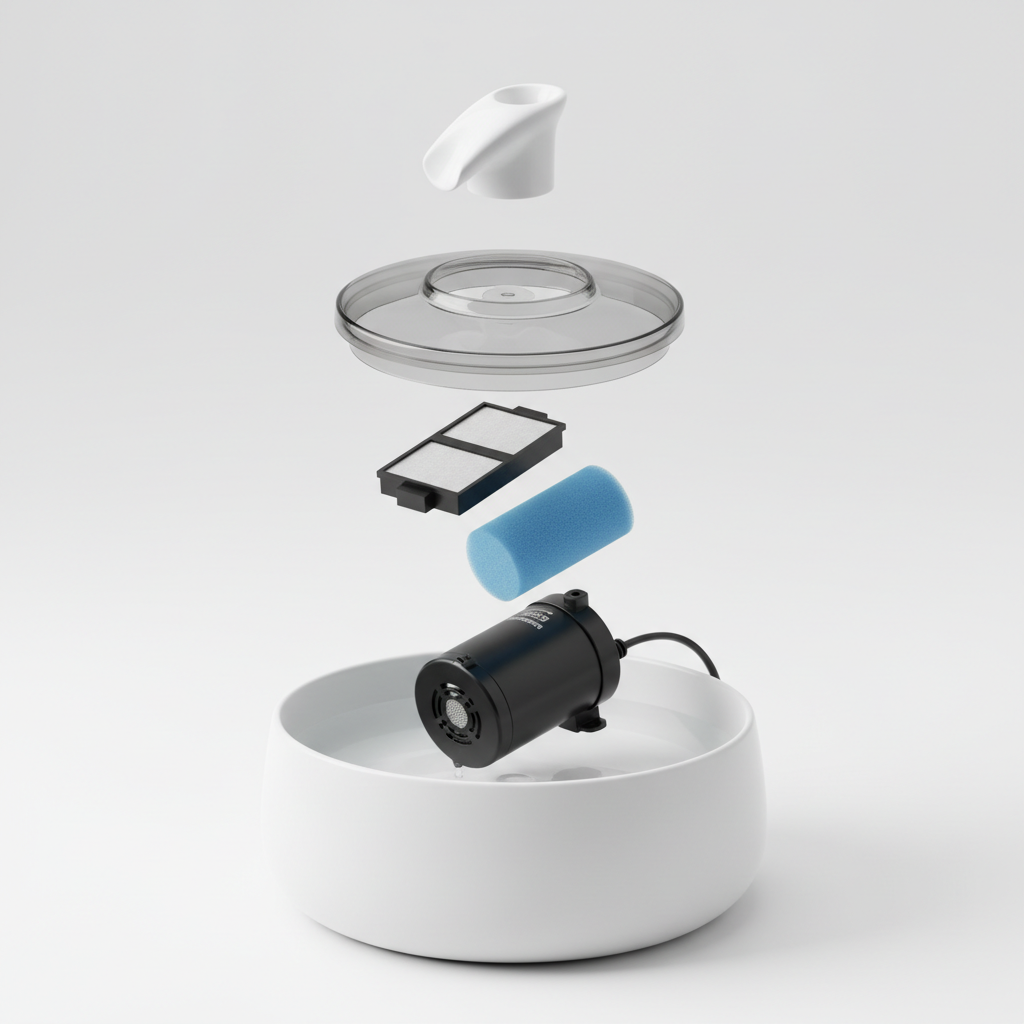
Material choice: plastic vs stainless vs ceramic
- Stainless steel: often easiest to keep odor-free, less prone to scratching, typically dishwasher-friendly (check manufacturer guidance). Can still vibrate on hard floors if the base is light.
- Ceramic: heavier and often quieter because it dampens vibration. Downsides are break risk and sometimes more awkward shapes to clean.
- Plastic: budget-friendly and common, but scratches can hold odor/biofilm over time, especially if you scrub with abrasive pads.
Pump design and mounting
For a cat water fountain quiet setup, look for pumps with rubber feet or silicone sleeves, plus a design that keeps the pump from touching the outer shell directly. A small detail that matters: a pump that’s easy to open makes routine cleaning more realistic, which keeps noise down long-term.
Flow style: gentle stream beats tall waterfall
If your goal is low noise, prioritize fountains with a low-drop flow, wide stream, or “bubble-up” style. Tall waterfalls create pleasing movement but often create the most audible splatter, especially as the water level changes.
Comparison table: what to prioritize based on your home
Not everyone needs the same setup. This table is how I’d triage features depending on the room and your tolerance for maintenance.
| Situation | What to prioritize | What to avoid |
|---|---|---|
| Small apartment / bedroom nearby | Low-drop flow, heavier base, pump with rubber isolation, simple parts | High waterfall spouts, lightweight bases that resonate |
| Hard tile floors | Non-slip mat, silicone feet, ceramic/stainless options | Thin plastic bowls placed directly on tile |
| Multiple cats | Larger capacity, easy-to-clean basin, readily available filters | Tiny reservoirs that run low and start gurgling |
| Cat hates noise | Very gentle circulation, quiet pump, calm placement away from foot traffic | Fast “jet” streams, fountains that rattle when nudged |
| You travel or forget maintenance | Simple geometry, visible water level window, reminder routine | Complex internal channels that trap slime |
Practical setup steps to make a fountain quieter today
You can often cut the noise dramatically in 10 minutes, no new purchase required.
- Set the fountain on a soft base: a thin silicone mat or folded microfiber towel reduces vibration. If the cat drags towels, use a low-profile rubber mat.
- Fill to the recommended line: too low causes gurgle, too high can increase splash depending on design.
- Check pump seating: make sure suction cups are fully attached and the pump sits flat.
- De-bubble the pump: unplug, lift the pump slightly, tilt underwater, then restart. Air pockets are a common hum trigger.
- Route the cord carefully: if the cord presses against the housing, it can transmit vibration into the shell.
- Lower the stream: if your model has a flow control, dial it back until splash stops but circulation remains steady.
After setup, listen from where you actually sleep. Some fountains sound fine standing over them, then the hum travels through a cabinet or wall at night.
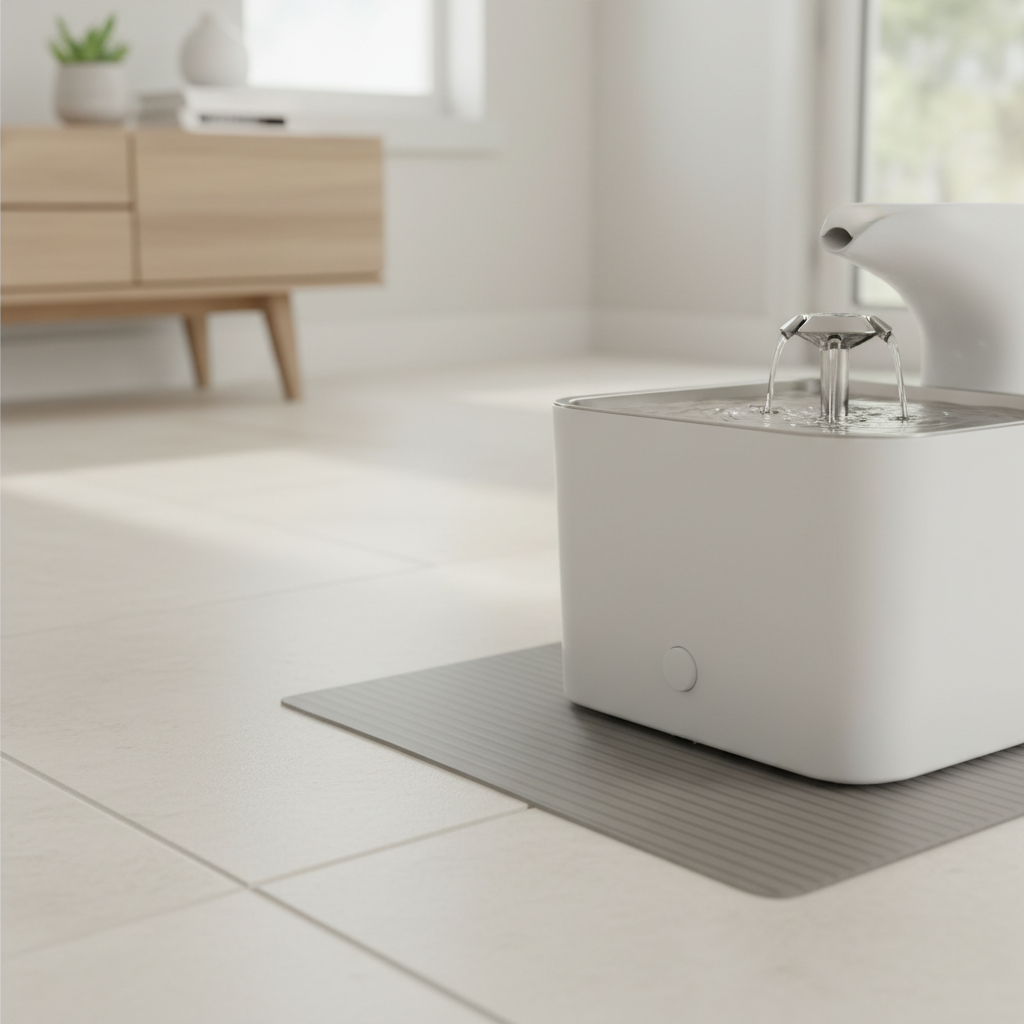
Keeping water fresh without overthinking it (cleaning + filter rhythm)
Filters help, but they don’t cancel biology. Warm indoor air, food crumbs, and cat saliva can build a thin film in places you can’t see. Freshness usually improves most when you simplify your routine and stick to it.
- Daily: quick top-off, quick glance for hair buildup and water level.
- Weekly: rinse the basin, wipe slimy spots, and rinse the pump exterior.
- Every 2–4 weeks: deep-clean the pump (open the impeller area), wash parts with mild soap, rinse thoroughly, replace or rinse pre-filters as directed.
- Filter changes: follow your brand’s guidance, but adjust if you notice taste/odor earlier, multi-cat homes often need faster changes.
If your tap water is very hard, mineral scale can show up fast and make even a cat water fountain quiet model start buzzing. In many cases, occasional descaling with a pet-safe approach recommended by the manufacturer helps, and if you’re unsure, ask your vet or the brand’s support.
Common mistakes that keep fountains loud (and how to avoid them)
- Running it “until it’s empty”: pumps are made to be submerged, low water equals noise and quicker wear.
- Skipping pump cleaning: the basin can look clean while the impeller area grows grime. That’s where noise starts.
- Assuming a stronger flow means fresher water: too much flow can mean more splash and stress for noise-sensitive cats.
- Using abrasive scrubbers on plastic: micro-scratches can trap odor and film, making “fresh” harder to maintain.
- Placing it next to the litter box: not a cleanliness rule for everyone, but many cats prefer separation, and litter dust can clog filters faster.
If your cat paws at the stream and makes a mess, it’s not always “bad behavior.” Some cats treat moving water like a toy. A calmer flow style and a larger splash-guard mat usually help more than relocating the fountain five times.
When to consider a different fountain, or ask for help
Sometimes the right call is switching models, not fighting your current one. If you’ve tried a mat, correct water level, and a full pump clean, and the hum stays loud, the motor might be wearing out or the design may just resonate in your space.
- Consider replacing the pump if the brand sells a compatible replacement and the rest of the fountain works for your home.
- Consider a heavier material if you’re on hard floors and vibration is the main issue.
- Talk to a veterinarian if your cat drinks dramatically more or less than usual, shows urinary discomfort, or stops drinking entirely. Those changes can be medical and shouldn’t be guessed at.
Key takeaways (so you don’t have to reread)
- Most noise comes from low water, vibration, or buildup, not from a “bad product.”
- Gentle, low-drop flow usually stays quieter than tall waterfalls.
- Fresh water is a system: circulation, cleaning, and timely filter changes matter more than marketing terms.
- A silicone mat and a clean pump solve a surprising number of complaints.
Conclusion: A quiet, filtered fountain that stays fresh is realistic, but it works best when you match flow style and materials to your home, then keep a simple maintenance rhythm. Pick the calmest flow your cat will actually use, set it up to reduce vibration, and treat pump cleaning like a small routine rather than an emergency fix.
If you want a quick next step, do this tonight: top off to the fill line, move the fountain onto a silicone mat, and de-bubble the pump. If the sound drops right away, you just saved yourself a return.
FAQ
What makes a cat water fountain quiet in real life?
A quiet fountain usually combines a low-vibration pump, a stable base, and a gentle flow that doesn’t splash. In many homes, the surface under the fountain matters as much as the fountain itself.
Why does my fountain get louder after a week?
That pattern often points to buildup around the impeller, a clogged pre-filter, or the water level drifting low. A pump clean and a filter check typically bring the sound back down.
Do carbon filters really keep water “fresh” for cats?
They can improve taste and reduce some odors, but they don’t replace cleaning. If the basin or pump has biofilm, the water can still smell off even with a new filter.
Is stainless steel always better than plastic?
Not always, but stainless often resists odor and scratches better, which can make freshness easier to maintain. Some plastic fountains are perfectly fine if you keep up with gentle cleaning and replace filters on schedule.
How often should I change the filter in a filtered cat fountain?
It depends on the brand, number of cats, and your tap water. If you notice taste/odor changes early, that’s usually a sign you need more frequent changes than the box suggests.
My cat is scared of the fountain—should I turn it off at night?
Some cats acclimate faster if you start with the lowest flow in a quiet location, then increase later if needed. Turning it off can be fine short-term, but stagnant water can get funky, so refresh the water and clean regularly if you do.
Can a loud fountain stress a cat?
It can, especially for noise-sensitive cats who already avoid unfamiliar objects. If your cat stops drinking from it, switch to a gentler flow or offer a normal bowl alongside while you troubleshoot.
Is it safe to use vinegar to clean a cat fountain?
Many people use diluted vinegar for mineral scale, but guidance varies by material and manufacturer. Check your manual first, rinse extremely well, and when in doubt, ask the brand or your veterinarian for a pet-safe approach.
If you’re trying to find a cat water fountain quiet enough for sleep and still want truly filtered, fresh-tasting water, it may help to shortlist models by flow style and material first, then compare how easy the pump is to open and clean, because that’s what you’ll live with week after week.