
Best Pet ID Tags for Cats 2026: What Actually Matters
Best pet id tags for cats usually come down to three things most people only learn after a scare: the tag stays on, the text stays readable, and your cat tolerates it day to day. If any one of those fails, the “best” tag on paper turns into a wasted purchase.
The good news is you do not need to overcomplicate it, you just need to match the tag style to your cat’s collar setup, roaming habits, and how rough they are on gear. Indoor cats still slip doors, outdoor cats still snag collars, and many cats hate anything that jingles, so practical choices beat trendy ones.
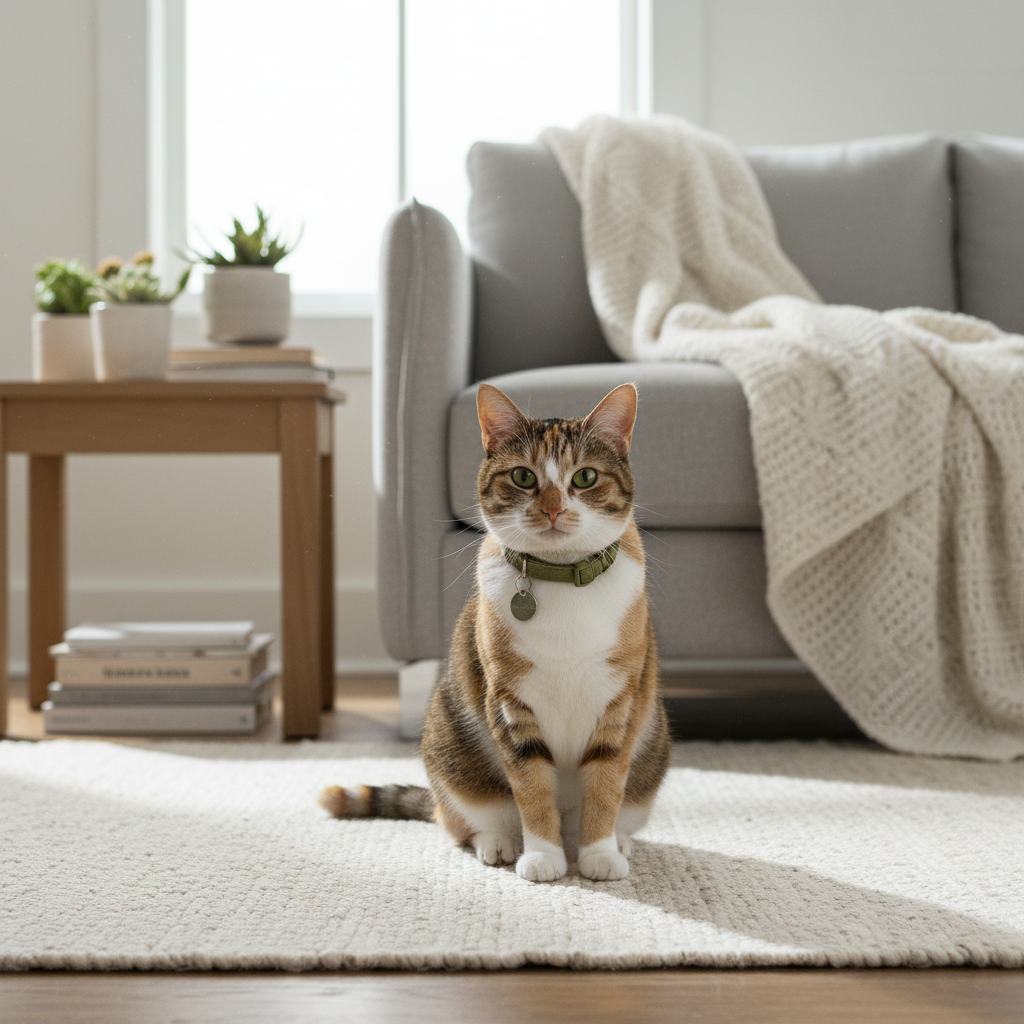
This guide focuses on what tends to work in real U.S. households in 2026: durable materials, quiet options, smart add-ons like QR codes, and a quick way to choose without buying five tags to “test.”
Quick take: what most cats do best with in 2026
If you want a fast shortlist, here is the typical “safe bet” setup for many cats: a breakaway collar plus a lightweight, rounded tag with deep engraving and large text. The collar matters as much as the tag, because a tag cannot help if the collar falls off, or if a non-breakaway collar creates a snag risk.
- Most reliable for readability: engraved stainless steel or thick anodized aluminum
- Most comfortable for noise-sensitive cats: silent slide-on collar ID or silicone silencers
- Most useful “extra” in 2026: QR code tags that store multiple contacts and notes (still keep a phone number visible)
Comparison table: best tag types by fit, noise, and durability
“Best” depends on your cat’s behavior and your collar style. This table helps you narrow it down quickly without getting lost in brand lists.
| Tag type | Best for | Pros | Watch-outs |
|---|---|---|---|
| Engraved stainless steel hang tag | Outdoor cats, long-term use | Strong, resists corrosion, engraving stays legible | Can jingle, may snag if oversized |
| Anodized aluminum hang tag | Indoor cats, lightweight preference | Light, many colors, usually affordable | Text can wear if printing is shallow |
| Slide-on collar ID (embroidered or engraved plate) | Jingle-sensitive cats, small cats | Quiet, snag-resistant, sits flush to collar | Must fit collar width, can slide if loose |
| QR code ID tag | Travel, multi-contact households | Update info without re-engraving, can add vet notes | Finder needs a phone, still include a visible number |
| Silicone tag or tag silencer add-on | Noise reduction, comfort | Softer feel, less clinking | May tear over time, check for wear |
What makes a tag “best” for cats (not dogs)
Cats are lighter, more flexible, and more likely to squeeze through tight spaces. That changes what “good” looks like. In practice, the best pet id tags for cats share a few traits that reduce failure points.
1) Breakaway safety and snag reality
According to ASPCA, collars should be properly fitted and many cat owners choose breakaway styles to reduce snag risks. A tag that is too large or hangs too low increases snag potential, especially on outdoor cats or cats that climb.
2) Readable text under stress
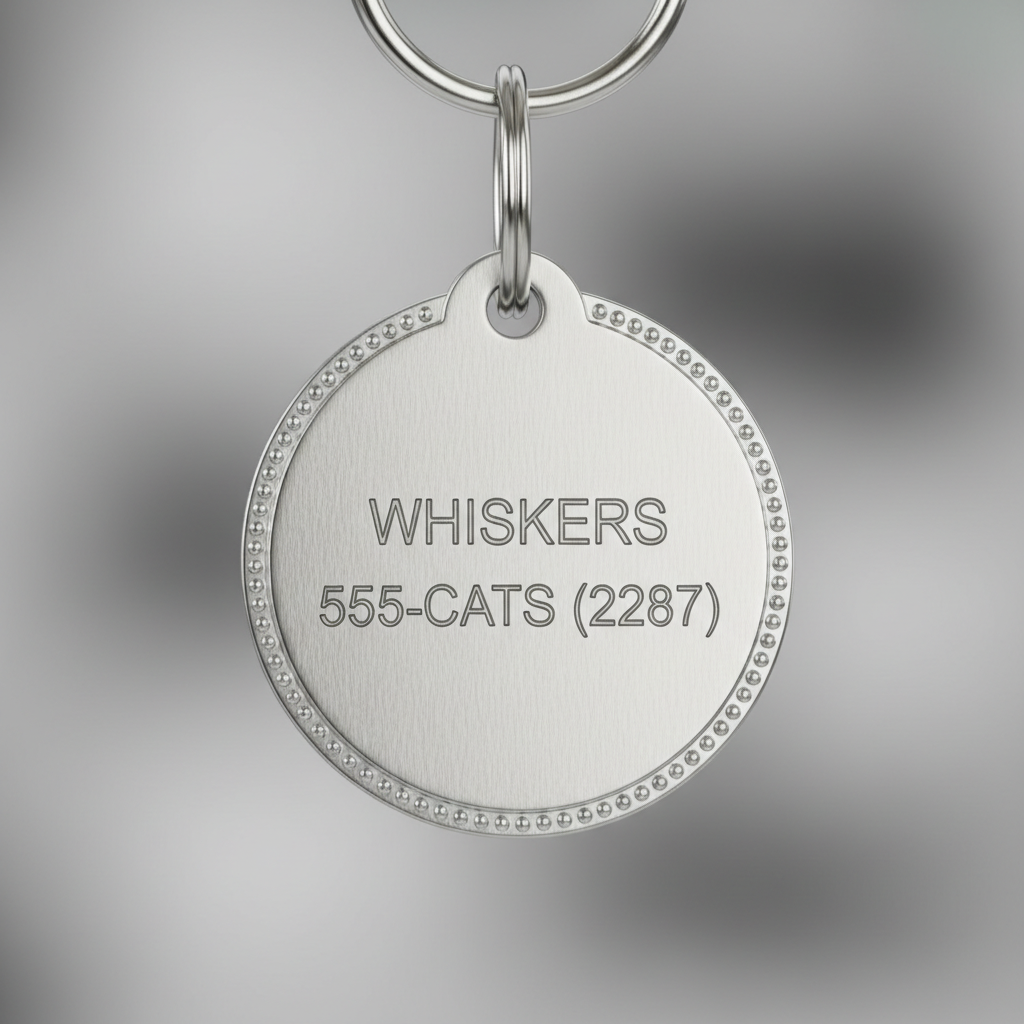
If someone finds your cat, they may be outside, in low light, and in a hurry. Prioritize larger font, high contrast, and deep engraving over decorative icons. If you cannot read it at arm’s length, a stranger probably cannot either.
3) Weight, edges, and “my cat hates it” factor
Many cats tolerate a collar, but react to the tag, usually because of weight or noise. Rounded edges matter more than people think, and so does tag size. If your cat constantly scratches at the collar, go smaller, go quieter, or switch to a slide-on plate.
4) Attachment hardware that does not fail
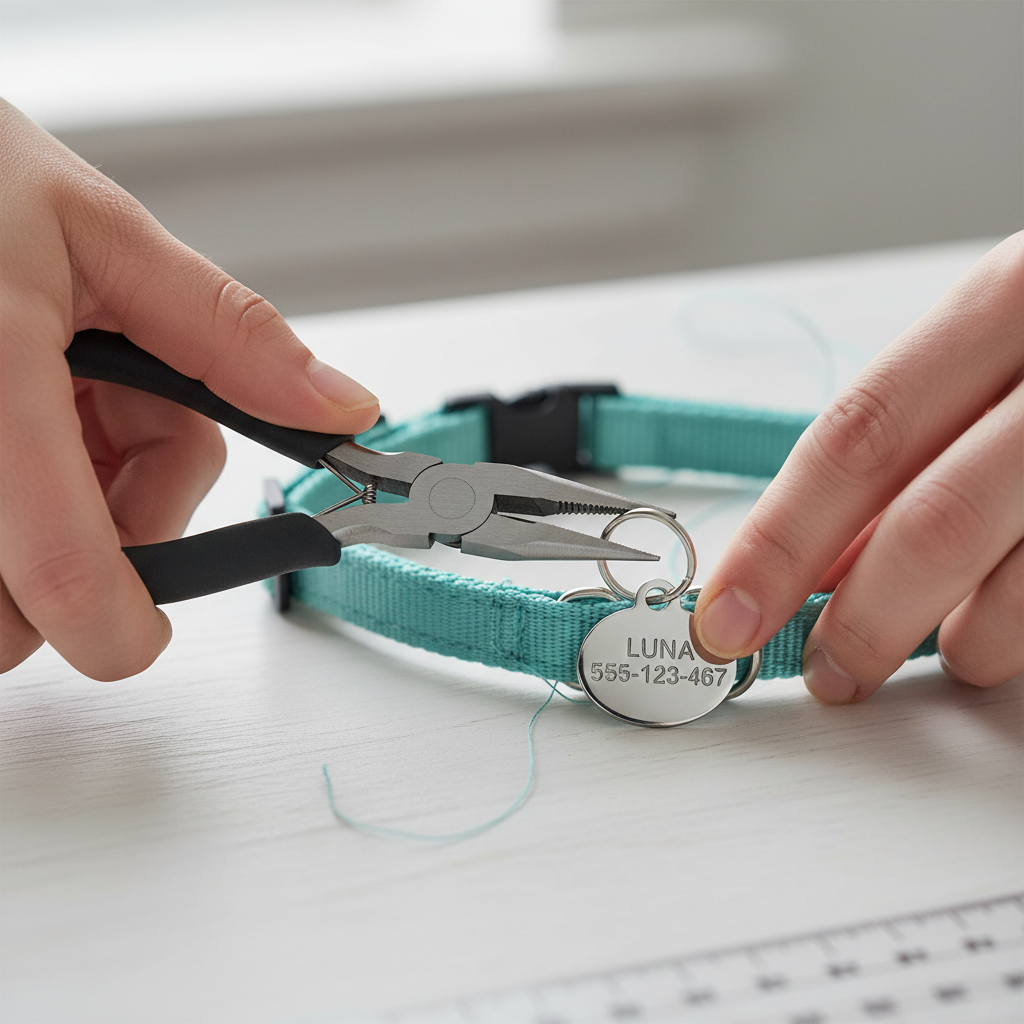
Cheap split rings bend, and thin S-hooks open up. If you use a hanging tag, consider a sturdier ring, and check it after rough play. This is boring, but it prevents the classic “tag fell off months ago” problem.
Self-check: choose the right tag in 60 seconds
Use this checklist to decide what category you are in, then you can shop with confidence instead of guessing.
- Your cat freezes or scratches at jingling: choose a slide-on collar ID or add a silicone silencer
- Your cat goes outdoors or escapes often: choose engraved stainless steel, keep size compact
- You use a very thin collar: avoid heavy tags, check ring strength and balance
- You change numbers or move frequently: add a QR tag, but still engrave at least one phone number
- Your cat is a strong climber: prioritize low-profile tags and a properly fitted breakaway collar
If you are unsure, pick the simplest path: engraved metal + large text + quieting accessory if needed. For many homes, that combination lands in the “best pet id tags for cats” zone without overthinking.
What to engrave (and what to skip)
People try to fit a biography on a tiny tag, then the font gets microscopic. A cat ID tag works best when it stays readable.
Recommended engraving lines
- Line 1: Cat’s name (optional, some owners prefer “I’m lost”)
- Line 2: Primary phone number (this is the real priority)
- Line 3: Secondary phone number or “Text ok”
- Line 4 (if space allows): “Microchipped” or city/state
Usually not worth the space
- Full street address (often too long, privacy concern for some households)
- Long medical notes (better in a QR profile if you use one)
- Too many icons, fancy fonts, or tiny decorative borders
Hands-on setup tips (so the tag stays on and stays readable)
Even the best tag can fail if the setup is sloppy. These steps are quick and reduce the common issues.
Step-by-step
- Fit the collar correctly: two fingers under the collar is a common rule of thumb, but adjust for your cat’s size and fluff.
- Place the tag to reduce flip: hang tags can rotate, a second small ring sometimes helps the tag lie flatter.
- Do a “doorway test”: gently tug the collar like it might catch on something, confirm breakaway releases as intended.
- Check weekly for two minutes: ring bent, engraving worn, edges rough, or the collar stretched.
If your cat refuses a collar, do not force it into a constant stress battle. In that scenario, a microchip and indoor safety habits may carry more weight, and you can ask a vet or behavior professional for collar training suggestions.
Common mistakes that make “good” tags fail
- Buying printed text when you need engraving: printing often fades faster in rough use, especially for outdoor cats.
- Choosing the biggest tag “for more info”: bigger often means more swinging, more noise, more snag risk.
- Ignoring the ring and connector: hardware failure is a quiet, common point of loss.
- Using only a QR code without a phone number: phones die, service drops, and some finders will not scan.
- Setting it and forgetting it: collars stretch, engraving wears, numbers change.
One more subtle issue: some people chase “tactical” or ultra-thick collars thinking they are safer. For many cats, that extra bulk reduces comfort and increases rubbing. Comfort affects compliance, and compliance affects safety.
When to ask for professional help (and what “help” means)
If your cat reacts intensely to collars, or you see hair loss, redness, or repeated scratching around the neck, it may be worth pausing and consulting a veterinarian. Skin irritation, allergies, or pain can look like “collar drama,” and guessing can drag the problem out.
If your cat is a frequent escape artist, consider a broader plan: microchipping, updated registration, secure window screens, and a consistent routine for door openings. According to AVMA, microchipping is a common, permanent form of identification, but it works best when contact information stays current. A tag still helps because it gives a finder instant contact without a scanner.
Conclusion: the simplest way to pick a tag you will not regret
The best pet id tags for cats are the ones your cat will actually wear, with engraving that stays readable and a setup that does not fall apart after a month. If you want one practical move today, choose a breakaway collar, pick a small engraved metal tag with a big phone number, then add a silencer if noise becomes a problem.
Do the two-minute check once a week for the first month, you will catch most issues early, and after that it becomes a low-effort habit rather than another pet project.
FAQ
What is the best material for cat ID tags in 2026?
For many homes, stainless steel remains the most reliable for long-term readability and corrosion resistance. Aluminum can work well for indoor cats if the engraving is deep and the tag stays low-impact.
Are QR code cat ID tags worth it?
They can be, especially if you want multiple contacts or you move often. Still, keep at least one visible phone number on the tag because not every finder will scan.
Should indoor cats wear ID tags?
Many indoor-only cats still slip out during deliveries or guests coming in, so an ID tag can shorten the time to get them home. If your cat cannot tolerate collars, microchipping plus home safety steps may be a better baseline.
How do I stop my cat’s tag from jingling?
A slide-on ID plate is the quietest option, since it sits flush on the collar. If you prefer a hang tag, a silicone silencer or smaller tag often cuts noise a lot.
What should I put on my cat’s ID tag?
Prioritize a phone number in a large font, then add a second number if space allows. “Microchipped” can help, but do not sacrifice readability for extra words.
Is a non-breakaway collar safe for cats?
In many situations, owners prefer breakaway collars to reduce snag risks, especially for cats that climb or go outdoors. If you are unsure what is appropriate for your cat, a veterinarian can help you weigh risks.
How often should I replace a cat ID tag?
Replace it when the text becomes hard to read, the edges roughen, or the attachment hardware shows bending. Outdoor cats and very active cats often wear tags faster than indoor cats.
If you are trying to choose between a few options and want a more “set it and forget it” setup, start by picking the collar first, then match the tag type to your cat’s tolerance for noise and movement, that small order-of-operations usually saves time and returns.