
pet dry shampoo powder for cats sounds like a simple fix when your cat smells a little “off” but a full bath would be a wrestling match, and in many homes, that’s exactly why people reach for it.
The value is real when you use it for the right job: quick coat refresh, mild oil control, and spot-cleaning around “problem zones” like the lower back or tummy. But it’s not magic, and it’s not a substitute for treating skin issues, fleas, or chronic dandruff.
Below you’ll find how no-rinse powders actually work, how to choose a safer formula, and a step-by-step routine that avoids the two common disasters: a dusty bathroom and a cat that now hates grooming.
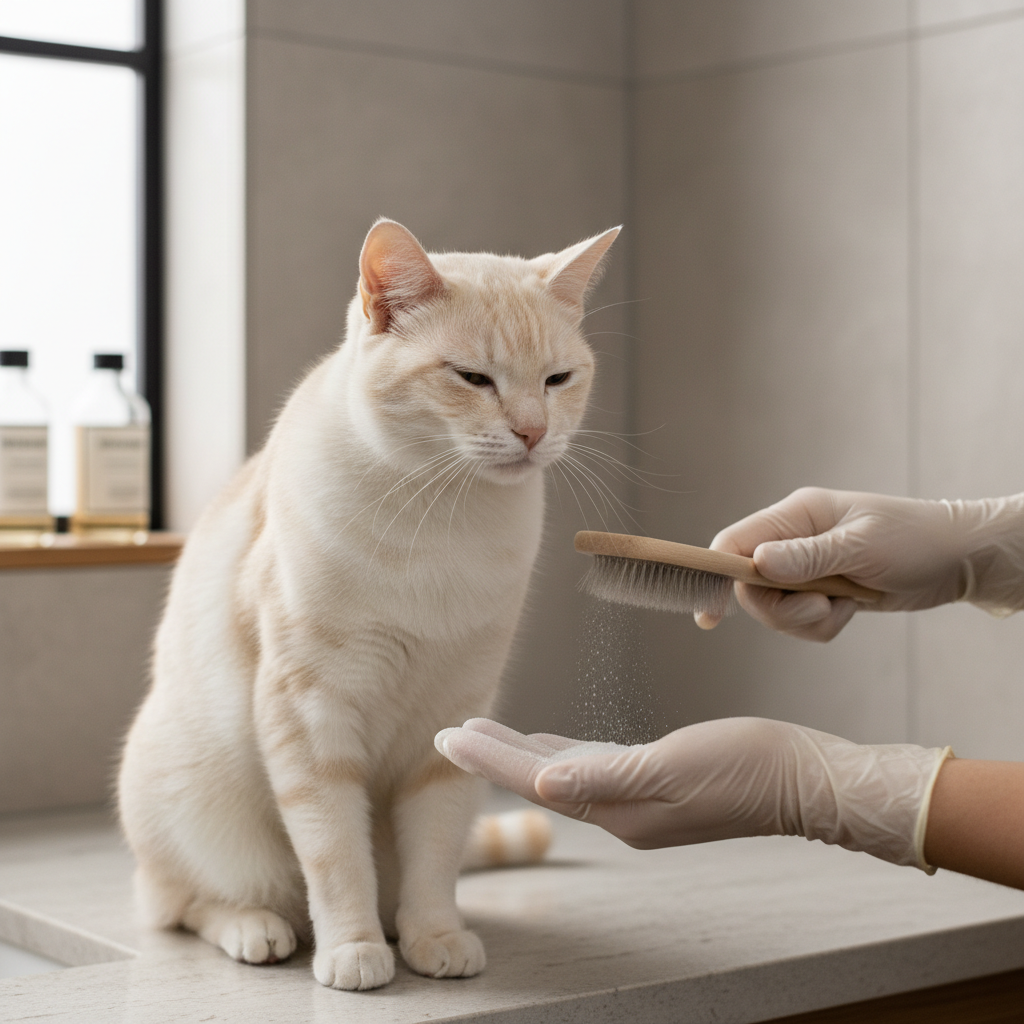
What “No-Rinse” Dry Shampoo Powder Really Does (and Doesn’t)
A dry shampoo powder works by absorbing surface oils and helping lift loose debris so it can be brushed out. If your cat’s coat looks slightly greasy, or you’re dealing with mild “litter box perfume,” it can help you get back to neutral fast.
What it doesn’t do well: remove sticky residue, clean fecal matter, treat infections, or solve strong odor coming from the skin itself. If the smell seems to come back within a day, that’s often a sign something else is going on.
According to the American Veterinary Medical Association (AVMA), cats are typically good self-groomers, and bathing isn’t routine for most cats, so when you feel you “need” frequent cleaning, it’s worth asking why.
Why Cat Owners Choose Powder Over a Bath
Most people don’t choose powder because it’s trendy, they choose it because it’s practical. In real life, these are the situations where it tends to make sense.
- Senior or anxious cats that panic with water or dryers
- Cold weather when you don’t want a damp coat
- Between professional grooming appointments
- Minor grease on the back near the tail base
- Light odor control after travel, vet visits, or stress
That said, if the “greasy tail” problem is frequent, it might be more than dirt. Some cats get stud tail or skin irritation, and a powder can mask the symptom while the cause keeps simmering.
Quick Self-Check: Is Your Cat a Good Candidate?
Before you sprinkle anything, take 60 seconds and do a reality check. This avoids using pet dry shampoo powder for cats in situations where it’s unlikely to help, or could make things worse.
Good fit (usually)
- Coat looks a bit oily but skin looks normal
- Mild odor, mostly “coat smell,” not a sharp or yeasty smell
- Small areas to refresh, not the whole body every week
- Your cat tolerates brushing for at least 2–3 minutes
Pause and reassess
- Redness, scabs, hair loss, or your cat keeps licking one spot
- Heavy dandruff that returns quickly after brushing
- Strong odor from ears, mouth, or skin folds
- Fleas or flea dirt (black specks that smear red when wet)
- Your cat is coughing/sneezing around dust, or has known respiratory issues
If you’re in the second list, a powder might still be part of the plan, but it shouldn’t be the plan.
How to Choose a Safer Dry Shampoo Powder (Ingredient + Format Guide)
The “best” formula depends on your cat and your house, but there are patterns that tend to hold up. Think less fragrance, less dust, more brush-out performance.
| What to look for | Why it matters | Common notes |
|---|---|---|
| Fine, low-dust powder | Less inhalation risk, less mess on furniture | Tap a small amount into your hands first |
| Minimal fragrance or fragrance-free | Cats can be scent-sensitive, and strong scents can irritate | “Baby powder” smell often lingers and may bother some cats |
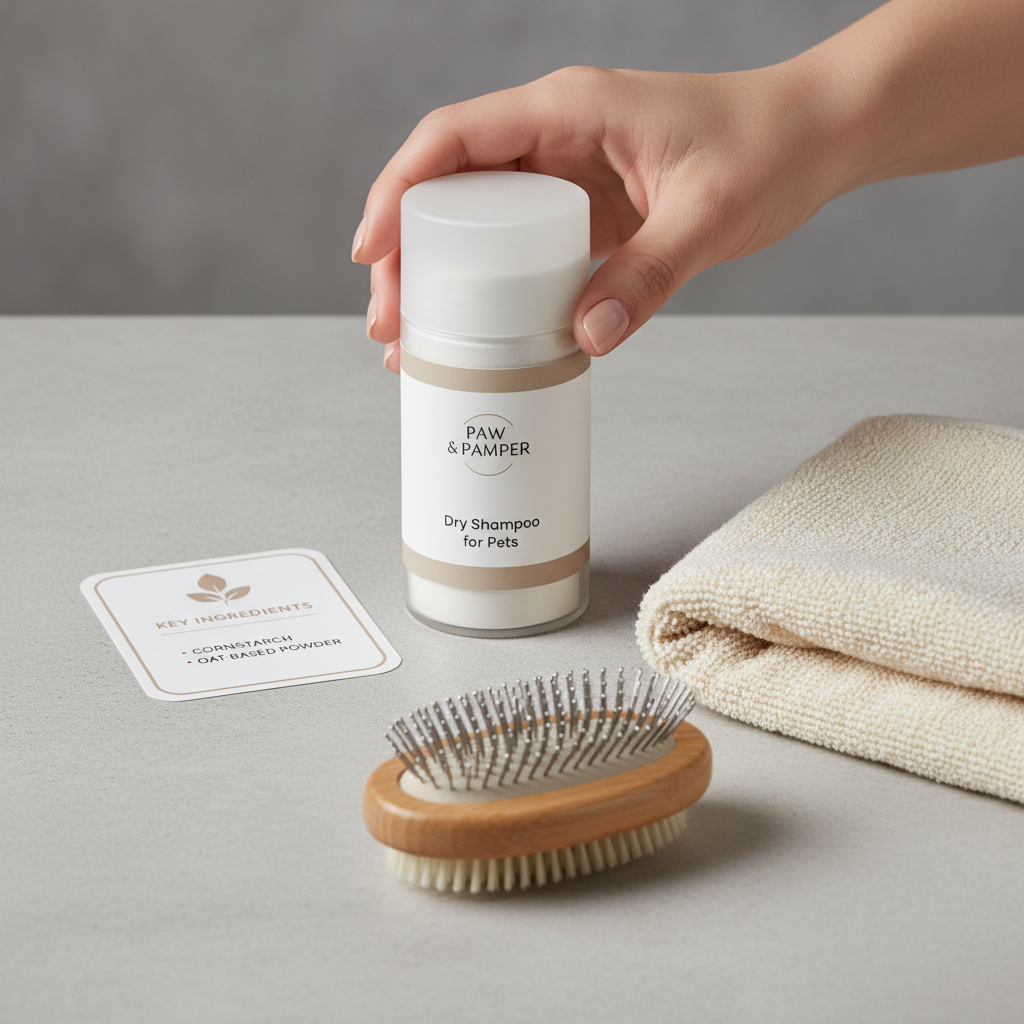
| Simple absorbents (e.g., oat/cornstarch-based) | Works for mild oil without harsh solvents | Always patch test a small area first |
| Clear label and pet-specific directions | Human powders can include ingredients not meant for cats | Look for guidance on avoiding eyes/nose/mouth |
Ingredient caution: avoid products that encourage heavy perfuming to “cover” odor. Also be careful with powders containing essential oils. Cats metabolize certain compounds differently, so if a label leans hard on oils for scent or “natural pest control,” it’s smart to ask your vet.
According to the ASPCA Animal Poison Control Center, essential oils can cause toxicity in pets in some cases, so it’s worth treating them as a serious ingredient, not a cute marketing extra.
Step-by-Step: Using No-Rinse Powder Without Stress (or Dust Clouds)
This is the part most people rush, then wonder why the coat feels chalky. The trick is tiny amounts + brush-out, not a full-body “seasoning.”
Set up (30 seconds)
- Choose a small room with easy cleanup, close doors, turn off fans
- Have a brush/comb, a microfiber towel, and a treat ready
- If your cat hates being held, let them stand on a stable surface
Apply
- Shake a small amount into your palm first, not directly onto the cat
- Rub hands lightly, then massage into the coat with fingertips
- Avoid face, nose, mouth, and inner ears
- Focus on oily zones: tail base, back, flanks
Wait, then remove
- Let it sit 1–3 minutes so it can absorb oils
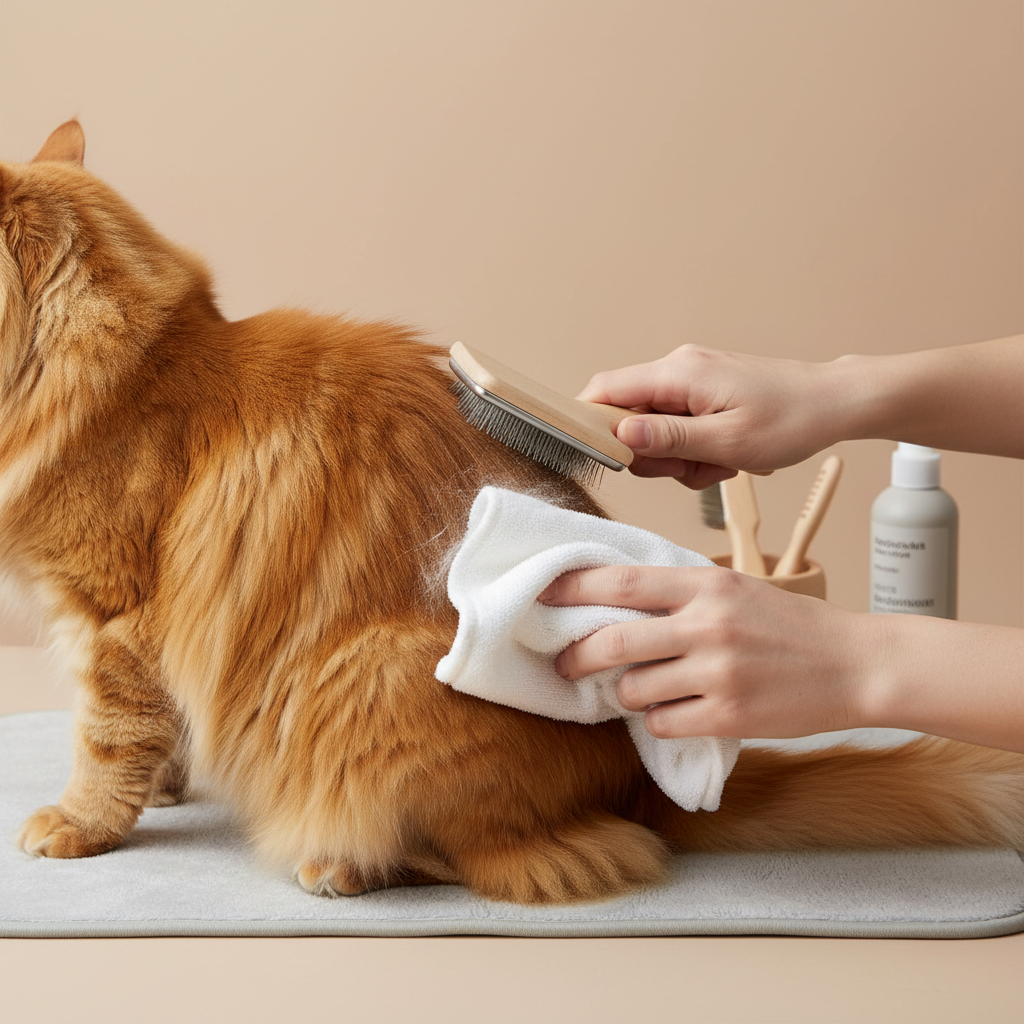
- Brush thoroughly until the coat no longer feels powdery
- Finish with a microfiber towel to lift leftover residue
Key takeaways (so you don’t overdo it)
- If you can see powder on the coat, it’s probably too much.
- If your cat licks immediately, use less next time and brush longer.
- If the coat looks dull after, you may be leaving residue behind.
Mistakes That Make Dry Shampoo Backfire
Dry powders get a bad reputation mostly because of a few predictable missteps. You can avoid most of them.
- Using it like a deodorant: if odor is strong, it usually needs a cause-focused fix, not more powder.
- Skipping the brush-out: residue invites licking and can matt fur over time, especially in longer coats.
- Applying near the face: powders can irritate eyes and airways, even when “pet safe.”
- Too frequent use: if you need it every few days, talk to a professional about diet, grooming, or skin health.
- Mixing products: layering sprays, perfumes, and powders can overwhelm sensitive cats.
Also, don’t use pet dry shampoo powder for cats as a “flea solution.” Flea control usually requires a vet-recommended product and environmental cleanup, powders won’t reliably break the life cycle.
When to Talk to a Vet or Groomer (Not Because You Failed)
There’s a point where “freshening up” turns into “we might be missing something.” That’s not dramatic, it’s just how skin and coat issues behave.
- Odor turns yeasty, sour, or metallic
- You notice bumps, scabs, or hot spots
- Dandruff becomes thick, waxy, or patchy
- Your cat stops grooming or seems painful when touched
- You suspect parasites, ringworm, or an ear infection
According to the American Animal Hospital Association (AAHA), persistent skin problems and itching often need a diagnostic workup, since allergies, parasites, and infections can look similar at home. If you’re unsure, a quick check can save weeks of trial-and-error.
Conclusion: A Practical Way to Stay Fresh Between Baths
Used thoughtfully, pet dry shampoo powder for cats can be a low-drama tool for small cleanup jobs, especially for cats that hate water. Keep amounts tiny, brush longer than you think you need, and treat strong odor or irritated skin as a signal, not a cosmetic problem.
If you want a simple next step, do one controlled “test session” on a small area, then decide based on how the coat feels after brushing and how your cat reacts over the next 24 hours.
FAQ
How often can I use pet dry shampoo powder for cats?
Many households use it occasionally, like after a messy moment or between grooming sessions. If you feel the need to use it weekly or more, it’s worth checking for oil buildup, diet changes, or skin issues with a groomer or vet.
Is no-rinse powder safe if my cat licks their fur?
Cats will lick, so the safer approach is using a very small amount and brushing until you can’t feel residue. If your cat obsessively licks right after application, reduce the amount, switch to a lower-dust formula, or stop and ask your vet for alternatives.
Can I use baby powder or human dry shampoo on my cat?
It’s usually not a great idea. Human products may include fragrances or ingredients not designed for feline grooming habits, and cats groom by licking, which changes the risk profile.
What’s the best way to apply powder without making a mess?
Put it in your palm first, rub hands together, then work it into the coat in small sections. Avoid sprinkling from height, that’s how you get the dust cloud.
Will dry shampoo powder help with dandruff?
It can make mild flaking look better short term, especially if the issue is just dry coat or seasonal shedding. Persistent or heavy dandruff often has a deeper cause, so consider a vet check if it keeps returning.
Can I use it on kittens?
Many products have age guidance on the label, and kittens can be more sensitive. If you’re dealing with a kitten that’s dirty or smelly, asking a vet what’s appropriate is the safest move.
Should I use powder before or after brushing?
Do a quick pre-brush to remove loose hair, apply a small amount, then brush thoroughly again to pull out oils and residue. The second brush-out is where most of the benefit happens.
If you’re trying to keep your cat fresh between baths and you’d rather not experiment with multiple formulas, it may help to choose a low-dust, lightly scented or fragrance-free powder and build a short routine around brushing, that’s usually where the “no rinse” approach feels genuinely easy.