
Guinea pig vitamin c chew tablets can be a convenient way to support daily Vitamin C intake, especially when pellets are old, picky eating shows up, or you want a more consistent routine than relying on veggies alone.
If you’ve ever stood in a pet aisle wondering whether “extra Vitamin C” is helpful or risky, you’re not overthinking it, guinea pigs are one of the few common pets that can’t make their own Vitamin C, so small gaps add up faster than people expect.
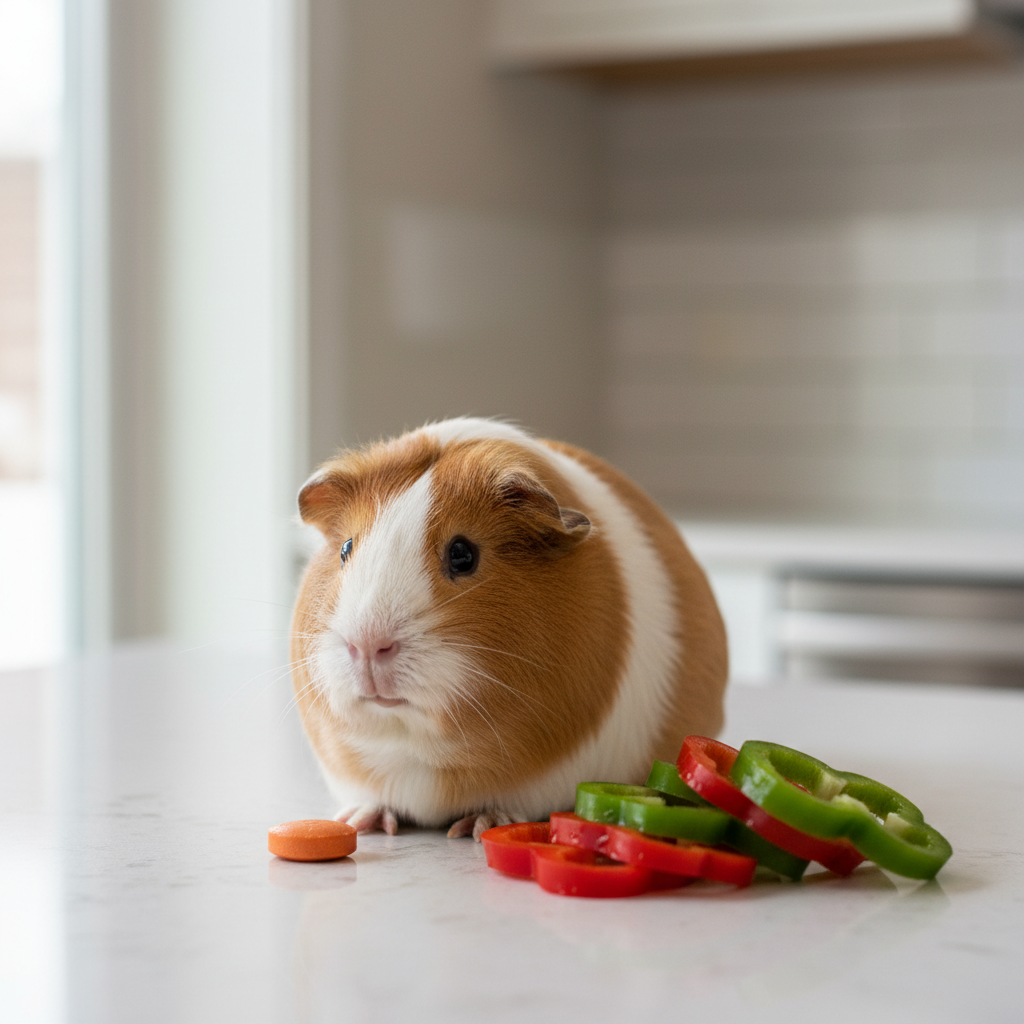
This guide breaks down when chewable tablets make sense, how to read labels without getting tricked by marketing, and what to do if you suspect deficiency, without pretending there’s one perfect product for every cage.
Why Vitamin C matters for guinea pigs (and why food alone sometimes falls short)
Guinea pigs, unlike many mammals, don’t synthesize Vitamin C, which means their daily intake has to come from diet. When intake slips, the body runs out of “buffer” quickly, and problems can show up in ways that look like totally different issues.
According to the Merck Veterinary Manual, guinea pigs require dietary Vitamin C, and deficiency can contribute to signs such as poor coat condition, lethargy, and joint or gum issues. Those symptoms aren’t unique to deficiency, but they’re common enough that Vitamin C is usually on the short list to review.
In real homes, “food alone” can fall short for a few predictable reasons:
- Pellets lose potency over time because Vitamin C degrades with storage, heat, and light.
- Picky eating means the “Vitamin C-rich veggies” you offer may not be the ones they actually eat.
- Illness or stress can reduce appetite, and less food intake often means less Vitamin C too.
- Multi-pig households sometimes lead to unequal intake, one pig dominates the best bits.
Are vitamin C chew tablets “healthy”? A practical, not-hype answer
Many guinea pig vitamin c chew tablets can be healthy in the sense that they offer measurable, consistent Vitamin C, but “healthy” depends on the formulation and on your pig’s overall diet. A tablet that delivers Vitamin C but also adds lots of sugar, fillers, or unnecessary ingredients may not be a win if used daily.
Chews tend to work best when you treat them like a supplement, not a snack:
- Use them to close a gap, not to replace hay, pellets, and fresh produce.
- Pick a dose you can control, especially in small pigs or seniors.
- Watch weight and poop when introducing any new chew, some pigs react to sweeteners or rich binders.
If your guinea pig already eats a stable diet with fresh high-C vegetables and fresh pellets, a daily chew might be optional. But if you’re unsure about consistency, tablets can simplify the routine, which matters more than people admit.
Quick self-check: do you need chew tablets right now?
Use this as a quick decision tool. If you hit multiple items in the left column, chewable Vitamin C becomes more reasonable to consider.
| Situation | What it usually means | Typical next step |
|---|---|---|
| Pellets opened for a long time, unclear “best by” date | Vitamin C content may be degraded | Replace pellets, consider temporary chew support |
| Refuses bell pepper/kale most days | Food sources aren’t reliable | Improve veggie rotation, add controlled supplement |
| Recovering from illness, eating less | Lower intake plus higher needs is possible | Talk to an exotics vet about dosing and duration |
| Limping, sore joints, rough coat, gum sensitivity | Could be deficiency or other conditions | Vet check soon, supplement only as part of a plan |
| Multiple pigs, one always “steals treats” | Uneven intake | Hand-feed chews individually or avoid shared dosing |
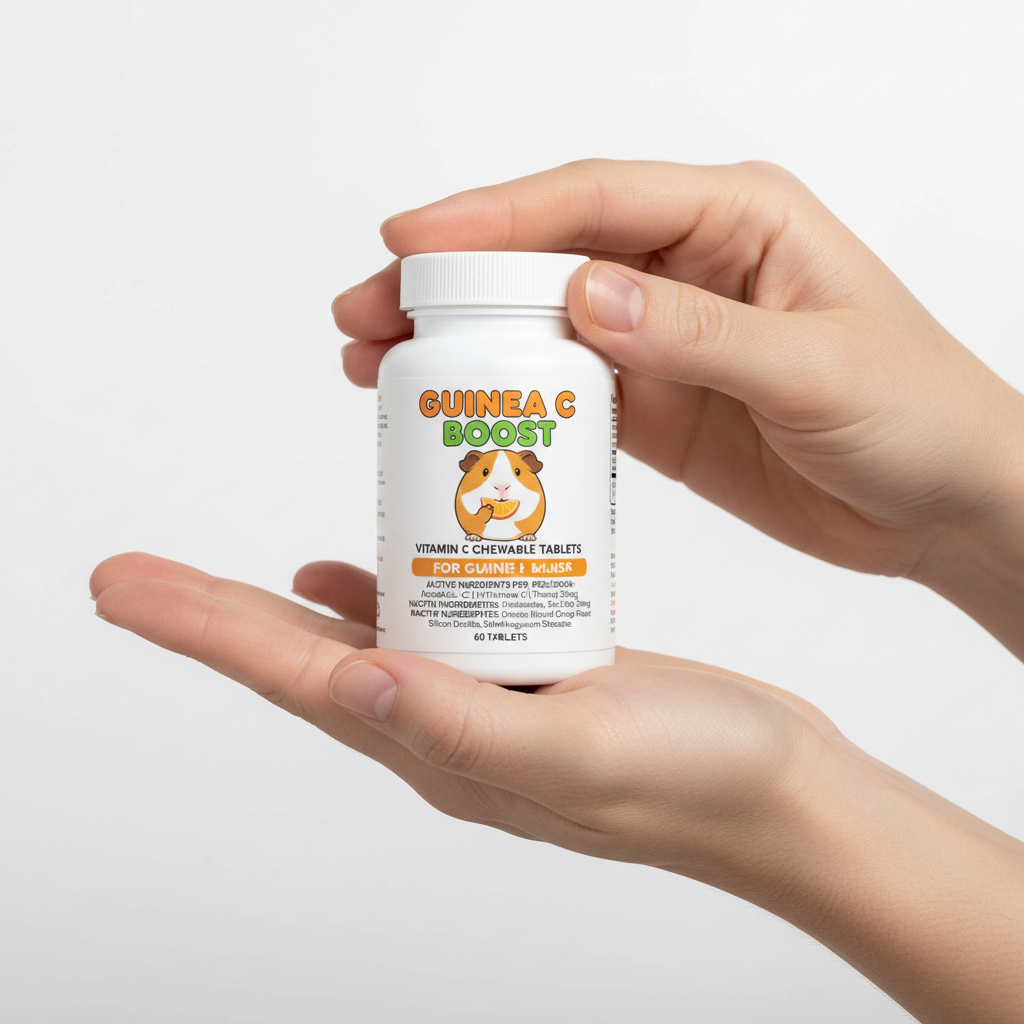
How to choose guinea pig vitamin c chew tablets (label-reading that actually helps)
The label matters more than the front-of-bottle claims. When you compare guinea pig vitamin c chew tablets, focus on what affects dosing accuracy and tolerance.
What to look for
- Clear Vitamin C amount per tablet (mg per chew), so you can scale dose without guessing.
- Simple ingredient list, fewer sweeteners and flavorings is often easier on digestion.
- Manufacturing and expiration info, Vitamin C stability is a real issue, not a marketing myth.
- Tablet size your pig can handle, tiny mouths do better with small chews or breakable tablets.
What to be cautious about
- High sugar or syrup bases, “treat-like” chews can encourage overeating or soft stool in some pigs.
- “Multivitamin” blends, they sometimes add vitamins or minerals your guinea pig doesn’t need daily.
- Vague dosing language like “give as needed” with no mg guidance, it’s hard to use safely.
If you’re stuck between two options, pick the one with clearer dosing and fewer extras. Fancy flavors feel helpful, but consistency wins.
How to use chew tablets safely: dosing, timing, and routine
Most owners do best with a steady routine: offer a chew at the same time each day, hand-feed it so you know who ate it, and adjust based on diet quality.
Because needs vary by age, pregnancy status, illness, and overall diet, it’s smart to confirm a target dose with an exotics veterinarian. According to the Association of Exotic Mammal Veterinarians (AEMV), guinea pigs have specific husbandry and nutrition requirements, and individualized guidance is important when health concerns are present.
Practical tips that reduce mistakes:
- Hand-feed each pig if you have more than one, shared “treat time” causes uneven dosing.
- Start low if your pig is sensitive, then scale up if needed, this helps you notice digestive changes.
- Don’t add Vitamin C to water in most cases, it can degrade quickly and may reduce water intake because of taste.
- Store chews correctly in a cool, dry, dark place, and close the container tightly.
Food-first support: vegetables that pair well with chews
Even if you use guinea pig vitamin c chew tablets, food still matters. Chews help with consistency, while vegetables bring fiber, hydration, and variety. The goal is not “maximum Vitamin C,” it’s steady intake without upsetting the gut.
Common Vitamin C-friendly options many pigs accept:
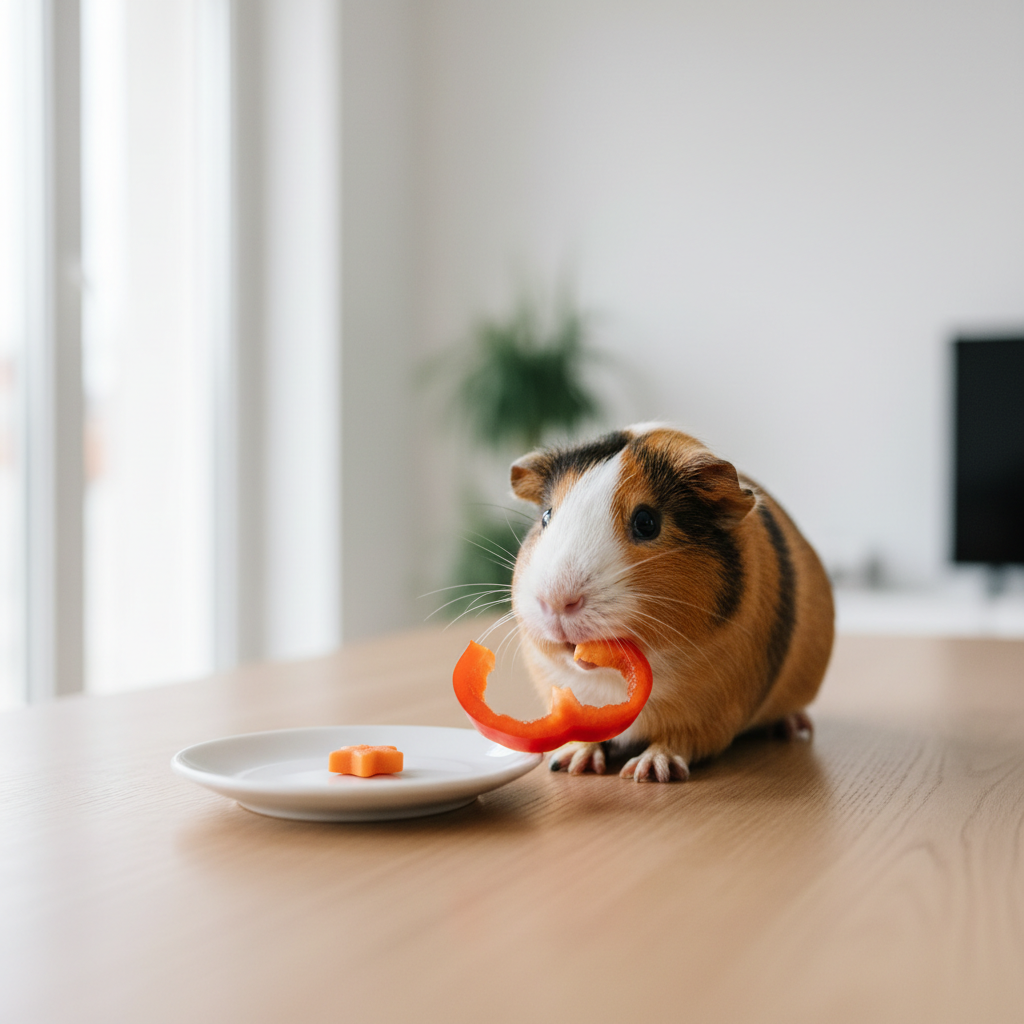
- Bell pepper (often the easiest “starter” choice)
- Small portions of leafy greens such as romaine-type lettuces, rotated with other greens
- Herbs like cilantro or parsley in moderate amounts, some pigs love them, some don’t
What tends to go wrong is owners chasing one “superfood” and overfeeding it. A rotation usually works better than obsession.
Common mistakes that make chew tablets less helpful
Most problems aren’t dramatic, they’re small habits that quietly cancel out the benefit.
- Using chews to “cover” an unbalanced diet, low hay intake still causes bigger issues than Vitamin C alone can solve.
- Leaving chews in the cage all day, you lose track of who ate what, plus moisture can affect texture.
- Assuming any limp equals Vitamin C deficiency, pododermatitis, arthritis, injuries, and dental pain can all change movement.
- Keeping pellets too long, if the bag sits open for weeks or months, don’t expect the Vitamin C label claim to hold.
- Changing too many things at once, new pellets, new veggies, new chew, then you can’t tell what caused soft stool.
When to talk to an exotics vet (and what to ask)
If you see ongoing lethargy, weight loss, diarrhea, refusal to eat, signs of pain, or bleeding gums, don’t wait it out with supplements. Vitamin C support might help, but it also might distract from a dental problem, infection, or other condition that needs treatment.
Helpful questions that keep the appointment focused:
- “Based on diet and weight, what daily Vitamin C range makes sense for my guinea pig?”
- “Is a chew tablet appropriate here, or should we use a different form short-term?”
- “Could these symptoms fit dental disease, arthritis, or infection, and how do we rule that out?”
- “How long should we supplement before reassessing?”
Key takeaways + a simple plan you can follow this week
Guinea pig vitamin c chew tablets are most useful when you need predictable intake, but they work best paired with fresh pellets, daily hay, and a realistic veggie routine. If you want a simple plan, do this: replace old pellets, add a consistent bell pepper serving, then introduce a chew you can dose accurately, one pig at a time, while watching appetite and stool for a few days.
If you’re trying to solve a bigger health issue and the chew feels like a “maybe,” that’s often the cue to call an exotics vet and confirm what problem you’re actually treating.
FAQ
How often should I give guinea pig vitamin c chew tablets?
Many owners use them daily, but frequency depends on how strong your diet already is and whether there’s a temporary need, like poor appetite. If your guinea pig has symptoms or medical history, it’s safer to confirm a plan with an exotics veterinarian.
Can I give Vitamin C drops in water instead of chew tablets?
It’s usually less reliable. Vitamin C can break down in light and time, and flavored water may reduce drinking. Chews or measured liquid doses given directly tend to be easier to track.
What are signs my guinea pig might be low on Vitamin C?
Low energy, rough coat, sore joints, reluctance to move, and gum sensitivity can show up, but these signs overlap with other problems. If symptoms persist, treat it as a vet question, not just a supplement choice.
Are chew tablets safe for baby guinea pigs?
They can be, but babies are small and dosing errors happen faster. Choose products with clear mg-per-tablet labeling and ask a vet for a weight-based target, especially if you plan daily use.
What if my guinea pig refuses the chew?
Don’t force it. Try a smaller piece, offer at a calm time, or switch to a different form that allows accurate dosing. In the meantime, lean on fresh high-C vegetables and fresh pellets.
Can I use human Vitamin C tablets for guinea pigs?
Sometimes people do, but it’s easy to run into sweeteners, added ingredients, or doses that are awkward to scale. If you consider it, review the inactive ingredients carefully and confirm a safe approach with a professional.
Do pellets provide enough Vitamin C on their own?
Fresh, properly stored pellets can help, but storage time and appetite make a big difference. If the bag has been open a while or your guinea pig eats selectively, supplementation becomes more reasonable.
If you’re trying to pick a chew and want a more “no-guessing” setup, it often helps to start from your current diet and routine, then choose a tablet with clean labeling and a dose you can control, that way you’re not buying hype, you’re buying consistency.