
Cat litter mat trap tracking is really about one thing: catching those sharp little granules before they migrate from the box to your floors, rugs, and bed.
If you feel like you’re sweeping “forever litter” every day, you’re not imagining it. Tracking is usually a mix of litter type, cat behavior, and where the box sits, and a mat can either fix most of it or do almost nothing, depending on the fit.
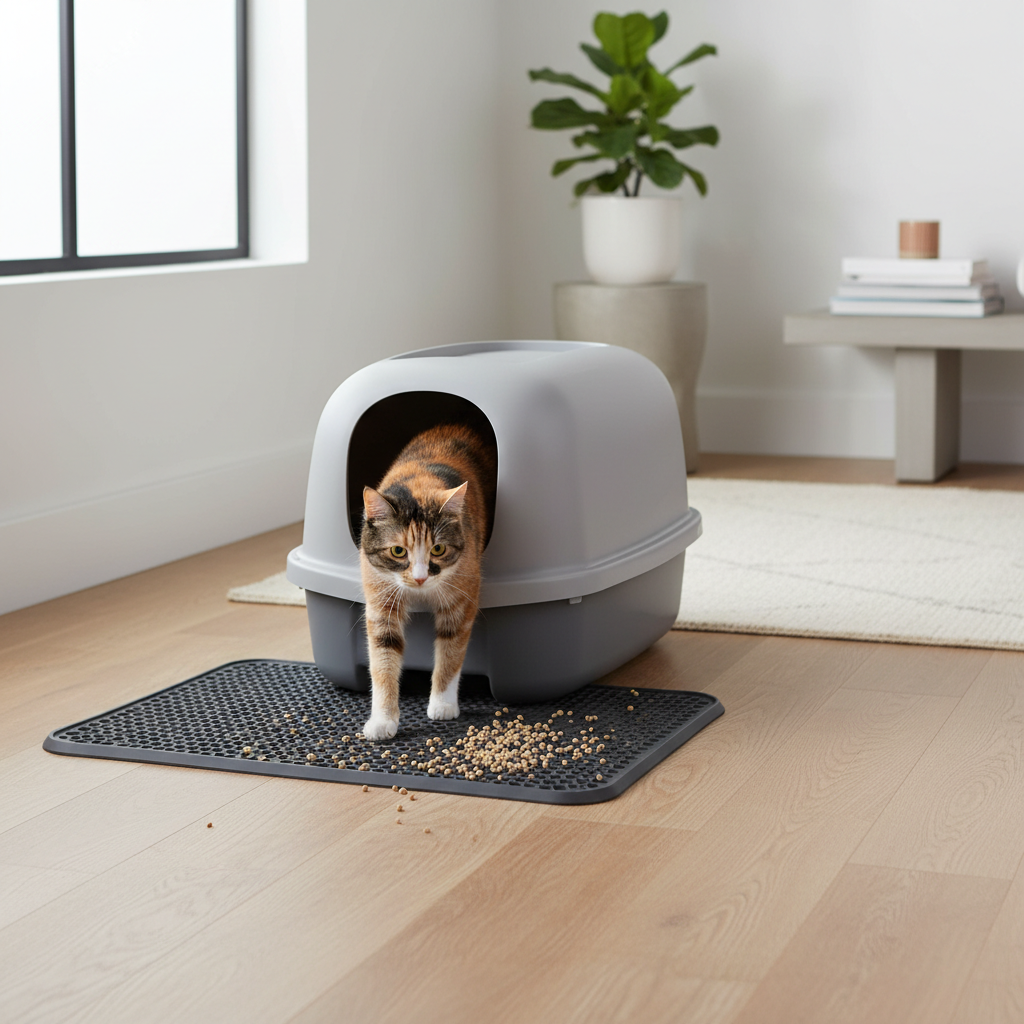
This guide breaks down why litter travels, how different mat designs trap it, and the small setup choices that usually make a bigger difference than buying the “thickest” mat online.
Key takeaways: placement matters, surface texture matters, and the wrong mat can annoy some cats enough to create new problems you didn’t have.
Why litter tracks in the first place (and why it’s not just the mat)
Most tracking starts at the moment your cat exits the box, litter clings to paws, fur, or toe tufts, then drops off with each step. A mat helps, but it can’t compensate for every variable.
- Litter shape and weight: light, small-grain litters tend to travel farther; larger pellets often track less but can scatter if your cat kicks.
- Box style: high-sided boxes reduce flinging; top-entry designs can reduce scatter but aren’t a fit for every cat.
- Cat gait and coat: long-haired cats and fast “launchers” tend to export more litter.
- Humidity and static: in dry homes, some litters cling more; in humid areas, clumps can stick to paws.
According to American Veterinary Medical Association (AVMA) guidance on cat care, litter box setup and cleanliness influence use and behavior, so any change (including a new mat) should be introduced in a way that doesn’t make the box area feel unpleasant.
How cat litter mats actually trap tracking (designs that work vs. look nice)
A mat “traps” litter by forcing a few extra steps on a surface that dislodges granules, then holds them so they don’t bounce right back out. That’s the whole game.
Common mat styles and what they’re good at
- Honeycomb / double-layer: top layer catches, bottom layer stores; strong for fine litter, easy to dump.
- Ribbed or textured single-layer: wipes paws as the cat walks; simpler, often easier to vacuum.
- Carpet-like fabric: can feel soft to cats, but may hold odor and be harder to deep clean.
- Microfiber “bath mat” style: comfy and absorbent, decent for dust, but not always great at holding granules in place.
If your goal is cat litter mat trap tracking performance, prioritize texture + containment over thickness. A super plush mat can feel nice, but some litters just sit on top and slide off when you step on it.
Quick self-check: what kind of tracking mess do you have?
Before you shop, identify your mess pattern. It saves money, and it helps you pick a mat that solves your specific annoyance.
- Small granules all over the room: usually lightweight litter + not enough “wipe steps” exiting the box.
- Piles right outside the box: scatter from digging, or a box that’s too small/too low.
- Dusty footprints: dusty litter, dry air, or a mat that doesn’t hold fine particles.
- Wet crumbs or smears: litter sticking to paws; could be box moisture, overfilled litter depth, or occasional stool/urine contact. If this repeats, consider checking with a veterinarian because paw sensitivity or GI issues may be involved.
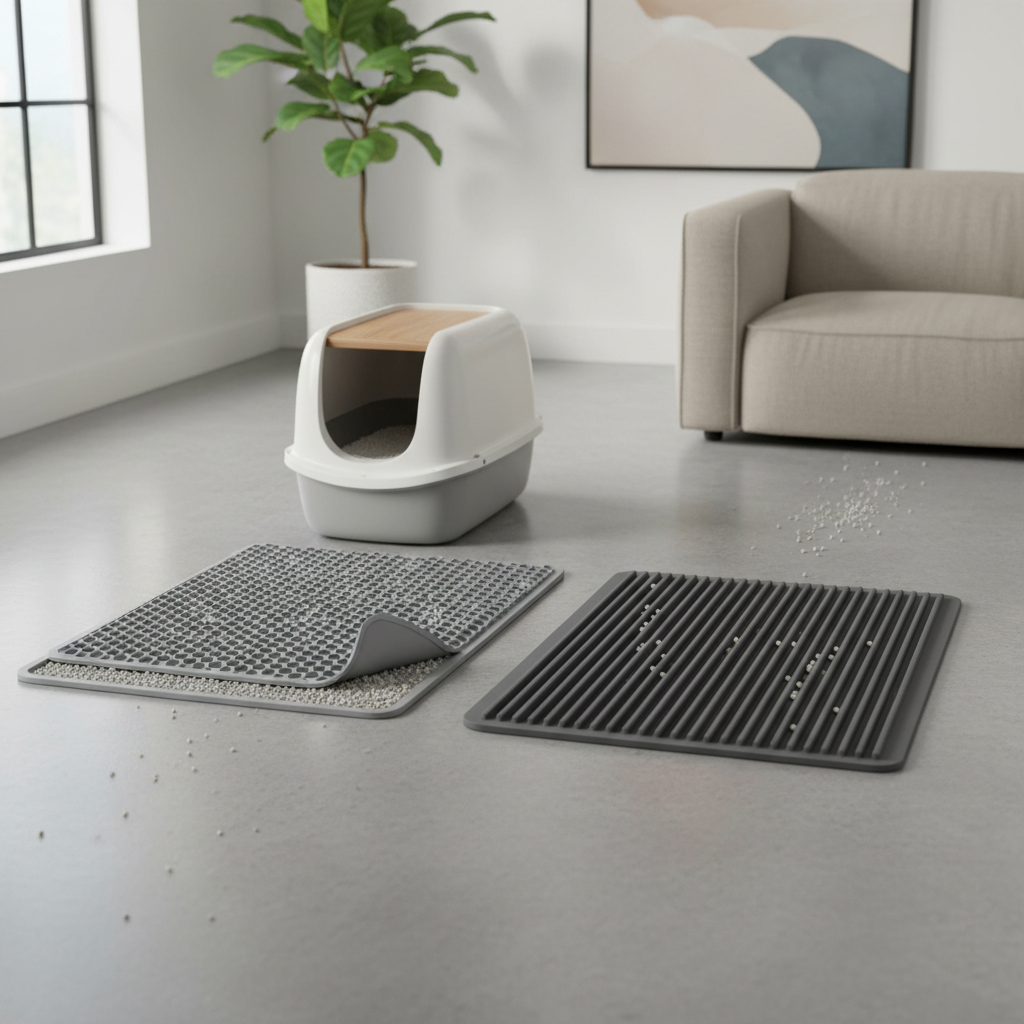
Also check your cat’s behavior: if they sprint out, jump over the mat, or avoid stepping on it, your “solution” becomes decoration.
Choosing the right mat: size, material, and comfort (the stuff listings gloss over)
Most people under-buy size. A tiny mat can’t do much because your cat takes one step and you’re back on hardwood.
A practical sizing rule
- Length: aim for at least 24–36 inches in the main exit direction.
- Width: wide enough that your cat can’t easily bypass it, especially if they exit at an angle.
- Edges: slightly raised lips can help contain scatter, but avoid edges that curl and trip you.
Material considerations that matter in real homes
- Grip: a mat that slides becomes useless; look for non-slip backing.
- Cleaning style: if you prefer shaking outdoors, double-layer works well; if you prefer vacuuming, ribbed mats can be simpler.
- Cat comfort: some cats dislike rough textures; if your cat hesitates, try a softer surface or a gradual intro.
For households chasing cat litter mat trap tracking results, “easy to dump” matters as much as trapping, because a mat that’s annoying to clean tends to stay dirty, then stops working.
Placement and setup: where most tracking wins actually come from
Even a good mat fails when it’s placed like a welcome mat at the wrong door. Think about your cat’s exit path, not your room layout.
- Cover the landing zone: place the mat where paws touch down first, not an inch away from the box.
- Match the exit direction: if your cat exits left, rotate the mat; don’t assume “front” matters.
- Create a forced path (gently): in some rooms, placing the box near a wall helps make the mat unavoidable without “blocking” the cat.
- Use two mats when needed: a smaller mat under the box for scatter + a longer runner for tracking can work better than one giant piece.
If you also have litter stuck in paws, lower the litter depth a bit and consider a slightly larger-grain litter; many cats do fine with that change, though preferences vary.
A simple troubleshooting table (symptom → likely cause → what to try)
| What you see | Likely cause | Try this |
|---|---|---|
| Litter past the doorway | Mat too small or easy to bypass | Increase mat length, add a runner in the exit direction |
| Granules on top of mat (not inside) | Surface holds nothing | Switch to honeycomb/double-layer or deeper ribbed texture |
| Big scatter pile right outside box | Digging/kicking, low-sided box | Use higher sides or a scatter shield, keep mat tight to box |
| Wet litter bits on floor | Overfilled litter, clumps sticking to paws | Reduce fill level, scoop more often; if persistent, consider vet advice |
| Mat smells or looks grimy fast | Hard-to-clean material, trapped moisture | Choose washable materials, dry thoroughly, clean on a schedule |
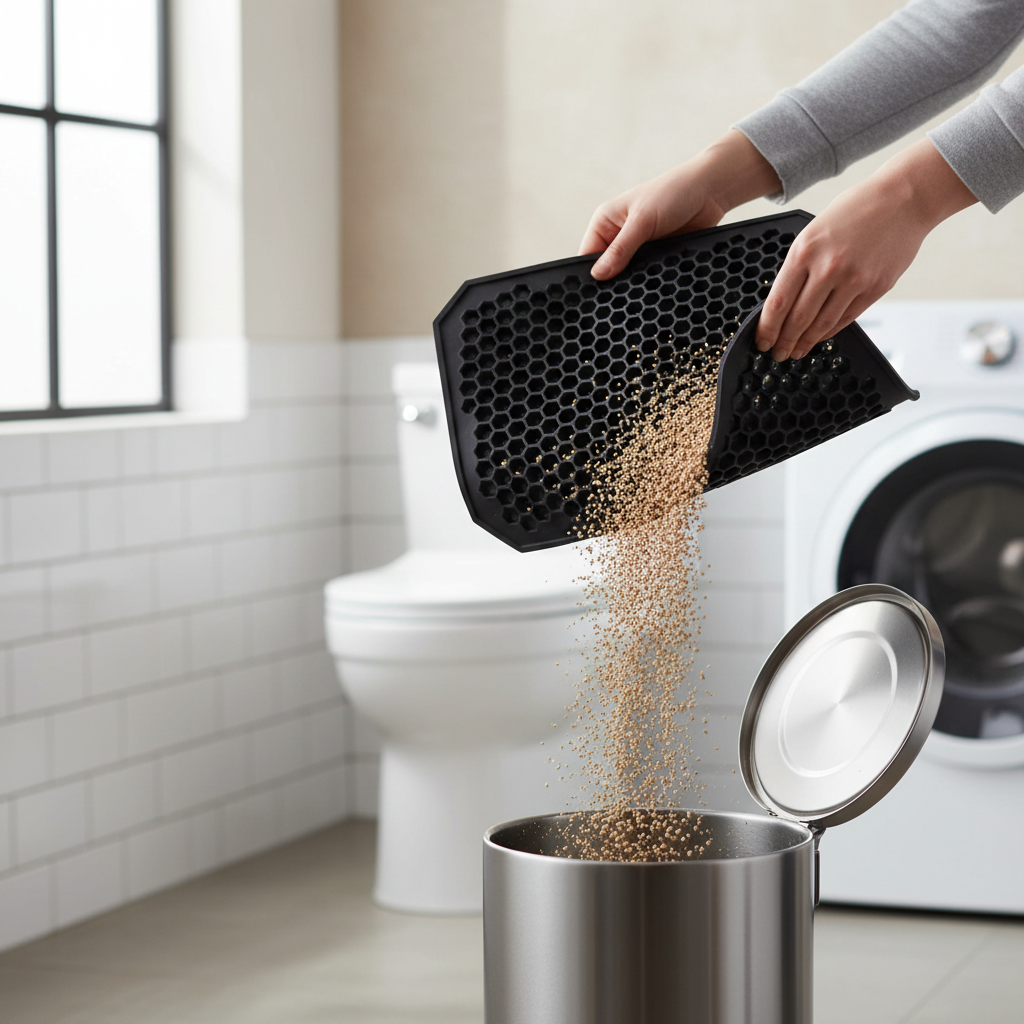
Don’t be surprised if you adjust two things at once: a better mat plus a minor change in litter grain often does more than either change alone.
Care, cleaning, and common mistakes (so the mat keeps working)
A mat that’s “full” stops trapping, and a mat that smells can make the whole litter area less inviting for your cat. The maintenance doesn’t need to be intense, just consistent.
- Quick routine: shake or vacuum every few days, more often in high-traffic multi-cat homes.
- Wash routine: rinse/wipe as needed, then dry fully to avoid musty odor.
- Avoid harsh cleaners: strong scents can bother cats; mild soap and thorough rinsing is usually safer.
Common missteps I see: buying a mat based only on looks, placing it with a gap from the box, or picking a rough texture that the cat refuses to step on. If your cat starts perching, jumping over the mat, or hesitating to enter the box area, treat that as feedback and adjust.
And one more reality check: cat litter mat trap tracking reduces mess, it rarely eliminates it. The goal is “easy cleanup” and “less spread,” not perfection.
Conclusion: a cleaner floor without turning your home into a litter project
If tracking is driving you crazy, start with the boring wins: a mat large enough to catch at least a few steps, placed exactly where your cat exits, then match the mat style to your litter grain. That combination usually cuts cleanup time more than any single “premium” feature.
Your next step: watch one exit from the box, note the exact path, then measure the space for a mat that covers it. If you want to go further, test one change at a time so you can tell what actually worked.
FAQ
What size litter mat is best to stop tracking?
Most homes do better with a longer mat than expected, because it forces a few steps that wipe paws. If you have space, 24–36 inches in the exit direction is a practical starting range.
Do honeycomb double-layer mats trap more litter than flat mats?
Often, yes, especially with fine-grain litter, because granules fall through and stay contained. The tradeoff is you’ll want to dump it out regularly so it doesn’t overflow back onto the surface.
Why does my cat jump over the litter mat?
Usually it’s texture dislike, a curled edge, or the mat feels unstable. Try a softer surface, make sure it’s flat and non-slip, and avoid placing it where your cat has to “step up” onto it.
Can a litter mat help with litter dust?
It can catch some dust and small particles, but it won’t fix a very dusty litter. If dust is a big issue, consider switching litters and checking ventilation, especially if anyone in the home has sensitivities.
How often should I clean a litter trapping mat?
In many single-cat setups, a quick shake or vacuum every few days keeps performance steady. Multi-cat homes or lightweight litter may need more frequent attention to stay effective.
Is it safe to wash litter mats in the washing machine?
Some are machine-washable, many are not, so check the manufacturer guidance. If you do machine wash, use mild detergent, rinse well, and dry fully; strong residual fragrance can bother some cats.
What if tracking suddenly gets worse even with a good mat?
Look for changes: a new litter formula, overfilled box, damp litter, or a cat with longer coat or toe fur. If you notice paw soreness, avoidance, or changes in bathroom habits, it’s reasonable to consult a veterinarian.
If you’re still chasing litter across the house, it may help to map your cat’s exit path and choose a mat designed for your litter type and cleaning style, not just the one with the best photos, a small tweak in placement often delivers the “why didn’t I do this sooner” result.