
Choosing an automatic pet water dispenser in a large size is mostly about matching real daily water demand, not just buying the biggest tank you can find.
If you have a large dog, multiple pets, or you’re gone for long stretches, the wrong capacity shows up fast: constant refills, slimy bowls, or a pump that gets noisy because the water level drops too low.
This guide breaks down what “large” should mean in practice, how to pick capacity and filtration without overpaying, and what to watch for so the dispenser stays safe, quiet, and easy to clean.
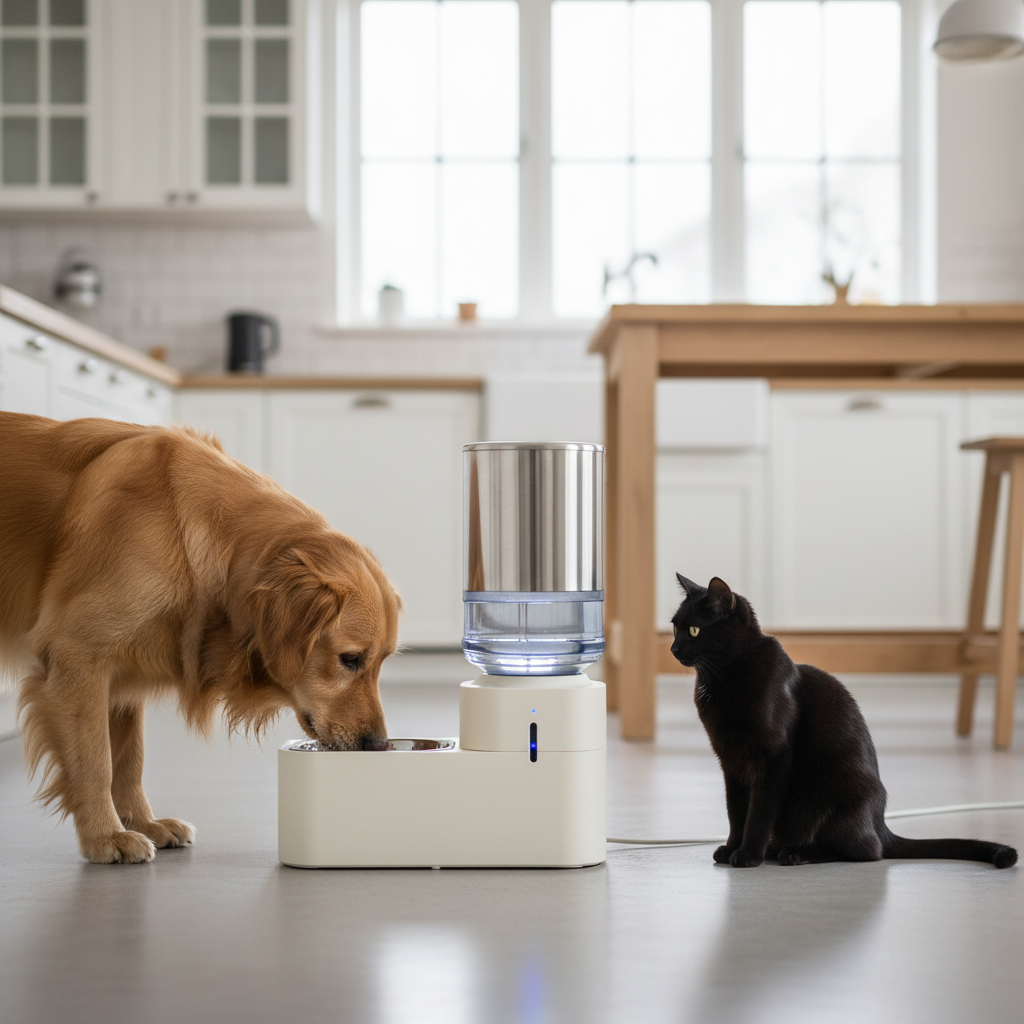
What “Large” Really Means for an Automatic Dispenser
“Large” can mean capacity, but it can also mean a wider bowl, a stronger pump, or a base that won’t slide when a big dog drinks like it’s a sport. Capacity still matters most, yet it’s not the only reason people upgrade.
- Large tank: fewer refills, more buffer during hot days or busy weeks
- Large drinking area: less crowding when two pets drink at the same time
- Large-pet stability: heavier base, low center of gravity, non-slip feet
- Large-pet flow: consistent circulation without splashing or “gulping” noise
If your main pain is refilling twice a day, go bigger on capacity. If your pain is mess and sloshing, go bigger on base and bowl design even if the tank size stays moderate.
Capacity Sizing: A Practical Way to Choose
Most brands list capacity in liters or ounces, but your decision usually comes down to two questions: how many pets drink from it, and how long you want to go between refills.
According to the American Kennel Club (AKC), many dogs need roughly an ounce of water per pound of body weight each day, with needs varying by activity and temperature. That range is why capacity can feel “fine” one week and suddenly not enough during a heat wave.
Quick sizing table (rule-of-thumb)
| Home setup | Typical refill target | Suggested dispenser size | Notes |
|---|---|---|---|
| 1 cat | Every 3–5 days | 1.5–2.5 L | Prioritize easy cleaning over huge volume |
| 1 medium dog (25–50 lb) | Every 1–3 days | 2.5–4 L | Choose stable base, quiet pump |
| 1 large dog (50–90 lb) | Every 1–2 days | 4–7 L | Look for low-water protection, sturdy parts |
| 2+ pets (dog + cat) | Every 1–2 days | 4–7 L | Wider bowl helps avoid “traffic jams” |
| Multi-dog home | Daily | 6–10 L | Consider two stations rather than one giant unit |
One honest note: going extremely large can backfire if you end up letting water sit too long. In many homes, “fresh enough” depends more on cleaning cadence than raw capacity.
Features That Matter More Than Marketing
When people shop for a large dispenser, they often get pulled into feature lists that don’t change daily life. A few features do, especially in big-dog and multi-pet setups.
- Low-water shutoff: helps prevent pump damage and reduces overheating risk if the tank runs low
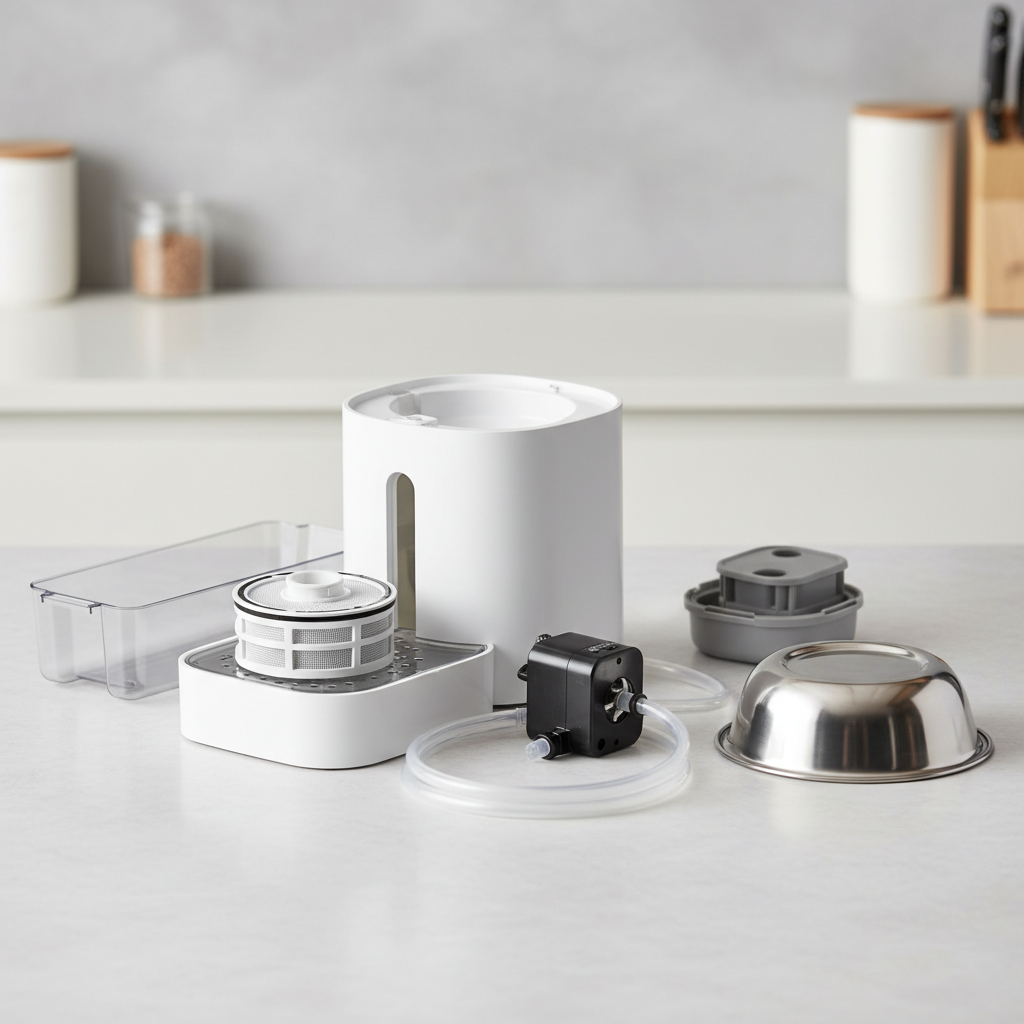
- Easy-to-clean build: fewer tight corners, fewer small clips, dishwasher-safe parts when possible
- Filter availability: replacement filters that are easy to find and not oddly proprietary
- Noise control: a quiet pump matters more at night than you think
- Stable base: wide footprint and non-slip feet for enthusiastic drinkers
Stainless steel bowls are popular because they tend to resist odor and scratches better than some plastics, though the full unit still needs regular washing either way.
Self-Check: Do You Actually Need a Large Unit?
Before you commit to a bigger footprint, it helps to be clear about what problem you’re solving. This quick checklist usually makes the answer obvious.
- You refill more than once a day, or you keep “topping off” so the pump doesn’t run dry
- Your dog drains the bowl fast and then ignores it until you refill, which can mean they prefer moving water
- Two pets regularly drink back-to-back, and one gets pushed away
- You travel for day trips, or you work long shifts and want more buffer
- You see more debris, hair, or drool strings, which often calls for better filtration and easier cleaning
If none of these feel familiar, a medium-size fountain plus a consistent cleaning routine may be the smarter buy than a huge reservoir.
Setup and Maintenance: The Part People Underestimate
A large automatic pet water dispenser can be low-effort, but only if you set it up so cleaning feels frictionless. The quickest way to abandon a dispenser is to buy one that’s annoying to take apart.
Practical setup steps
- Place it away from food bowls so kibble dust doesn’t end up in the water as quickly
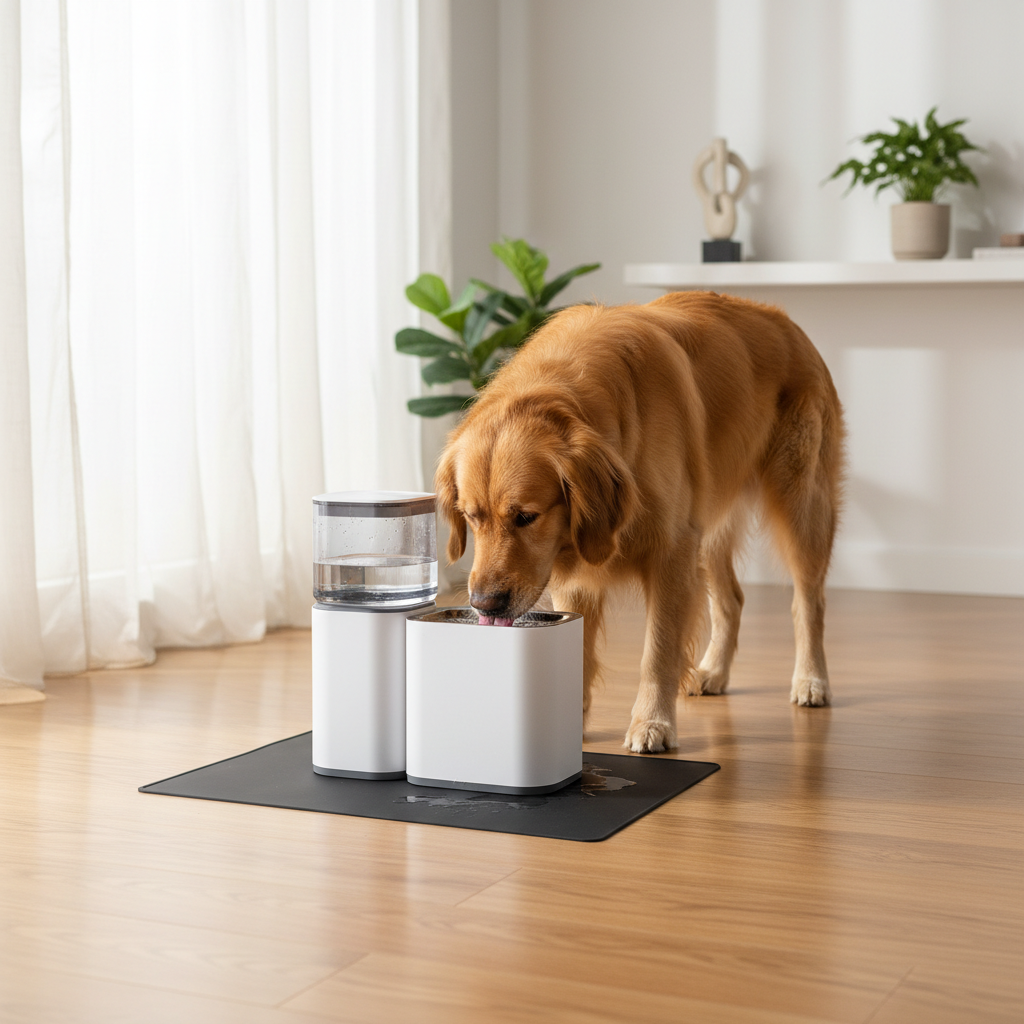
- Use a mat if you have a messy drinker; it prevents sliding and protects floors
- Prime the pump as the manual suggests; a dry-start often makes noise and shortens pump life
- Pick a refill rhythm (for example, same time every morning) so “big tank” doesn’t become “stale water”
Cleaning cadence (typical, varies by home)
- Daily: quick rinse, wipe biofilm line, top off with fresh water
- Weekly: wash bowl and tank with mild soap, clean pump intake, rinse thoroughly
- Filter changes: follow the manufacturer schedule, but shorten it if you see odor or slow flow
According to the U.S. Food and Drug Administration (FDA), cleaning and sanitizing food-contact surfaces helps reduce germs; while pet dispensers aren’t “human food equipment,” the same common-sense hygiene logic applies. If your pet has health issues, a veterinarian can suggest a cleaning routine that fits their needs.
Common Mistakes (and How to Avoid Them)
Most problems people blame on “a bad unit” are actually usage issues. Not always, but often enough that it’s worth checking.
- Buying huge capacity to avoid cleaning: more water sitting longer can still develop odor or slime
- Ignoring pump maintenance: hair and mineral scale can reduce flow and increase noise
- Using the wrong water type: hard water can leave deposits; many homes do better with filtered water
- Letting cords become chew targets: route cords out of reach and use cord covers if needed
- Assuming filters replace washing: filtration helps, but it doesn’t remove the need to scrub surfaces
If your dispenser gets loud, don’t just turn up the TV. First check water level, then check for trapped air, then look for gunk at the pump intake.
When to Consider Vet or Professional Help
Water gadgets can support hydration habits, but they don’t “solve” medical issues. If your pet suddenly drinks much more or much less than usual, or you notice accidents in the house, it may signal an underlying condition and it’s worth checking with a veterinarian.
Also consider asking a pro if you’re dealing with repeated chin acne in cats, frequent stomach upset after drinking, or you suspect an electrical safety issue with any plugged-in device. In those cases, swapping materials or changing the station setup can help, but guidance keeps you from guessing.
Key Takeaways and a Simple Buying Plan
If you want a large dispenser that actually feels easier day to day, focus on capacity plus cleanability, then sanity-check noise and stability.
- Match size to refill goals, not just pet size
- Prioritize easy cleaning over extra modes and lights
- Choose stable designs for large dogs and multi-pet homes
- Plan maintenance so water stays fresh, not just plentiful
My practical suggestion: pick a capacity that buys you one extra day between refills, then invest your “saved time” into a fast weekly clean. That combo tends to deliver the best real-world payoff.
FAQ
What size automatic pet water dispenser is considered “large”?
Many shoppers treat 4 liters and up as “large,” but the better definition is whether it covers your household’s typical 24–48 hours without the pump running low.
Is a bigger reservoir always better for freshness?
Not necessarily. A bigger tank can mean water sits longer, so freshness still depends on how often you rinse and wash parts, plus how much debris your pets bring to the bowl.
Do filters remove the need to clean the dispenser?
No. Filters can reduce taste issues and trap debris, but biofilm can still form on surfaces. If you can feel a slippery film, it’s time to scrub.
My dispenser is noisy—does that mean it’s defective?
Sometimes, but many cases come from low water level, trapped air, or a clogged pump intake. If noise continues after cleaning and proper fill level, warranty support may be worth contacting.
Can an automatic dispenser help a cat drink more water?
It can, because some cats prefer moving water, but results vary. Placement, bowl material, and cleanliness often matter as much as the fountain itself.
Is stainless steel always safer than plastic?
Stainless steel often resists scratches and odors, which can help with hygiene, but any material can be fine if it’s well-made and cleaned regularly. If your pet has sensitivities, ask a veterinarian about bowl material.
Should I buy one large unit or two smaller ones for multiple pets?
Two stations can reduce crowding and help shy pets drink comfortably. In a small space, one large, stable unit may be simpler, but watch for bottlenecks at busy times.
If you’re trying to pick an automatic pet water dispenser that can handle a large dog or a multi-pet routine without turning into another chore, it helps to compare a few models side by side using your refill goal, cleaning effort, and filter cost as the deciding factors.