
how to help dog with separation anxiety starts with one simple idea, your dog isn’t “being bad,” they’re struggling when you’re gone, and the fix usually looks more like a plan than a quick trick.
If you’ve come home to shredded blinds, neighbor complaints, puddles from a house-trained dog, or a pet who looks panicked the moment you grab your keys, you’re not alone, and you’re not failing. Separation anxiety is common, and it can escalate if you accidentally practice the wrong departures every day.
The good news is that many dogs improve a lot with the right combination of behavior work, predictable routines, and smarter management. This guide walks you through how to tell true separation anxiety from “bored dog” behavior, what to change this week, and when it’s worth looping in a veterinarian or a qualified trainer.
Key takeaway: the goal isn’t to “tire your dog out” until they give up, it’s to teach your dog that being alone feels safe and temporary.
What separation anxiety looks like (and what it’s not)
A dog with separation anxiety typically shows distress tied to your absence, not just general mischief. Many owners miss this distinction because the mess is what you see, not the emotion that caused it.
- Common signs: barking/howling soon after you leave, scratching doors or windows, drooling, panting, pacing, attempts to escape, or destructive chewing focused on exit points.
- “But my dog is house-trained”: accidents can happen when panic spikes, even in dogs who reliably hold it when calm.
- What it’s often confused with: adolescent chewing, under-exercise, lack of training, or a dog who simply hates the crate.
According to the American Veterinary Medical Association (AVMA), behavior problems are a common reason pets lose their homes, so taking anxiety seriously is more than a convenience issue, it’s a welfare issue.
Why it happens: the most common causes in real homes
There isn’t one universal cause. In many households, separation anxiety shows up after a change that seems minor to humans but feels huge to a dog.
- Routine shifts: moving, a new job schedule, a partner moving in or out, hybrid-to-office transitions.
- Loss and instability: rehoming history, time in shelters, or losing a bonded person or pet.
- Over-attachment patterns: dogs who rarely practice being alone, especially when every room-change becomes a “follow mom” mission.
- Noise and outside triggers: some dogs spiral when they hear hallway footsteps, delivery trucks, or fireworks while alone.
- Medical discomfort: pain, GI upset, senior cognitive changes, or urinary issues can stack stress on top of isolation.
It’s tempting to look for a single “event,” but many dogs accumulate stress over weeks, then tip over when a schedule changes.
Quick self-check: is this separation anxiety or something else?
Before you start a training plan, it helps to classify the problem, because the fix for boredom looks different from panic. Use this as a practical gut-check, not a diagnosis.
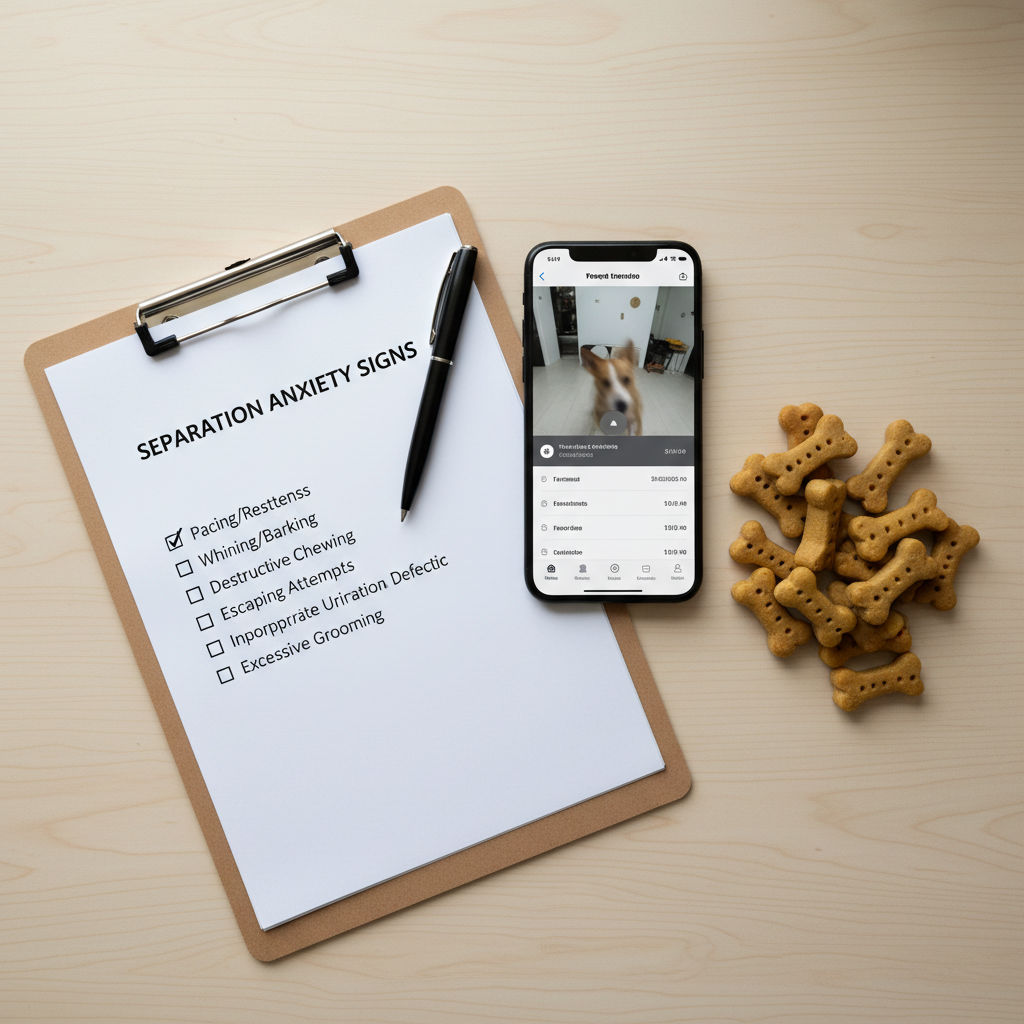
- Timing: does distress start within 5–30 minutes after you leave, and settle when you return?
- Pattern: is destruction focused near doors/windows, or random chewing everywhere?
- Intensity: does your dog seem unable to eat, rest, or self-soothe when alone?
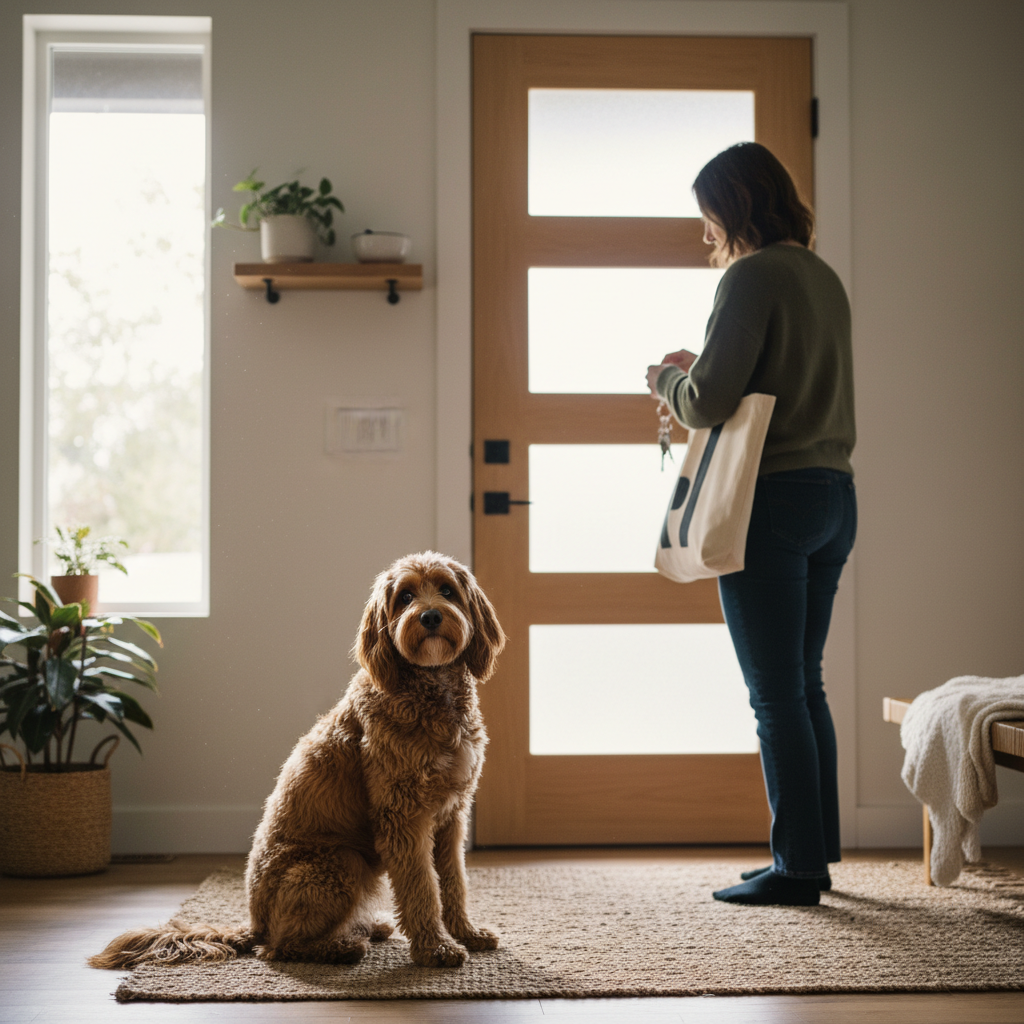
- Triggers: do “leaving cues” (shoes, keys, work bag) cause shaking, shadowing, whining?
- Video evidence: can you check a pet cam to confirm vocalizing, pacing, or escape attempts?
If you see sustained panic, especially escape behavior or nonstop vocalization, treat it as anxiety. And if you suspect pain or illness, it’s smart to talk with a veterinarian before pushing longer alone-time practice.
Start here: management changes that prevent backsliding
If your dog panics for 30 minutes, practicing 30-minute absences every weekday often keeps the anxiety “fresh.” Management is how you stop re-injuring the same spot while you build new skills.
- Reduce “big departures” temporarily: use a dog sitter, daycare, or a friend if you can while training ramps up.
- Create a safe confinement setup: some dogs do better in a small room with a baby gate, others prefer a crate, but forcing a crate when the dog panics can make things worse.
- Block rehearsal of escape routes: cover window access, move furniture away from sills, use door guards if scratching escalates.
- Use a camera: you need feedback, guessing tends to lead to too-fast progression.
According to the American College of Veterinary Behaviorists (ACVB), effective treatment often combines behavior modification with environmental management, and sometimes medication, depending on severity.
Behavior training that actually helps: gradual alone-time in small steps
how to help dog with separation anxiety usually comes down to structured desensitization, meaning you teach “alone” in doses your dog can handle without tipping into panic. If the dog panics, the step is too big.
Step 1: make leaving cues boring
Pick 3–5 cues that set your dog off, like picking up keys or putting on shoes, then do them at random times without leaving. The goal is emotional neutrality.
- Put on shoes, sit back down, scroll your phone for 30 seconds
- Pick up keys, walk to the sink, set them down
- Open the front door, close it, walk away
Step 2: practice micro-absences your dog can “win”
Start with seconds, not minutes. Walk out, count to 3, come back before distress starts, then act calm and normal. Build slowly, and don’t increase duration every single rep.
- Good sign: your dog can sniff, chew, or lie down while you’re gone
- Too hard: immediate barking, door-charging, frantic pacing, refusal to take treats
Step 3: add randomness and real-life variety
Once you reach a few minutes comfortably, vary the routine so your dog doesn’t only cope with one “script.” Try different doors, different shoes, short car-starts without leaving, and slightly different times of day.
Realistic expectation: moderate cases can take weeks of steady practice, and severe cases often take longer. Speed tends to come from consistency, not from pushing bigger jumps.
Enrichment and routines that reduce anxiety (without masking it)
Enrichment won’t “cure” separation anxiety by itself, but it can lower baseline stress so training sticks better. The trick is choosing activities your dog can do while alone.
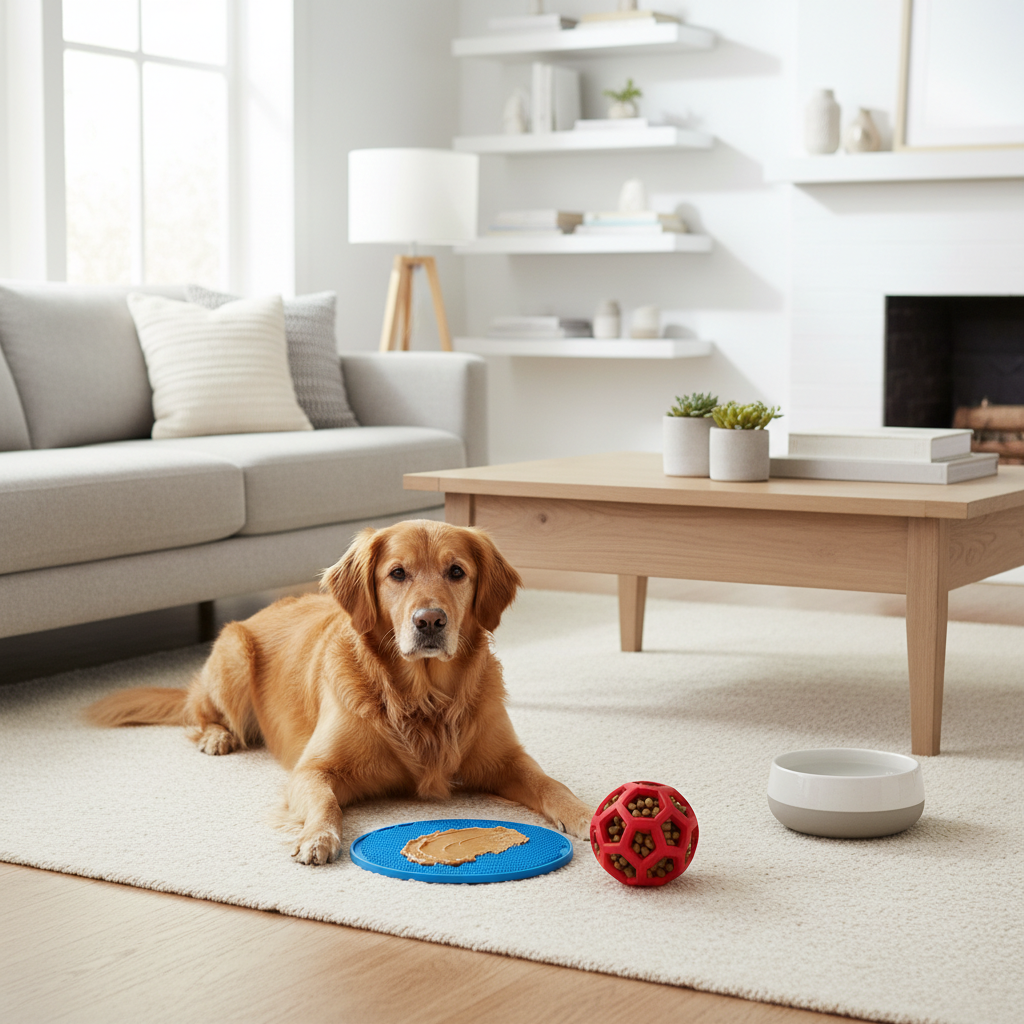
- Food puzzles and lick mats: use safe, vet-appropriate foods, and test them when you’re home first.
- Scent games: scatter kibble in a snuffle mat or hide small treats around one safe room.
- Predictable pre-departure routine: short potty break, brief calm play, then a settle period.
- Sound masking: white noise or calm music can help some dogs, especially in apartments.
One caution: if your dog won’t touch food once you leave, that’s often a clue the anxiety level is high, and you may need to lower the absence duration or talk with a professional.
What to do on a typical workday: a practical plan
People get stuck because the training plan sounds nice, but Tuesday at 8:15 a.m. is chaos. Here’s a workable template you can adapt.
Sample weekday schedule (adjust to your dog)
| Time | What you do | Why it helps |
|---|---|---|
| Morning | Potty + short sniff walk, then calm decompression at home | Sniffing lowers arousal for many dogs, calm sets the tone |
| Pre-leave | Give a tested food puzzle, start white noise, set up camera | Builds a predictable “safe alone” context |
| Midday | Dog walker or sitter visit if absences exceed training level | Prevents panic rehearsal while you train |
| Evening | Short training reps of micro-absences, then normal family time | Improves skills without relying on exhaustion |
Small but important detail: keep greetings low-key. If every reunion becomes a party, some dogs stay keyed up, waiting for the “big moment” to return.
Mistakes that quietly make separation anxiety worse
Most mistakes come from good intentions. You try to reassure, but the pattern backfires.
- Punishing the aftermath: scolding for destruction or accidents usually increases anxiety and can make departures harder.
- Jumping durations too fast: going from 2 minutes to 20 minutes often resets progress.
- Using a crate as a “must”: a crate can be helpful, but if your dog panics in it, forcing it can increase injury risk.
- Skipping video: many dogs look “fine” when you leave, then unravel minutes later.
- Relying on sedation-only solutions: medication may help in some cases, but it typically works best paired with behavior training under veterinary guidance.
According to the American Society for the Prevention of Cruelty to Animals (ASPCA), separation anxiety treatment often involves gradual departures and teaching independence skills, not punishment or “dominance” tactics.
When to involve a vet or a qualified behavior pro
Some cases need more support than a DIY plan, and that’s not a reflection on you or your dog. It’s just the reality of panic-level behavior.
- Safety red flags: bloody paws, broken teeth, jumping through windows, heavy drooling or vomiting during absences.
- Severe distress on camera: nonstop pacing, screaming, or repeated escape attempts.
- No progress after 2–4 weeks: when your plan is consistent but your dog stays stuck at very short durations.
- Possible medical layer: sudden onset in an older dog, new accidents, signs of pain.
A veterinarian can rule out medical contributors and discuss whether medication might reduce panic enough for learning to happen. For training support, look for a credentialed professional who uses reward-based methods; in the U.S., that often means a board-certified veterinary behaviorist or a reputable certified trainer who has separation anxiety experience.
Putting it together: a realistic path forward
how to help dog with separation anxiety is rarely about one magic toy or one “alpha” routine, it’s about lowering the panic, preventing rehearsal, and building tolerance in tiny, repeatable steps.
- Action step for today: set up a camera and identify the first moment your dog starts to struggle.
- Action step for this week: begin micro-absence training and keep duration below the panic threshold.
- Action step for next month: tighten your routine, add enrichment your dog can actually use when alone, and consider professional support if progress stalls.
If you stick with it, many dogs learn that alone time is just part of life, not an emergency. And honestly, that’s the outcome you’re really chasing, a dog who can exhale when the door closes.
FAQ
- How long does it take to fix separation anxiety in dogs?
It varies by severity and consistency. Many mild cases improve in weeks, while more intense panic can take months, especially if the dog keeps experiencing long absences that trigger distress. - Should I get another dog to help with separation anxiety?
Sometimes companionship helps, but it often doesn’t solve true separation anxiety because the dog is distressed about separation from a person. It can also create a second dog with stress if you’re not careful. - Does exercise cure separation anxiety?
Exercise can reduce overall stress, but it usually doesn’t resolve panic about being alone. Think of it as support for training, not the main treatment. - Is a crate good for a dog with separation anxiety?
Some dogs feel safer in a crate, others feel trapped and escalate. If you see frantic attempts to escape, heavy drooling, or self-injury risk, a different safe setup may be better, and professional guidance is wise. - What if my dog won’t eat treats when I leave?
This often signals anxiety is already too high. Try shorter absences, test enrichment while you’re still home, and consider consulting a vet or behavior professional if refusal persists. - Can I use calming supplements for separation anxiety?
Some owners find certain products mildly helpful, but responses vary and quality differs by brand. It’s safest to discuss supplements with a veterinarian, especially if your dog takes other medications. - What’s the best way to stop barking when I leave?
Address the underlying distress rather than the symptom. Use gradual alone-time training, reduce triggers, and confirm progress with video, because barking often starts after you’ve already left.
If you’re trying to juggle work, neighbors, and a dog who panics the moment you step out, a structured plan can feel like a lot, so it may help to ask a vet or a qualified trainer to map your starting threshold and build a week-by-week progression you can actually follow.