
How to reduce cat shedding starts with a simple truth: some shedding is normal, but “fur everywhere” usually means your cat’s coat cycle is getting pushed by grooming gaps, dry air, stress, or something health-related.
If you’re in the U.S., you probably feel it most on dark clothes, couch corners, and bedding, and it gets worse seasonally or when indoor heat or AC runs nonstop. The good news is you can often make a noticeable dent with small, consistent changes rather than one miracle product.
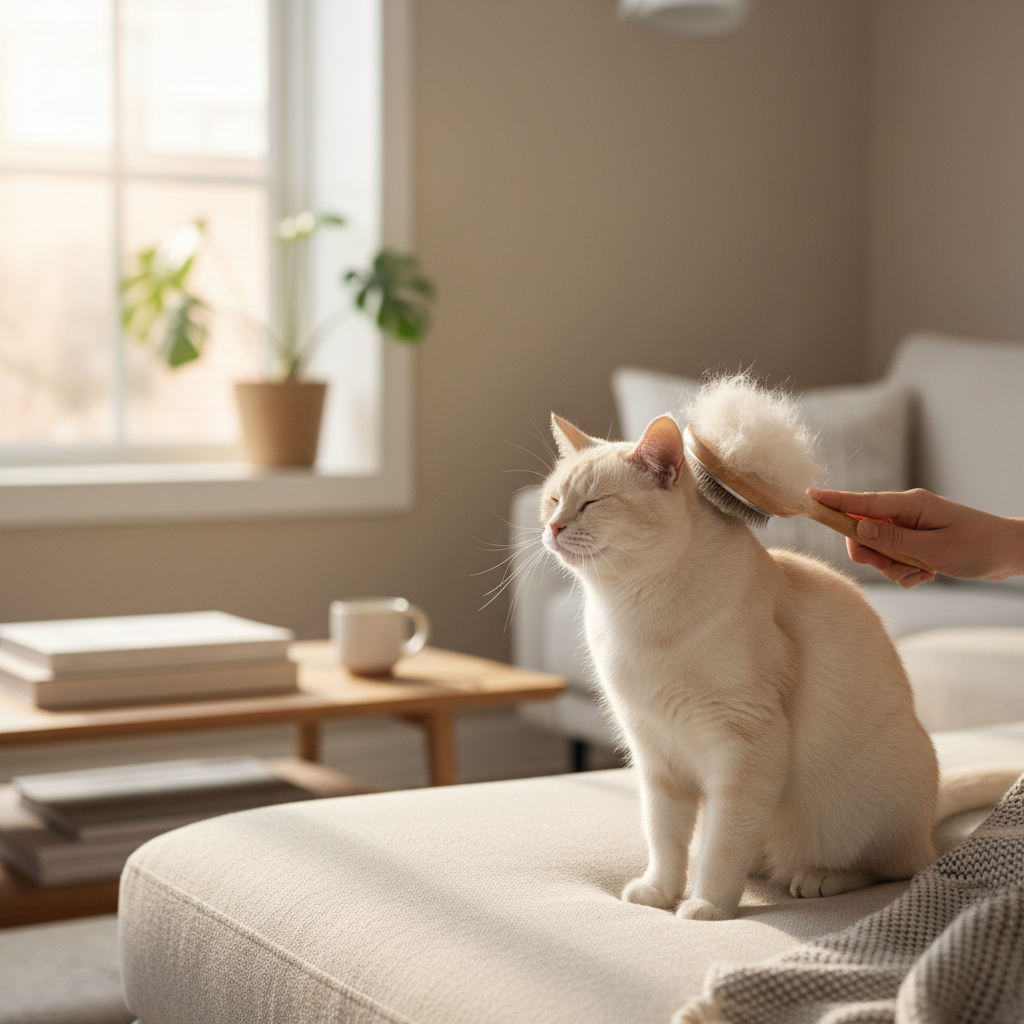
One quick misconception to clear up: “natural” does not mean “do nothing.” It usually means doing the basics well, brushing with the right tools, feeding a diet that supports skin, and adjusting the home environment before you reach for supplements or medicated shampoos.
This guide breaks down why shedding spikes, how to tell what kind you’re dealing with, and what to do week by week, plus when it’s smarter to call your veterinarian.
Why cats shed more than usual (the real-world reasons)
Cats shed to replace old hair, but excessive shedding often comes from a few predictable buckets. Figuring out which bucket you’re in saves a lot of trial and error.
- Seasonal coat shift: Many cats blow coat in spring and fall, indoor lighting and temperature can blur the seasons but not erase them.
- Under-grooming or wrong tools: Longhair cats mat, shorthair cats pack loose undercoat, both can “dump” when brushed too infrequently.
- Dry skin: Indoor heating, low humidity, or too-frequent bathing can make skin flaky, hair breaks and releases faster.
- Diet imbalance: A diet that does not agree with your cat, or lacks adequate essential fatty acids, can show up as dull coat and shedding.
- Stress and routine changes: Moves, new pets, loud construction, even a new litter box location can trigger overgrooming.
- Parasites or skin disease: Fleas, mites, ringworm, and bacterial or yeast issues can cause hair loss that looks like shedding.
- Medical causes: Pain, thyroid issues, allergies, or other conditions sometimes present as coat change. According to the American Veterinary Medical Association (AVMA), skin problems are among common reasons pets are brought to veterinarians, and persistent changes warrant a professional look.
Quick self-check: normal shedding or a problem?
Before you change food or buy new gear, take two minutes to look for patterns. This is the fastest way to decide whether you’re dealing with “more hair than you’d like” or something that needs medical attention.
- Distribution: Fur everywhere evenly suggests typical shedding, patchy loss suggests skin or grooming issues.
- Skin condition: Redness, scabs, black specks, dandruff, or odor points to irritation or infection.
- Behavior: Constant licking, chewing, or “barbering” fur can be stress, itch, or pain.
- Timing: A spike after turning on heat, changing foods, or a stressful event is a useful clue.
- Hairballs: More hairballs often track with more loose coat, but frequent hairballs can also signal grooming or GI sensitivity.
When it’s likely normal: coat looks healthy, no bald spots, cat acts normal, shedding rises seasonally.
When to be cautious: bald patches, sores, intense itch, sudden heavy shedding, weight change, low energy, or any sign of pain.
Grooming routines that actually reduce shedding
If you want a natural approach, grooming is the lever with the biggest payoff. The trick is not brushing harder, it’s brushing smarter and on a schedule your cat tolerates.
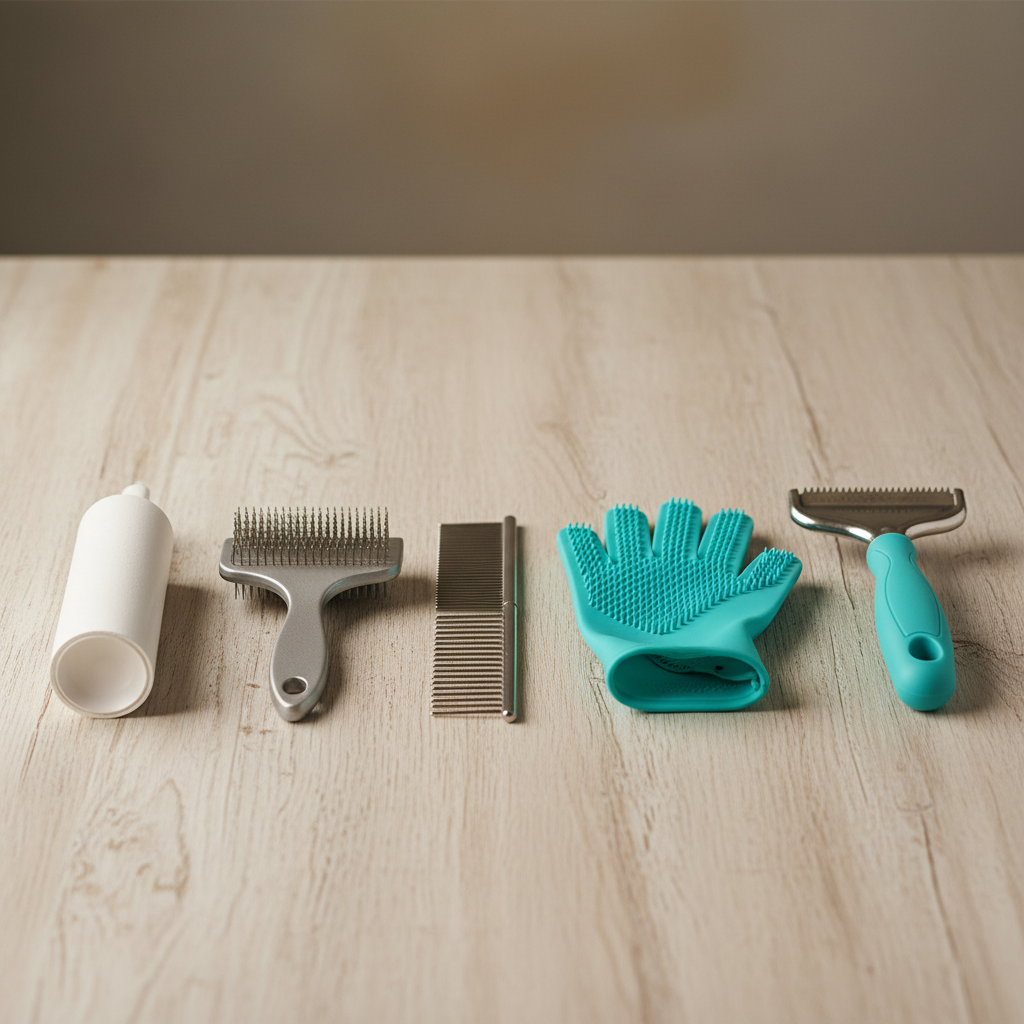
Choose the tool based on coat type
- Shorthair: rubber curry brush or grooming glove 2–3x/week, add a fine comb weekly to catch loose undercoat.
- Medium/longhair: wide-tooth comb for tangles, then slicker brush, then a quick comb-through to check for leftover knots.
- Double-coat or very plush coats: a deshedding rake can help, but use lightly; pressing too hard can irritate skin and backfire.
A realistic brushing schedule (that most cats accept)
- 3–5 minutes per session beats one long battle.
- Start with shoulders and back, end with sensitive areas (belly, legs) only if your cat is calm.
- Pair brushing with a treat or play, so your cat stops seeing it as a trap.
Bathing: usually optional, sometimes helpful
Many cats do not need regular baths, and too-frequent washing can dry skin. If you do bathe, use a cat-specific, fragrance-free shampoo and keep it infrequent. For cats that hate water, a damp microfiber cloth wipe-down can pick up loose fur and dander without the stress.
Nutrition and hydration: the “inside-out” coat support
People often ask how to reduce cat shedding with food alone. Diet can help, but it works best as part of a plan: brush, then support skin barrier, then reduce inflammation triggers.
According to the American Association of Feed Control Officials (AAFCO), complete and balanced pet foods are formulated to meet nutrient profiles for specific life stages, which matters because “extra” supplements sometimes solve nothing if the base diet is already adequate.
Diet moves that tend to help (without getting trendy)
- Confirm the food is complete and balanced for your cat’s life stage, look for an AAFCO statement on the label.
- Prioritize protein quality (not just high percentage), many cats do better with consistent, digestible formulas.
- Consider omega-3s cautiously if coat is dull or skin looks dry. Fish oil can help some cats, but dosage and product quality matter, so asking your veterinarian is a safer route.
- Increase moisture intake via wet food, water fountains, or adding a little water to meals, hydration supports skin in many cases.
Quick “change-food” guardrails
- Transition gradually over 7–10 days to avoid GI upset.
- If shedding started right after a diet change, consider reverting and discussing allergy or intolerance with a professional.
- Avoid essential oils or unverified “skin & coat” add-ins, cats can be sensitive to many ingredients.
Home environment: small tweaks that reduce fur everywhere
You can brush daily and still feel buried in fur if the home setup keeps re-circulating hair. These changes are not glamorous, but they work.

- Humidity: If your home is very dry (common in winter), a humidifier can reduce static and dry skin, which may reduce breakage and flakes.
- HEPA filtration: A HEPA air purifier can help capture dander and fine particles; it does not replace cleaning, but it can reduce how much ends up floating back onto surfaces.
- Fabric strategy: Washable throws on the sofa, and keeping one “cat blanket” where your cat prefers to lounge, concentrates hair in one place.
- Vacuum rhythm: Two quick passes per week often beats one massive clean, especially during coat-blow season.
- Brush stations: Keep a brush where you already sit (TV chair, entryway), convenience is what makes routines stick.
A simple 2-week plan (what to do first, without overthinking)
If you’re overwhelmed, here’s a practical sequence. It’s designed so you can see progress without changing ten variables at once.
Days 1–3: baseline and grooming reset
- Take photos of coat and any concerning spots, so you can compare later.
- Brush 3 minutes once daily, stop before your cat gets annoyed.
- Wash bedding or throws where your cat sleeps most.
Days 4–10: environment + consistency
- Brush 3–5 times during the week based on tolerance.
- Add a HEPA filter or run the HVAC filter on an appropriate schedule if you already have one.
- If home air feels dry, try modest humidity support, keep it clean to avoid mold issues.
Days 11–14: diet check, then adjust carefully
- Confirm AAFCO “complete and balanced” statement and life-stage match.
- If coat still looks dry, discuss omega-3 support with your veterinarian rather than guessing dosage.
- If there is itching or dandruff, avoid random shampoos, focus on diagnostics.
Common mistakes that make shedding worse
- Over-bathing: stripping oils can trigger dryness and more visible shedding.
- Using dog products on cats: ingredient tolerances differ, “natural” scents can still irritate cats.
- Brushing too aggressively: skin irritation leads to scratching, which leads to more hair loss.
- Chasing supplements first: without a solid brushing routine, supplements tend to feel like they “don’t work.”
- Ignoring fleas because you don’t see them: some cats react to a small number of bites, and you may only see flea dirt.
When to talk to a veterinarian (and what to ask)
If shedding comes with other signs, home fixes are not the right hill to die on. A quick exam can rule out parasites, infections, allergies, pain, or systemic issues.
- Patchy hair loss, scabs, open sores, or bleeding
- Intense itch, head shaking, ear debris, or strong odor
- Sudden coat change plus vomiting, diarrhea, appetite change, weight change, or lethargy
- Overgrooming or behavior changes that look stress-related but do not improve
If you go in, it helps to ask: “Could parasites be involved,” “Do you see signs of allergy or infection,” and “Is there a safe skin-and-coat plan for my cat’s age and health?” Many cases are straightforward once the cause is identified, but it’s hard to guess correctly from home.
Key takeaways + quick reference table
If you want the short version, focus on routine brushing, coat-supporting nutrition, and a home setup that doesn’t constantly re-spread hair. Then escalate to professional help when you see skin lesions or behavioral red flags.
Shedding triggers and what to try first
| What you notice | Likely bucket | Try first (natural steps) | Escalate when |
|---|---|---|---|
| More fur on furniture, coat still shiny | Seasonal shedding | Short daily brushing, wash throws weekly | If it lasts unusually long or becomes patchy |
| Dandruff, static, dry feel | Dry skin / low humidity | Less bathing, gentle brush, consider humidifier | If redness, odor, or scabs appear |
| Constant licking, thinning fur | Stress, itch, pain | Reduce triggers, structured play, gentle grooming | If overgrooming persists beyond 1–2 weeks |
| Patchy loss, crusts, flea dirt | Parasites/skin disease | Vet evaluation, safe parasite control plan | Immediately if sores, swelling, or rapid spread |
| Dull coat after diet change | Diet mismatch or sensitivity | Review AAFCO statement, gradual transition, ask vet | If GI issues or itch occur |
- Most effective lever: consistent, gentle brushing with the right tool.
- Most overlooked lever: dry indoor air and low moisture intake.
- Most important safety note: patchy loss, scabs, or intense itch should not be treated as “just shedding.”
Practical wrap-up
Reducing shedding naturally is rarely about a single fix, it’s about getting the basics aligned so your cat’s coat can do what it’s supposed to do. Start with a brush routine you can keep, clean smarter not harder, and only then tweak diet or add targeted support.
If you want one action today, brush for three calm minutes and look at the skin while you do it, that quick check often tells you whether you’re dealing with normal coat turnover or a problem that deserves a vet visit.
FAQ
How to reduce cat shedding in an apartment without constant vacuuming?
Concentrate hair where your cat rests, use washable throws, and brush near those spots. A HEPA air purifier can help with fine dander so less ends up re-settling.
Does wet food help with shedding?
It can, mainly because hydration supports skin and coat for many cats. It’s not a guaranteed fix, but it’s a reasonable lever if your cat tolerates it well.
What brush works best for a short-haired cat that “still sheds a ton”?
Many shorthair cats do well with a rubber curry or grooming glove for frequent sessions, plus a fine comb weekly. The comb is the part people skip, but it catches a surprising amount of loose coat.
How often should I bathe my cat to reduce shedding?
Often less than people think. Many cats do not need baths at all unless they get into something or have a vet-recommended skin plan. Too many baths can dry skin and make shedding look worse.
Are omega-3 supplements safe for cats?
They can be useful for some cats, but dosing and product quality matter, and some cats have conditions where fat supplementation needs caution. It’s smart to ask your veterinarian before starting.
My cat is shedding and scratching, but I don’t see fleas, what now?
You can still have fleas or flea allergy dermatitis with minimal visible fleas. Check for flea dirt with a comb, and consider a vet-guided parasite control plan rather than guessing.
How long does it take to see results when changing routine?
With brushing and cleaning, you may notice less hair around the house within a week. Coat quality changes tied to nutrition often take longer, commonly several weeks, because hair grows in cycles.
Can stress really cause shedding?
Yes, many cats respond to stress by overgrooming, and it can look like “extra shedding.” If you suspect stress, look for triggers and consider a veterinarian or behavior professional if it does not settle.
If you’re trying to how to reduce cat shedding but keep bouncing between brushes, foods, and cleaning hacks, it may help to step back and build a simple routine you can repeat, then adjust only one variable at a time. If skin looks irritated or hair loss is patchy, a veterinarian can help you avoid months of guessing.