
How to help a constipated dog at home usually comes down to three things: confirming it’s really constipation, using gentle hydration-and-fiber steps, and knowing when it’s no longer a DIY situation.
If your dog strains, circles the yard with no result, or passes small, dry stools, it’s stressful to watch, and it’s easy to overcorrect with random remedies. The goal here is relief without creating a new problem like diarrhea, dehydration, or masking a blockage.
This guide walks you through common causes, a quick self-check, practical home steps you can try, and the “stop and call the vet” signs that matter most.
What constipation looks like (and what it can be confused with)
Constipation is typically hard, dry stool that’s difficult to pass, often with straining. But a few look-alikes can trick you.
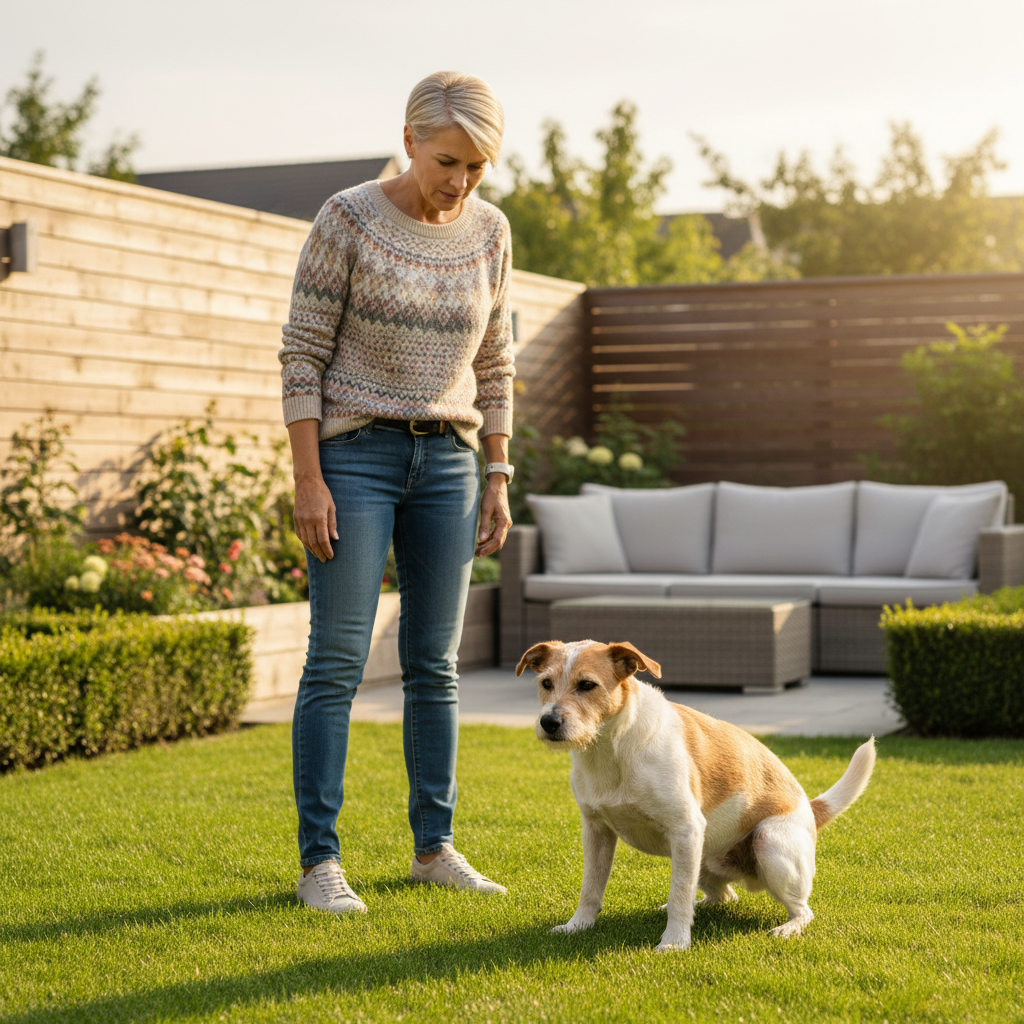
Common mix-ups:
- Diarrhea with straining (tenesmus): frequent squatting with little output, sometimes mucus.
- Urinary trouble: repeated squats, discomfort, little or no urine. This can become urgent fast.
- Anal gland discomfort: scooting or licking, sometimes normal stool but obvious irritation.
According to the American Veterinary Medical Association (AVMA), signs like repeated straining, pain, lethargy, vomiting, or blood warrant veterinary attention rather than prolonged home treatment.
Why dogs get constipated at home (real-world causes)
Most constipation has a boring explanation, but boring still needs the right fix.
- Not enough water: dry kibble-only diets, hot weather, or reduced drinking can dry stool out.
- Too little fiber: some dogs do better with moderate fiber, especially when stools trend dry.
- Too much “stuff”: chewing bones, rawhides, toys, rocks, cat litter, or hair can slow transit, and in some cases cause obstruction.
- Low activity: less movement can mean less gut motility, especially in older dogs.
- Stress and routine changes: travel, boarding, moving, or schedule shifts can change bowel habits.
- Pain or orthopedic issues: arthritis or back pain can make squatting uncomfortable, so dogs “hold it.”
- Medication side effects: some pain meds and antihistamines may contribute in certain dogs.
If your dog is a senior, very small breed, or brachycephalic, constipation can become more complicated, mostly because dehydration and discomfort show up sooner.
Quick self-check: is home care reasonable right now?
Use this checklist before trying remedies. It helps you avoid treating the wrong problem.
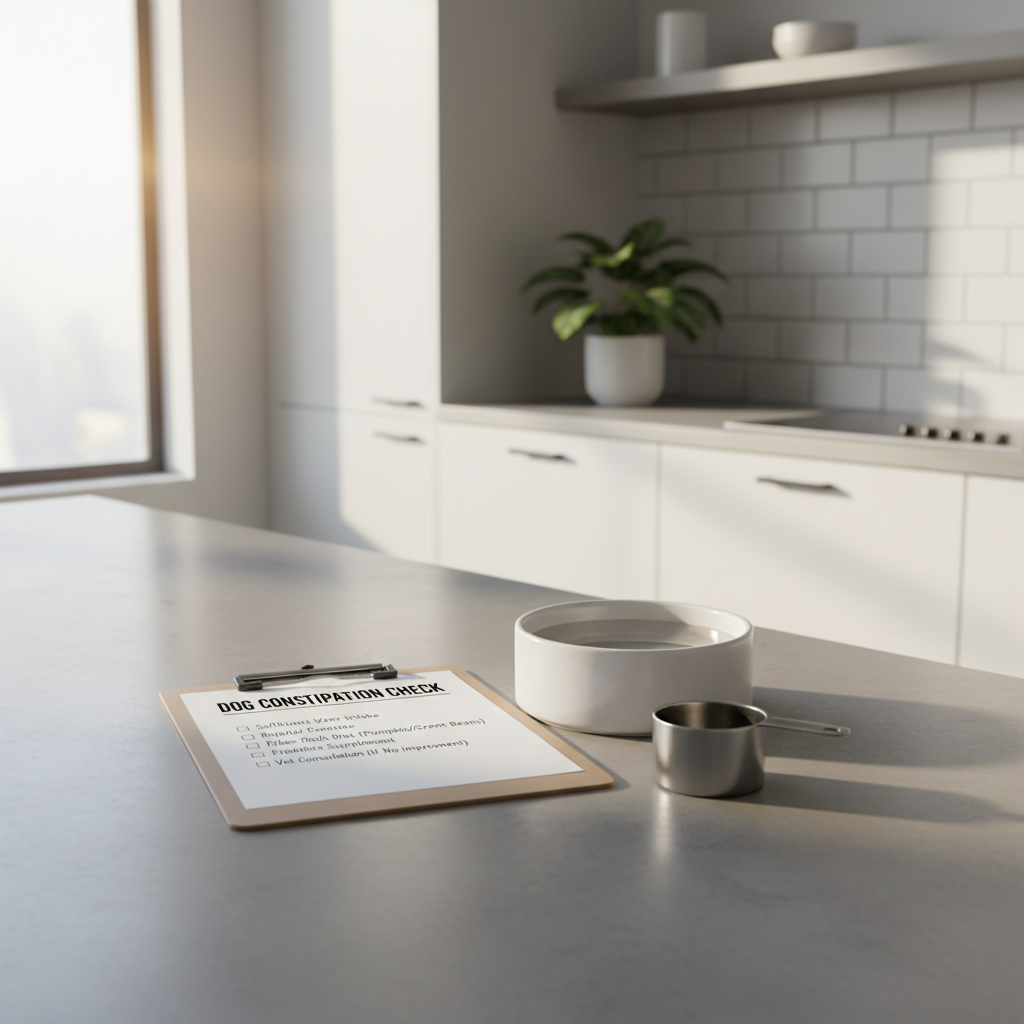
Home care is often reasonable if:
- Your dog is bright, eating at least some, and not vomiting
- Constipation is mild and less than 24–48 hours (varies by dog)
- No known access to bones, toys, corn cobs, socks, or other swallowable items
- You see small dry stool, not black/tarry stool or significant blood
Skip home care and call a vet promptly if:
- Vomiting, marked bloating, or repeated unproductive retching
- Severe pain, crying when trying to poop, or collapse/weakness
- No stool for 48+ hours plus straining, especially in small dogs
- Possible foreign body (missing toy pieces, bone shards, trash access)
- Known history of megacolon, pelvic injury, or chronic constipation
- Straining but you’re not sure if it’s stool vs urine
According to the ASPCA Animal Poison Control Center, giving human medications or laxatives without veterinary guidance can be risky, especially if there’s an underlying obstruction or dehydration.
At-home steps that tend to help (gentle, low-risk first)
When people ask how to help a constipated dog, they often jump to “what can I give,” but the basics work surprisingly well when constipation is mild.
1) Hydration first (often the biggest lever)
- Offer fresh water in multiple spots, consider a pet fountain if your dog likes running water.
- Add water to meals: mix warm water into kibble and let it soften.
- Switch one meal to wet food for a day if your dog tolerates it.
If your dog refuses water, looks dull, has tacky gums, or pants heavily, dehydration might be part of the story and a vet call is smart.
2) Add a small amount of fiber (slowly)
Fiber helps stool hold water and move along, but too much can backfire. Try one option, not all at once.
- Plain canned pumpkin (not pumpkin pie mix): many dogs tolerate it well.
- Psyllium husk (unflavored): sometimes used in small amounts mixed into food.
- Veterinary GI fiber diets: useful if this is recurring, but choose with your vet.
Portions depend on body size and sensitivity, so start small. If stool turns loose quickly, pull back.
3) Encourage movement, but keep it comfortable
- A couple of short, relaxed walks can stimulate gut motility.
- Avoid intense exercise if your dog seems uncomfortable or stiff.
4) Make bathroom time easier
- Give more opportunities to go out, especially after meals.
- If your dog has long hair around the rear, check for matting or stuck stool that makes them avoid squatting.
A practical “24-hour home plan” (step-by-step)
If your dog seems otherwise okay, this plan is a reasonable way to test whether gentle measures solve the problem.

- Morning: add warm water to breakfast, take a calm walk after eating, then offer another potty break 1–2 hours later.
- Midday: offer water again, consider one small fiber add-in with food if your dog tolerates it.
- Evening: wet food or soaked kibble, another relaxed walk, then a final potty break before bed.
Track outputs: even a small, softer stool is a good sign. If your dog strains repeatedly with nothing, or discomfort rises, stop the experiment and call your veterinarian.
What to avoid (common mistakes that make things worse)
This is where many well-meaning owners get stuck, because the internet throws everything into the same bucket.
- Human laxatives or enemas without veterinary instruction. Some ingredients can be toxic, and dosing is not guesswork.
- Bones as “fiber”: they can constipate, splinter, or contribute to obstruction.
- Big sudden diet changes: a dramatic switch often triggers diarrhea, then you’re managing two issues.
- Too much oil or fatty food: it might cause pancreatitis in susceptible dogs, and it rarely fixes the underlying cause.
- Waiting too long: constipation that drags on can become harder to resolve, especially in older dogs.
If you’re unsure whether a product is safe, assume it isn’t until your vet confirms, that conservative approach prevents a lot of late-night emergencies.
When a vet visit is the safer move (and what they may do)
Sometimes how to help a constipated dog is less about home tricks and more about getting the right diagnosis quickly.
Call or go in if you notice:
- Vomiting, refusal to eat, worsening lethargy
- Swollen abdomen, obvious pain, or repeated failed attempts to pass stool
- Blood in stool, black/tarry stool, or suspected foreign body
- Constipation that keeps returning
What vets commonly consider:
- Physical exam and a rectal exam when appropriate
- X-rays to check for obstruction, pelvic narrowing, or severe stool buildup
- Fluids if dehydration contributes
- Prescription stool softeners or laxatives with safe dosing
- Enema performed safely in-clinic when needed
According to the American Animal Hospital Association (AAHA), treatment choices often depend on hydration status and whether obstruction is a concern, so “just give a laxative” is rarely the full answer.
Key takeaways (keep this part simple)
- Mild constipation often improves with water, a modest fiber boost, and gentle activity.
- Straining can be stool or urine, if you’re not sure, treat it as urgent and call a vet.
- Foreign body risk changes everything, home care can delay needed treatment.
- If it’s recurring, focus on a long-term plan with your veterinarian, not one-off fixes.
Home options at a glance (table)
| Option | When it may help | What to watch for |
|---|---|---|
| Water added to meals / wet food | Dry, small stools; low water intake | Refusing water, signs of dehydration, vomiting |
| Small fiber add-in (e.g., plain canned pumpkin) | Mild constipation, otherwise acting normal | Gas, loose stool, worsening straining |
| Short, relaxed walks | Low activity, mild slowing of bowel movements | Pain, stiffness, reluctance to move |
| Vet evaluation | Red flags, suspected foreign body, recurring issue | Delaying care can increase risk |
Conclusion: a calm plan beats random remedies
If you’re trying to figure out how to help a constipated dog, start by confirming it’s constipation, not urinary trouble, then lean on hydration, a small fiber tweak, and gentle movement for a short window. If symptoms escalate or you suspect something got swallowed, calling your veterinarian sooner is usually the safer choice.
If your dog has repeated constipation episodes, bring a simple log to your vet, diet, treats/chews, stool texture, and timing, it makes it much easier to build a prevention plan.