
how to stop cat from scratching door is usually less about “bad behavior” and more about a cat trying to communicate, relieve stress, or reach something important on the other side.
If you’re losing sleep from late-night scratching, or staring at shredded paint and trim, you’re not alone, this is one of those problems that feels small until it becomes a daily fight. The good news is you can often reduce it fast with the right combination of environment changes and training, without turning your home into a fortress.
What tends to trip people up is treating the door like the problem, when the real driver is need: attention, routine, territory, play, anxiety, or even a litter box or food setup that isn’t working for your cat. Below is a practical way to figure out what’s fueling the scratching and what to do next.
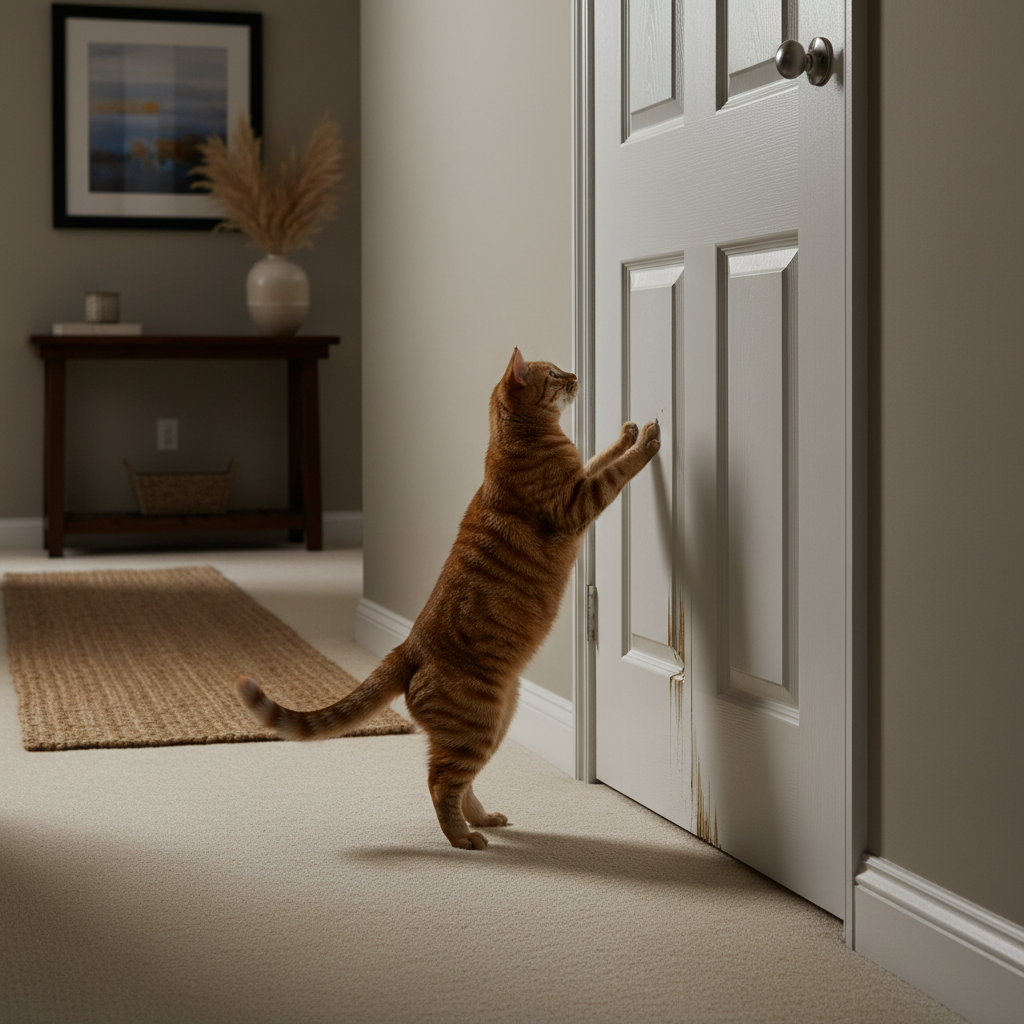
Why cats scratch doors (the real reasons, not the “spite” story)
Cats don’t scratch doors to “get back at you.” In most homes, the behavior falls into a few repeatable buckets, and once you identify yours, the fix gets much more straightforward.
- Access seeking: Your cat wants to be with you, reach a window, get to another pet, or patrol territory.
- Attention and routine: Scratching works because it reliably makes humans react, even negative attention can still be attention.
- Energy and boredom: A cat with extra fuel will invent a job, doors are loud and satisfying.
- Stress or separation anxiety: Common after moves, schedule changes, new pets, babies, or construction noise.
- Resource issues: Food timing, litter box location/cleanliness, or water access can trigger “let me out” scratching.
- Medical discomfort: If the scratching pairs with sudden vocalizing, accidents outside the box, or restlessness, it can be worth checking in with a veterinarian.
According to the American Veterinary Medical Association (AVMA), behavior changes can sometimes be linked to health issues, so it’s smart to keep medical causes in mind, especially when a behavior appears abruptly.
A quick self-check: what type of door scratcher do you have?
This little triage saves time. Pick the pattern that matches best, then jump to the solution sections.
- Mostly at night, near your bedroom: attention, routine, or sleep-cycle mismatch.
- Only when you leave the house: separation stress, boredom, or lack of enrichment.
- Right before meals: food schedule training (your cat trained you, honestly).
- When someone is in the bathroom/office: access seeking and social attachment.
- At a specific door to outside or a balcony: window views, scent trails, prey watching, territory.
- Scratching plus spraying, hissing, or guarding: conflict with another pet or anxiety, needs a gentler plan.
Key point: if the scratching happens in one predictable context, you can usually fix it by changing what happens right before and right after that moment.
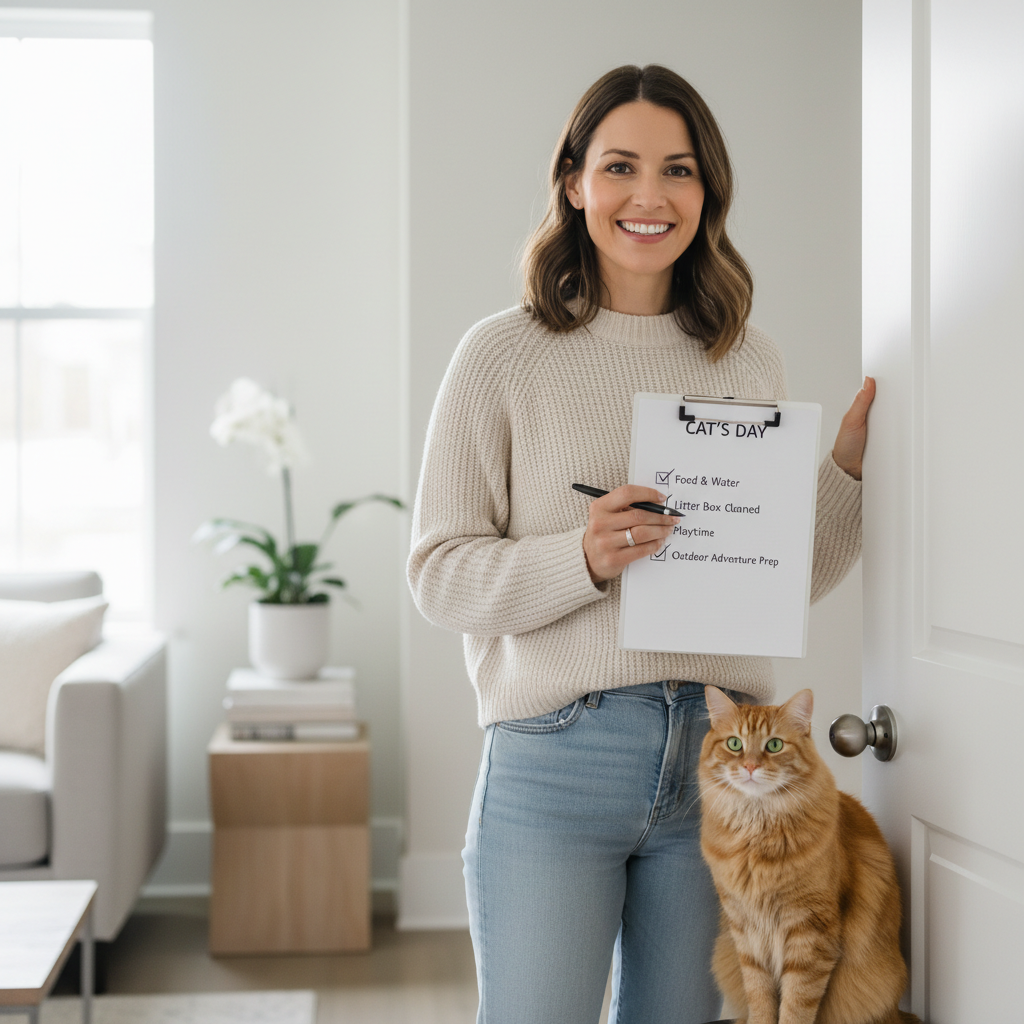
Fix the environment first: make the door boring and the alternatives rewarding
If you only “train,” but the door stays satisfying to scratch, you’ll keep losing. Your goal is a boring door plus better options nearby.
1) Give a scratch option right where the problem happens
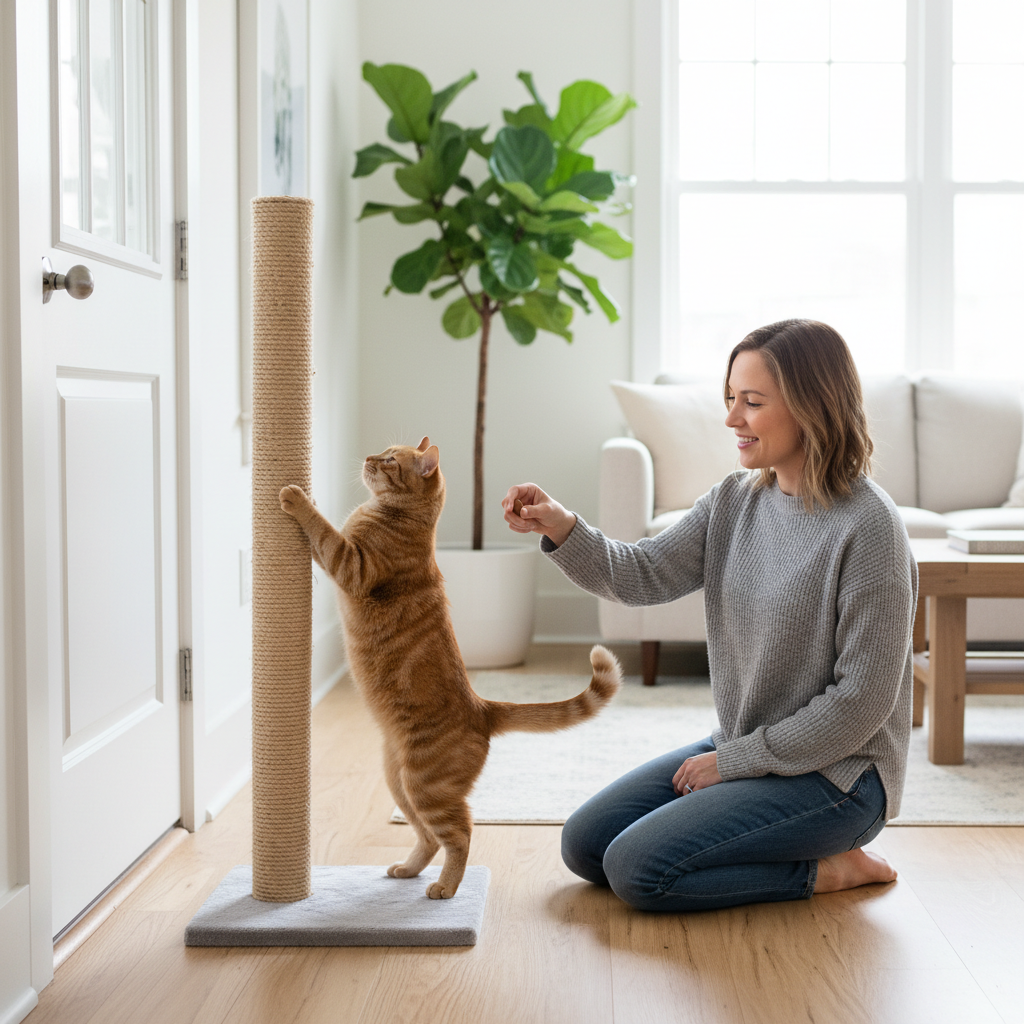
Put a scratching post or scratcher within 1–2 feet of the door, not across the room. Many cats scratch doors because the location matters: it’s a boundary line, it smells like you, it’s part of their patrol route.
- Use a tall, stable vertical post for door scratchers, it should not wobble.
- Try sisal for “hard scratch” cats, cardboard for cats that prefer shredding.
- Rub a little catnip or silver vine on the scratcher if your cat responds to it.
2) Make the door less scratchable (temporary is fine)
- Clear scratch guard sheets (pet-safe adhesive) on the lower door panel.
- Plastic door kick plates or acrylic panels to protect paint and wood.
- Carpet runner (nubs-out) or a protective mat at the base if the floor takes damage too.
These aren’t “giving up,” they buy you quiet while the new habit forms.
3) Reduce the payoff
Many people accidentally reinforce the behavior by opening the door or talking to the cat. If scratching reliably produces a reaction, it becomes a tool. If you’re working on how to stop cat from scratching door, you want the scratching to lead to… nothing useful.
Training that works in real homes (without constant policing)
Training is basically teaching: “this behavior opens doors” versus “this behavior earns rewards.” The cleanest version is to reward calm behaviors and give scratching zero results.
Teach an alternative: “sit on the mat” or “touch”
Pick one simple behavior, then pay it well for a week.
- Place a small mat a few feet from the door.
- When your cat steps onto the mat, mark with “yes” or a click, then treat.
- Gradually reward only when your cat stays on the mat for 2–5 seconds.
- Once it’s reliable, use it when your cat approaches the door.
This looks almost too simple, but it gives your cat a job that competes with scratching.
Use “quiet door” timing
If the scratching happens because your cat wants the door opened, open it only during quiet moments. Even a two-second pause matters. You’re not being mean, you’re being consistent.
- Wait for a brief break in scratching.
- Open the door calmly, no big greeting.
- If scratching starts again, close the door, then repeat.
According to the American Association of Feline Practitioners (AAFP), positive reinforcement and meeting environmental needs are central to addressing common feline behavior problems, this approach fits that philosophy.
Step-by-step plans for common scenarios
Most households fit one of these. Use the matching plan for 10–14 days before you judge results, because the first few days can be noisy while the old habit stops working.
Scenario A: Scratching at night outside your bedroom door
- Before bed: 10–15 minutes of interactive play (wand toy), then a small meal.
- Set the room: white noise outside the bedroom, blackout curtains if your cat gets stimulated by outdoor movement.
- Door setup: scratch post plus a guard on the door.
- Your response: no talking through the door, no opening during scratching.
If you can, a timed feeder for early morning often helps because it removes “wake the humans” as a strategy.
Scenario B: Scratching when you’re working or in the bathroom
- Schedule two short “connection breaks” daily, even 5 minutes of play counts.
- Teach the mat behavior outside the door and reward it heavily.
- Give a puzzle feeder or lickable treat on the other side of the door before you close it.
Scenario C: Scratching when you leave the house
- Leave high-value enrichment only for departures, like a food puzzle.
- Increase vertical space: a perch or cat tree near a window often reduces door focus.
- Keep departures low drama, long goodbyes can raise arousal for some cats.
If the scratching escalates to panic behaviors, it may be anxiety-related, in that case, move to the “get help” section.
Tools and materials: what helps, what disappoints
Some products are genuinely useful, others look good on a product page but don’t change much in practice. Here’s a quick comparison you can use.
| Option | Best for | Watch-outs |
|---|---|---|
| Clear door scratch guard | Protecting paint/wood while retraining | Adhesive can damage some finishes, test a small area first |
| Scratching post next to door | Cats that scratch for location/marking | Wobbly posts get ignored, stability matters |
| Puzzle feeder / timed feeder | Food-driven scratching and early wake-ups | Introduce slowly to avoid frustration |
| Double-sided tape | Short-term texture deterrent | Can pull paint or leave residue, not great long-term |
| Citrus sprays | Occasional mild deterrent | Many cats ignore it, some dislike strong scents in the home |
| Soft nail caps | Reducing damage during training | Needs proper fit, ask a vet or groomer if unsure |
If your priority is the door itself, start with a guard. If your priority is lasting behavior change, start with enrichment plus an alternative scratching surface.
Common mistakes that keep the scratching going
Most of these come from being tired and reacting on autopilot, which is understandable, but it teaches the cat the wrong lesson.
- Opening the door to make it stop: this is the biggest reinforcement loop.
- Yelling or spraying water: it may suppress behavior briefly, but it often increases stress and doesn’t teach what to do instead.
- Moving the scratcher away from the door: you fixed the wrong location, so the cat returns to the door.
- Only playing “when problems happen”: try scheduled play, not emergency play.
- Too many changes at once: swap one variable, observe for a few days, then adjust.
According to the ASPCA, scratching is a normal feline behavior, the goal is redirection and management, not trying to eliminate scratching entirely.
When to talk to a veterinarian or behavior professional
Sometimes the fastest path is getting another set of trained eyes on the situation. Consider professional help if you notice any of the following.
- The scratching starts suddenly in an older cat, or pairs with appetite, litter box, or mobility changes.
- You see signs of panic: heavy vocalizing, drooling, self-injury, destructive escape attempts.
- Conflict between pets, stalking, blocking doorways, or resource guarding shows up.
- You’ve followed a consistent plan for two weeks and nothing shifts.
A veterinarian can rule out medical causes and discuss anxiety support if appropriate, and a qualified cat behavior consultant can build a plan around your home layout and routines.
Conclusion: a calmer door starts with a clearer message
If you want how to stop cat from scratching door to actually stick, make the door unrewarding, set up a nearby scratch alternative your cat prefers, then reward a simple replacement behavior like “mat.” It’s not instant, but in many households, the noise drops quickly once scratching stops producing results.
Action you can take today: put a stable scratching post right by the door and add a clear scratch guard, then begin rewarding calm behavior near the doorway for the next week.